




Related: Mobile Commerce is On the Rise
Commentary: The Promise of E-Commerce
E-commerce is nothing new, but it continues rising to new heights. Smart trucking companies are realizing it’s the next area with a huge growth potential, especially when the overall economy is growing at a moderate rate at best.

Evan Lockridge・Former Business Contributing Editor
Source: U.S. Commerce Department
3 min to read
Source: U.S. Commerce Department
E-commerce is nothing new, but it continues rising to new heights. Smart trucking companies are realizing it’s the next area with a huge growth potential, especially when the overall economy is growing at a moderate rate at best.
Weak areas for trucking right now are manufacturing, energy and intermodal:
Manufacturing began to take it on the chin last year, with recent reports showing the sector being weak.
Then there has been the collapse in energy prices, hitting trucking operations involved in oilfield operations.
The intermodal business is down from multi-year highs set in 2014, because of excess capacity in the marketplace, which has meant lower rates due to less freight demand in the sector.
Then there is the nation’s overall economic situation. Not bad, especially when you contrast it to the deep dark days of the Great Recession. In fact, the current expansion is one of the longer economic recoveries in U.S. history. But the pace of growth is not as fast as many would like. In the final quarter of last year, the gross domestic product increased at an annual rate of just 1%, down from 2% in the third quarter. Actual numbers for the first quarter aren’t due out until late April, and predictions at press time were all over the map.
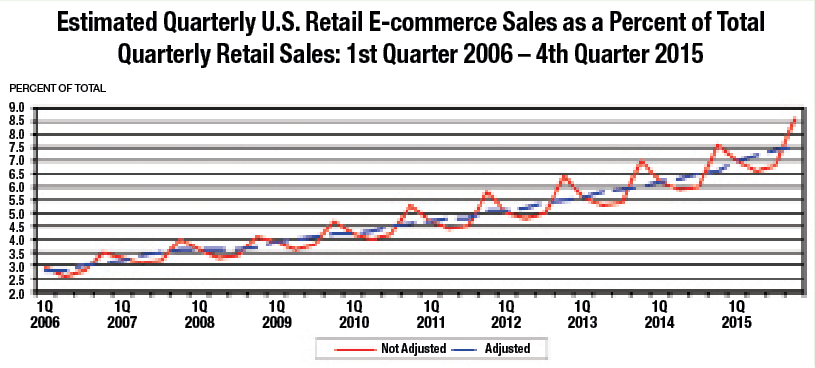
So why is e-commerce the bright spot in all this? E-commerce sales in the U.S. last year were an estimated $341.7 billion, 14.6% higher than in 2014, says the Commerce Department. Compare that to total retail sales growth last year, which improved just 1.4%. E-commerce accounted 7.3% of retail sales in 2015, up from 6.4% the year before.
In other words, while traditional retail sales are improving a little, e-commerce is increasing a lot – and some carriers are banking on it for the future.
Take XPO Logistics, for instance, which purchased Con-way here in the U.S. and Norbert Dentressangle in Europe.
In a conference call with investors in February, CEO Bradley Jacobs noted that, “One bright spot in the economy is the demand for heavy goods. Consumer spending on big-ticket items has been growing at a good pace. This is especially true for Internet purchases.”
Such growth, he said, allowed the company to sign nearly 60 new contracts worth $118 million in annual sales.
In an interview with the Journal of Commerce, Jacobs said, “E-commerce has tentacles everywhere in our business, and that’s a good thing. It’s driving our supply chain business, our last-mile business and it’s affecting our LTL business as well. It’s definitely affecting all of our businesses in a positive way.”
Covenant Transport Group is also seeing the boom. Its costs for purchased transportation services and rented equipment rose more than 25% year-over-year in the fourth quarter as it rented more trailers, reportedly due to jumps in e-commerce.
CEO David Parker told a conference call of investors earlier this year that e-commerce is “growing three to four times faster than retail as a whole is growing,” and he expects it to continue.
One of Canada’s largest fleets, TransForce (which also serves the U.S.) is replacing business from the energy sector with e-commerce. In a conference call with investors in February, CEO Alain Bédard said he expects to as much as double e-commerce business this year. “In terms of growing our piece of the pie with e-commerce,” he said, “we feel good.”
Meanwhile, big-name retailers are stepping up their online game. According to the global real estate group Colliers International, the building of so-called “big box” warehouses is surging, with the Wall Street Journal reporting an additional 74 million square feet are set to be completed this year to help fulfill customer orders. With that kind of money being invested, it’s a pretty sure bet that these carriers will continue to “feel good” about e-commerce.
Subscribe to Our Newsletter
More Fleet Management
Why This Trucking Recovery Is Different
Freight demand remains sluggish, but rising costs and tougher enforcement have taken enough capacity out of the market to change the outlook for motor carriers.
Read More →
Platform Science Adds Dispatch and Safety Tools
Four additions to PS Fleet help fleets monitor loads, manage driver coaching, share truck locations and adjust video system settings.
Read More →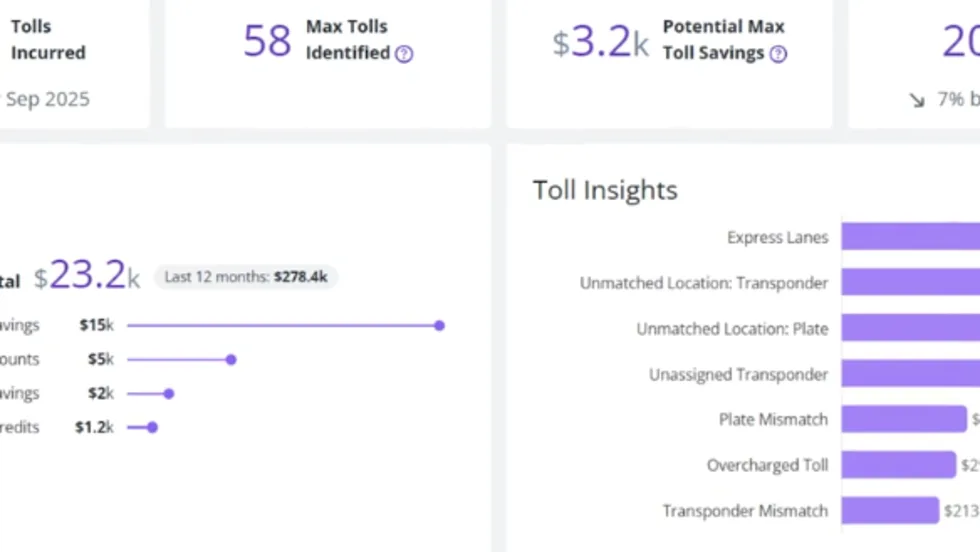
PrePass Intelligence Mines Fleet Bypass, Toll and Safety Data
PrePass Intelligence helps fleets measure bypass savings, flag potential toll overcharges, and spot suspicious transactions by combining data from separate systems.
Read More →
Motive Adds AI Agents for Fleet Operations
New tools automate follow-up on fleet data, from maintenance work orders to driver alerts, with two-way voice conversations planned for later this year.
Read More →
Can You Beat Our Trucking Trivia Challenge?
Test your truck knowledge with 19 trivia questions from Heavy Duty Trucking Exchange. Can you keep up with the fleet pros?
Read More →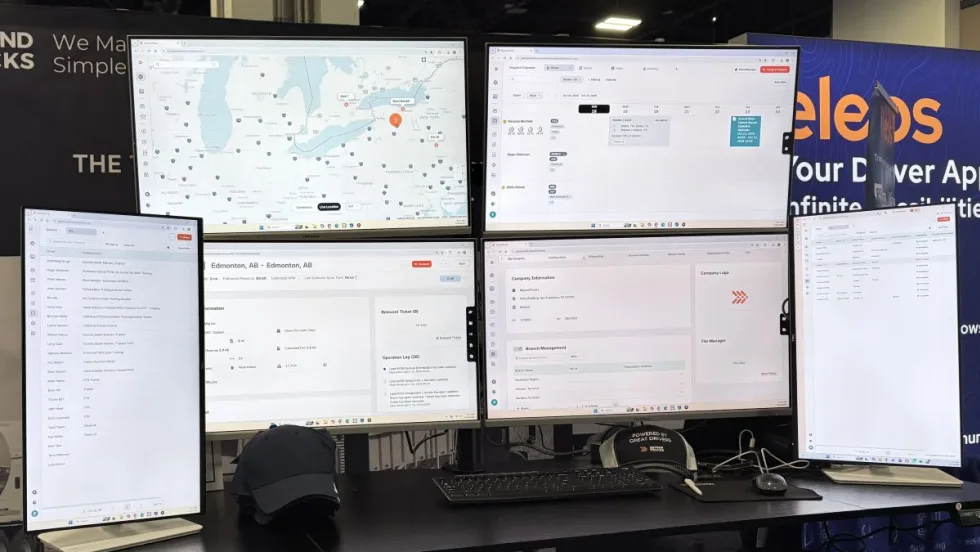
BeyondTrucks Adds Rules Checks to Dispatch
New Compatibility Engine checks driver qualifications, equipment requirements and fleet policies before loads are dispatched.
Read More →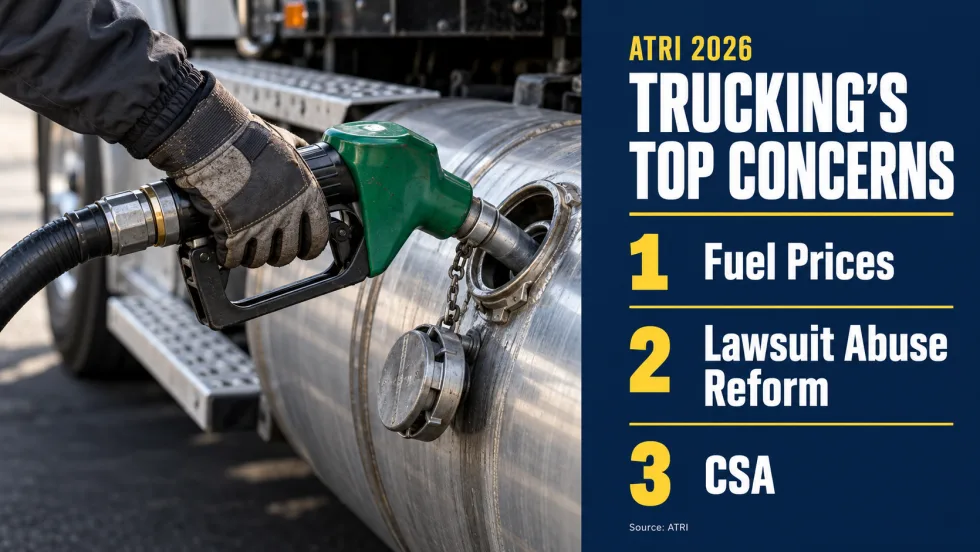
Diesel Prices Hijack Trucking’s Worry List
ATRI’s annual survey finds cautious optimism about freight, but diesel costs, litigation, and insurance continue to squeeze fleets. Drivers have different priorities on several issues.
Read More →
Nomination Deadline Extended for HDT Emerging Leaders
Just a few more days to nominate accomplished trucking fleet professionals under 40 who are making an impact and helping lead the industry forward for the HDT Emerging Leaders award. Deadline extended to October 20!
Read More →
What Will ATA’s New Leader Bring to Trucking's Table?
Incoming President and CEO Mark Colson’s record in Alabama offers clues about his priorities and approach following Chris Spear’s abrupt departure as the head of the American Trucking Associations.
Read More →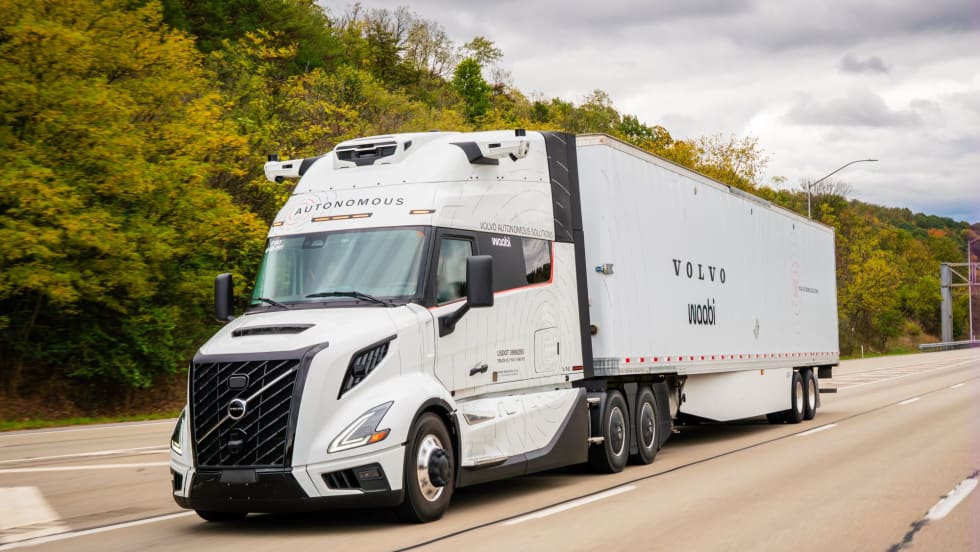
Volvo, Waabi Start Commercial Autonomous Operations in Texas
Volvo VNL Autonomous trucks, powered by the Waabi Driver, are hauling freight directly to third-party facilities for a customer in Texas.
Read More →