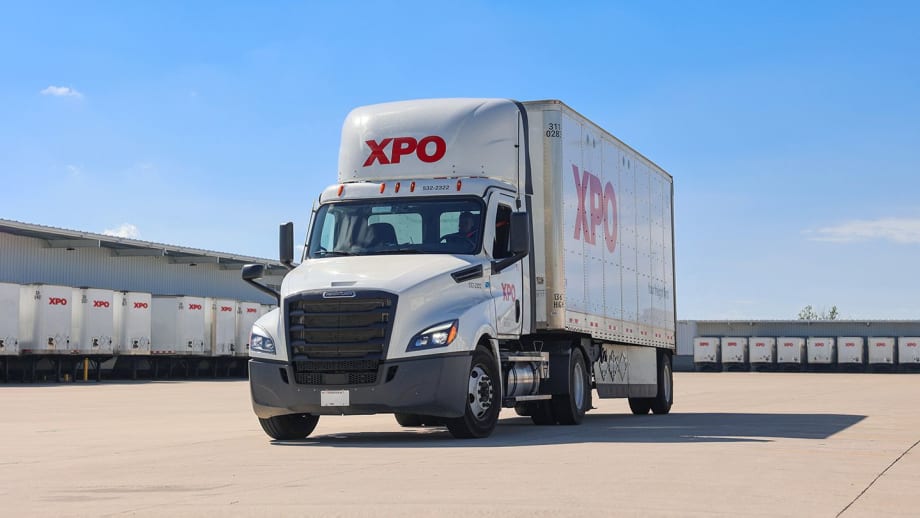
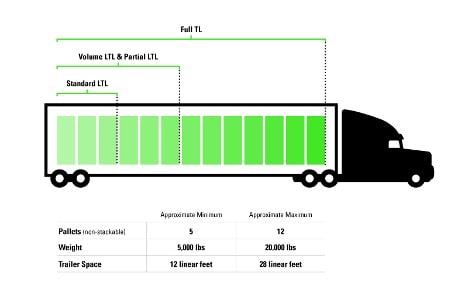
XPO Logistics defines LTL trucking generally as handling shipments that weigh between 500 and 15,000 pounds, are shipped on pallets, and only require a portion of a trailer.
Photo: XPO Logistics
6 min to read
Less-than-truckload carriers will best ride out the turbulence of the freight environment in 2023 by closely managing key challenges to profitability, including falling freight volumes and flat rates. Tools to push back and fuel growth include volume LTL services, density-priced shipping, collaborative co-loading, and using technology to set prices dynamically.
Ad Loading...
In the first quarter of 2023, the LTL sector recorded a smaller quarter-over-quarter loss in shipment volumes than in the fourth quarter of 2022, according to the Transportation Intermediaries Association 3PL Market Report.
“Data from the first quarter of 2023 indicates the decline in freight volumes we saw at the end of last year has leveled off,” said TIA President and CEO Anne Reinke. “While the freight economy may not grow significantly until 2024, the total economy shows resilience.”
Ad Loading...
The latest release of the TD Cowen/AFS Freight Index projects LTL rates to level off after a sharp drop in in the first quarter. Meantime, truckload rates are expected to continue their decline while per-package parcel rates remain elevated.
In the first quarter of 2023, the LTL rate per pound index experienced the “most significant QoQ decline on record,” dropping from its historic high of 64% above the January 2018 baseline in Q4 2022 to 57% in Q1.
“This sharp decline can be attributed to declining diesel fuel prices and excess capacity exerting downward pricing pressure,” per the report. “In Q1 2023, the actual fuel cost per shipment dropped 15.7% QoQ and cost per shipment decreased 4.6% QoQ, even though weight per shipment remained consistent with the previous quarter.”
In the second quarter, the index projects LTL rates to flatten, with a modest quarter-over-quarter increase of 0.8% attributed to seasonal data trends, reaching 58.3% above the January 2018 baseline.
But here’s the index’s punchline: “The year-over-year trend of the LTL rate per pound index is expected to turn negative in upcoming quarters due to weakened demand and lower rates.”
Ad Loading...
As carriers look to fill excess capacity and maintain revenue, “prudent shippers can find major cost saving opportunities by looking beyond traditional LTL services,” said Kevin Day, president, LTL for AFS Logistics, discussing the index’s findings.
1. Volume LTL
This article is Part 4 in a series, "How Freight Movement is Changing," exploring how logistics trends are affecting trucking.
Day explained that “volume LTL” is a tool carriers can deploy to gain some incremental revenue out of backhaul lanes that would otherwise have them moving empty trailers. At the same time, this gives shippers “the opportunity to take advantage of significantly lower rates and avoid the added sting of steep accessorial charges.”
According to Coyote Logistics, a UPS company, the volume LTL solution uses excess trailer capacity in LTL carrier networks to move shipments of 6 to 12 pallets. While it’s more cost-effective than traditional service, it may have less availability.
In short, carriers use volume LTL to fill in gaps to cut empty miles and generate extra cash flow.
There are pros and cons to consider before launching volume LTL service.
Ad Loading...
“Though business-to-business shipments are ideal, and commodities with lower cargo value that are either very high or very low in density fare the best, most commodities and freight classes are candidates for volume LTL shipping,” advises Coyote. The most important factors are shipment size and/or weight.
Volume LTL service is aimed at larger LTL shipments between 6 and 12 pallets, It leverages excess trailer capacity in an LTL carrier’s network, which occurs when there are equipment or freight-density imbalances.
Source: Coyote Logistics
The logistics firm also points out that volume LTL is not the same as partial truckload (aka shared truckload or co-loading). The key difference is volume LTL uses LTL carrier networks while partial truckload uses truckload carrier networks.
The upshot is “partial truckload can offer compelling cost savings, but consistent capacity can be very difficult to coordinate.”
2. Collaboration
Another key trend cited by Umstead is taking a collaborative approach.
“One potential solution for LTL shipments is to co-load with other shippers, as consolidating in a multi-shipment environment can truly bring a number of benefits in this particular market.” He pointed out “through this collaborative approach, multiple customers who are shipping products to the same region can build dynamic multi-stop truckloads.”
Ad Loading...
Greg Umstead, Uber Freight’s vice president, Fleet & LTL Services Transportation Management, noted in a blog post that “a great shipper match” results in cost savings, reduced working capital, inventory improvement, greater order fill rates, more frequent deliveries, and increased flexibility to support customers.
Collaboration has long been a focus in the transportation industry, he said, “but its realization has been a challenge because of the manual processes and lack of scalability.”
He added that that’s why Uber Freight looks “load-by-load across our whole customer network to see exactly where and how we can save our customers time, capacity time and money.”
3. Density-Based Pricing
In a similar vein to volume LTL is the shift away from the traditional National Motor Freight Classification (NMFC) rate-setting formula to density-based pricing by LTL carriers
The NMFC formula groups commodities by evaluating their density, handling, stowability, and liability. The LTL industry has incorporated density-based pricing.
Ad Loading...
This approach “considers the actual weight of a particular item, classifies it, and determines how much volume it will take up in a trailer,” Ulmstead said.
Toward that end, he said, “the first step many carriers have taken is introducing ‘dimensioners’ into their network to efficiently capture the density of each shipment as it travels through their network,” he explained. This helps the carrier better capture the actual cost incurred for each shipment for more accurate pricing.
Applying density-based pricing means LTL carriers are requiring shippers to pay additional fees for handling lightweight shipments or bulky items that take up a lot of trailer space.
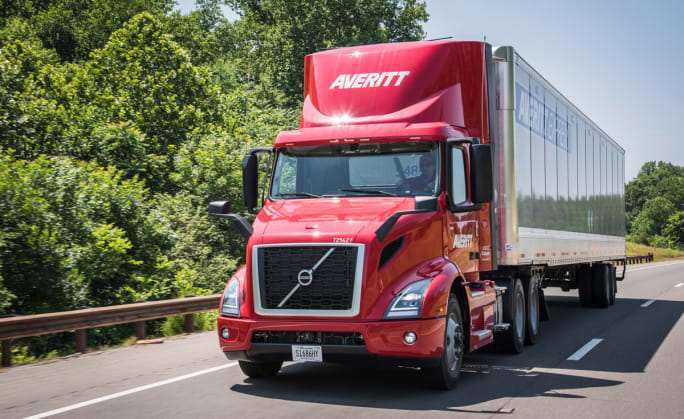
Averitt offers dynamic pricing, which simplifies the complexities of LTL pricing for the shipper and reflects the carrier’s real-world costs.
Photo: Averitt
4. Dynamic Pricing
Since motor carrier deregulation in 1980 changed the way transportation pricing was done, the industry has largely been locked into a static, tariff-based pricing model that doesn’t reflect day-to-day changes in the market.
A new model is called dynamic pricing, which uses technology and data to offer real-time freight pricing. Customers get fast, simple, competitive rates without negotiating a published price, leveraging available capacity within the carrier’s network.
Ad Loading...
Dynamic pricing allows for more accuracy and flexibility, because it is based on actual factors that affect LTL carrier costs, rather than complicated proxies like NMF classifications, such as:
Unit weight and dimensions.
Piece count.
Available capacity.
Day of week.
Season.
Origin.
Destination.
Shipper profiles.
Weather.
Fuel prices.
The pricing ends up being customized shipment-by-shipment instead of being randomly classified by a blanket price.
At ArcBest subsidiary ABF Freight System, according to the Journal of Commerce, dynamic pricing contributed to 2% year over year gain in shipments and tonnage in May, at the same time as many competitors saw shipments drop by high-single-digit percentages.
Tennessee-based Averitt Express reported it is already experiencing positive results after partnering with SMC3 to introduce ExactRate dynamic pricing.
Ad Loading...
“ExactRate paves the way for improved efficiency, transparency, and collaboration in LTL pricing,” said Mark Davis, vice president of pricing and traffic at Averitt.
Editor’s Note: Editor and Associate Publisher Deborah Lockridge contributed to this article.
For fleet managers and collision repair professionals keeping heavy-duty trucks on the road, getting the color right the first time isn't just about appearance — it's about efficiency, turnaround time, and bottom-line results. Discover how today's digital color tools are transforming the repair process from guesswork to precision.
Carriers whose updates were due on or after June 1 have more time, while FMCSA works to stabilize its new registration system and warns of phishing sites impersonating its new carrier registration system, Motus.
Cargo theft is no longer just the cost of doing business. It's a multi-billion-dollar criminal enterprise exploiting vulnerabilities across your fleet, drivers, and supply chain.
Explore how telematics help refrigerated fleets improve visibility, uptime, efficiency, compliance, and cargo protection across connected cold chain operations.
Escalating U.S.-Canada tariffs could disrupt cross-border freight, reduce truck volumes, raise costs, and create new uncertainty for carriers on both sides of the border.
The American Transportation Research Institute wants to know what's worrying trucking fleet managers, drivers, and other stakeholders in its annual Industry Issues survey.
HDT Truck Fleet Innovator Adam Buttgenbach helped PepsiCo build one of North America’s largest EV fleets by focusing on where electric trucks make operational sense.