





California's AB5: What Now for Truck Owner-Operators in the State?
Judge Extends Restraining Order Keeping California from Enforcing AB5 in Trucking
Trucking companies using owner-operators in California can breathe a sigh of relief for now, as a judge has extended a temporary restraining order keeping officials from enforcing the onerous terms of its AB5 independent contractor law against motor carriers.
January 13, 2020

Drayage owner-operators are among those that could be significantly affected by AB5.
Photo: Port of Long Beach
4 min to read
Trucking companies using owner-operators in California can breathe a sigh of relief for now, as a judge has extended a temporary restraining order keeping officials from enforcing the onerous terms of its AB5 independent contractor law against motor carriers.
A Jan. 13 hearing on the California Trucking Association’s motion for a preliminary injunction in its legal case against the state’s controversial Assembly Bill 5 was “spirited,” according to one attendee.
U.S. District Judge Roger Benitez heard arguments under advisement but did not issue a decision. He has extended the temporary restraining order that was put in place Dec. 31, and it will be in effect until his ruling on the preliminary injunction. This could take days or a couple of weeks, according to a California Trucking Associations spokesperson.
Until a decision is delivered, the California Trucking Association has said it is not commenting on the case.
However, Joe Rajkovacz, director of governmental affairs and communications for the Western States Trucking Association, attended the hearing and shared this comment with HDT via email:
“It was a surprising two hours of spirited questioning from the bench of plaintiffs, Teamsters counsel and the California attorney general. [The judge’s] questioning of all parties was very indicative that he has serious constitutional issues with how AB 5 impacts goods movement nationally in violation of the commerce clause and F4A.”
The attorneys at transportation legal firm Scopelitis, Garvin, Light, Hanson & Feary agreed that the judge “seemed to be leaning in favor of granting a preliminary injunction that would enjoin the state from enforcing AB 5 as to any motor carrier operating in California pending resolution of the case by the District Court.”
The CTA and the ABC Test
The California Trucking Association in November had filed a lawsuit challenging Assembly Bill 5. The new law, which went into effect Jan. 1, put into place a stringent “ABC test” for determining the validity of independent contractor relationships. Because one of the requirements, the “B prong,” prohibited companies from using independent contractors unless the worker was performing work “outside the usual course of the hiring entity’s business.”
CTA contends in its lawsuit that AB 5 is preempted by the supremacy and commerce clauses in the U.S. Constitution and is in direct conflict with the Federal Motor Carrier Safety Act and the Federal Aviation Administration Authorization Act of 1994. (Part of the FAAAA, also called F4A, bans states from enacting laws that affected a motor carrier's prices, routes and services.)
On Dec. 24, CTA filed a motion for temporary restraining order, seeking to keep the state from enforcing AB5 as it relates any motor carrier operating in California, pending the court’s decision on a preliminary injunction. In the final hours of New Year’s Eve, Judge Bernitez issued a temporary restraining order preventing state officials from enforcing the law against motor carriers, writing in that Dec. 31 decision that the association had showed the case was “likely to succeed on the merits” and that the plaintiffs are “likely to suffer irreparable harm in the absence of relief.”
Battling the Bill
California Gov. Gavin’s proposed 2020 budget calls for $20 million in additional funding to enforce Assembly Bill 5, the governor announced Friday. But trucking isn’t the only industry battling the new law.
In December, the Western States Trucking Association filed a complementary suit targeting how AB5 treats motor carriers that provide “construction trucking services.” Freelance writers and photographers also filed suit in December, alleging that AB5 unconstitutionally restricts free speech and the media. Uber and Postmates filed suit alleging that AB5’s targeting of app-based workers and platforms violates the Equal Protection Clauses of the United States and California Constitutions.
And there are indications that it will be addressed in the next session of the legislature. Kevin Kiley, a California Legislator representing the 6th Assembly District, has said he will introduce legislation in 2020 to “restore the right to earn a living.” He is promoting a rally to repeal AB5. Jan. 28 at 10 a.m. Pacific Time on the north steps of the California state capitol.
More Drivers
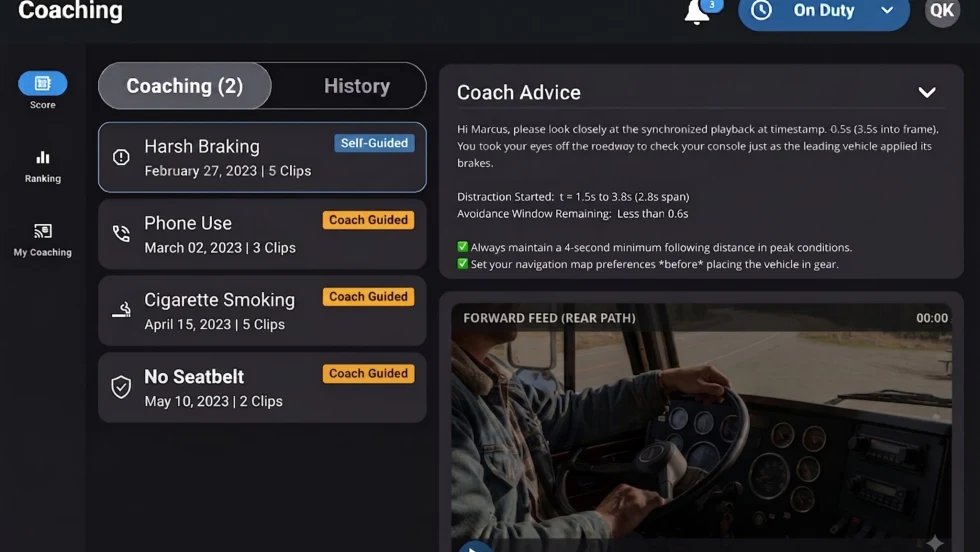
Platform Science Adds Dispatch and Safety Tools
Four additions to PS Fleet help fleets monitor loads, manage driver coaching, share truck locations and adjust video system settings.
Read More →
When Language Stops the Truck: The Return of ELP Out-of-Service Orders
English language proficiency rules for commercial drivers aren’t new, but renewed out-of-service enforcement has raised the stakes. Here’s what carriers need to know before a driver reaches a roadside inspection.
Read More →
Samsara Launches Custom AI Agent Builder
Agent Studio lets fleets create AI tools for hours-of-service monitoring, reporting and driver support, including agents that communicate by phone.
Read More →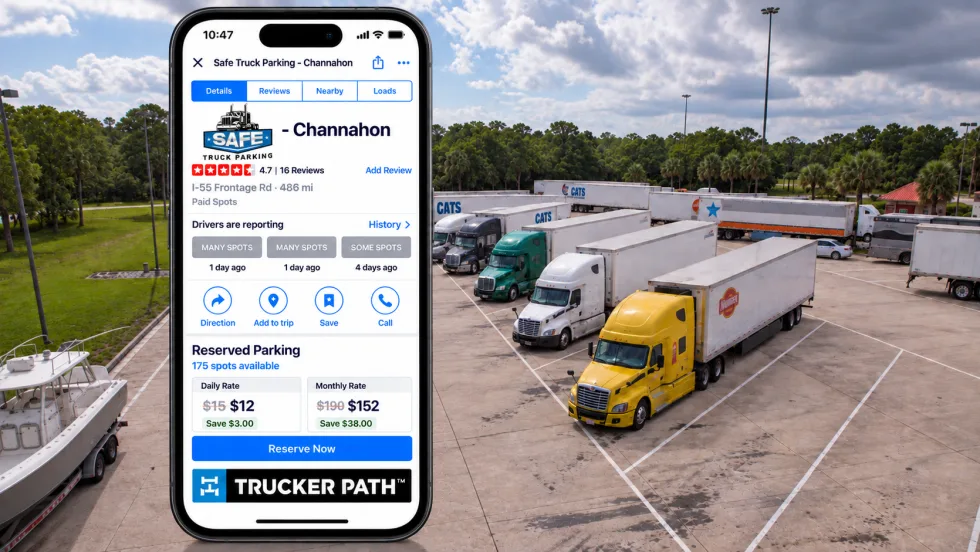
Trucker Path Expands Reserved Parking Network
Trucker Path has added close to 6,000 more truck parking spaces to its Trucker Path Reserved Parking Network with the addition of Safe Truck Parking.
Read More →
EEOC Sues Texas Trucking Company Over Driver Age Limits
The agency says Trancasa USA rejected applicants over 65 and applied tougher driving-record standards to those over 60.
Read More →
Nussbaum, Roehl Announce Second Driver Pay Increase This Year
This year has seen a swath of major truck driver pay increases as freight capacity has tightened.
Read More →
From One Generation to the Next: How Mentorship Builds Safer Truck Drivers
After three decades in trucking, Harold Perry shares what he's learned about driver safety, mentorship, and helping the next generation build confidence behind the wheel.
Read More →
Truck Drivers Need More Than Another Alert
Fleets have more visibility into truck health, safety events, and driver activity than ever. The next challenge is turning all that information into useful guidance for the person who has to decide what to do next.
Read More →
FMCSA Removes 110 Truck Driver Training Schools from Certified ELDT List
Federal regulators also are targeting more than 160 additional training providers and launching a nationwide audit of third-party CDL skills testers as part of a broader crackdown on trucking fraud.
Read More →
Hours of Service Pilot Programs: FMCSA Readies for 2027 Rollout
Two pilot programs could eventually reshape hours-of-service rules, giving truck drivers options to pause their 14-hour clock or use longer split sleeper rest periods.
Read More →