





Related: California Bill Means 'End for Independent Trucking' in State
Lawsuit Challenges California Law Requiring Construction Truck Drivers to be Employees
The Western States Trucking Association filed a lawsuit in federal court challenging a construction-trucking-specific provision of California’s already controversial Assembly Bill 5, which severely restricts the use of independent contractors in the state.
December 20, 2019
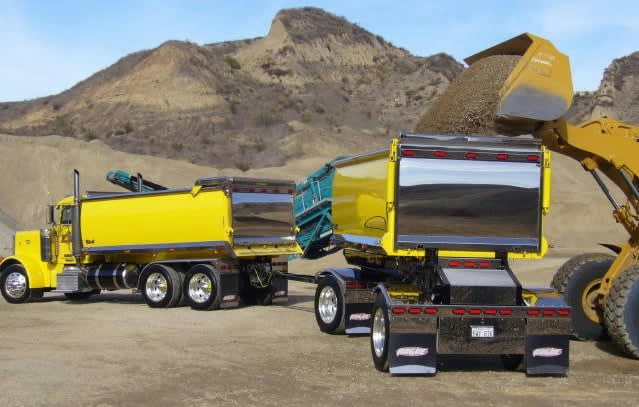
The independent contractor model has been a significant component of the construction trucking industry for decades, notes WSTA.
Photo courtesy Western States Trucking Association
3 min to read
The Western States Trucking Association filed a lawsuit in federal court challenging a construction-trucking-specific provision of California’s already controversial Assembly Bill 5, which severely restricts the use of independent contractors in the state.
AB 5, signed by Gov. Newsom in September and effective Jan. 1, 2020, dramatically affects all workers that have independent contractor status, “upending the market for owner-operator trucking companies by imposing massive liability upon those that contract with them,” according to a WSTA press release. But the group says it’s even worse news for the construction sector.
For most workers, AB 5 codified the California Supreme Court’s stringent ABC test from its 2018 Dynamex decision. It requires companies wishing to use independent contractors to meet all three requirements. At issue is the “B” prong of the test: That the worker performs work that is outside the usual course of the hiring entity’s business.
WSTA said that for motor carriers that provide “construction trucking services,” AB 5 included no test whatsoever. “Rather, it mandates that workers are employees rather than independent contractors. This mandate is clearly preempted by federal law, which prohibits states from enacting or enforcing any law or regulation related to the price, route, or service of a motor carrier,” the association explains in a press release.
WSTA was the first to file a lawsuit on behalf of the trucking industry when it challenged the original Dynamex decision back in 2018. When it became clear to WSTA during negotiations with the Legislature and stakeholders that AB 5 would be passed at the Capitol in a way that would render WSTA’s original Dynamex lawsuit moot and thus likely unsuccessful, it voluntarily dismissed its case on Sept. 4, 2019.
“However, with the subsequent inclusion of the offensive construction trucking provision in AB 5, WSTA determined that it was now appropriate and necessary to refile a lawsuit specifically targeting AB 5’s construction trucking provision in order to best protect its construction trucking members,” the release explained.
WSTA is not the only trucking group that has challenged the law in court. The California Trucking Association and two California-based owner-operators filed a challenge to the law in November.
CTA's suit argues that the classification test codified by AB 5 is preempted by the supremacy and commerce clauses in the U.S. Constitution and is in direct conflict with the Federal Motor Carrier Safety Act and the Federal Aviation Administration Authorization Act of 1994. (Part of the FAAAA bans states from enacting laws that affected a motor carrier's prices, routes and services.)
WSTA said it applauds the efforts of the California Trucking Association and others who are also challenging AB 5 in court.
“In its lawsuit, CTA has taken a broad approach and is challenging the ABC test itself as it applies to all motor carriers. Alternatively, WSTA’s lawsuit is narrowly focused on AB 5’s construction trucking provision in Labor Code section 2750.3, subdivision (f)(8), which does not utilize the ABC test. Given the unpredictability of the judicial system, it is possible that a judge could rule narrowly in the CTA case in a manner that does not provide adequate relief for construction trucking companies. As such, WSTA has filed this complementary case to ensure that its members are protected in each scenario.”
You can read WSTA's legal challenge on the association's website.
More Drivers

Why Hiring Truck Drivers Is Getting Harder
Higher recruiting costs, a shrinking driver pool, and renewed pay competition are raising the stakes for fleets heading into 2027.
Read More →
Roehl Offers Truck Drivers $10,000 Retention Incentive
Payments begin after the first load and continue in mileage-based installments for eligible experienced drivers joining the fleet.
Read More →
Platform Science Adds Dispatch and Safety Tools
Four additions to PS Fleet help fleets monitor loads, manage driver coaching, share truck locations and adjust video system settings.
Read More →
When Language Stops the Truck: The Return of ELP Out-of-Service Orders
English language proficiency rules for commercial drivers aren’t new, but renewed out-of-service enforcement has raised the stakes. Here’s what carriers need to know before a driver reaches a roadside inspection.
Read More →
Samsara Launches Custom AI Agent Builder
Agent Studio lets fleets create AI tools for hours-of-service monitoring, reporting and driver support, including agents that communicate by phone.
Read More →
Trucker Path Expands Reserved Parking Network
Trucker Path has added close to 6,000 more truck parking spaces to its Trucker Path Reserved Parking Network with the addition of Safe Truck Parking.
Read More →
EEOC Sues Texas Trucking Company Over Driver Age Limits
The agency says Trancasa USA rejected applicants over 65 and applied tougher driving-record standards to those over 60.
Read More →
Nussbaum, Roehl Announce Second Driver Pay Increase This Year
This year has seen a swath of major truck driver pay increases as freight capacity has tightened.
Read More →
From One Generation to the Next: How Mentorship Builds Safer Truck Drivers
After three decades in trucking, Harold Perry shares what he's learned about driver safety, mentorship, and helping the next generation build confidence behind the wheel.
Read More →
Truck Drivers Need More Than Another Alert
Fleets have more visibility into truck health, safety events, and driver activity than ever. The next challenge is turning all that information into useful guidance for the person who has to decide what to do next.
Read More →