




Federal Proposal Would Allow Pell Grants for Shorter-Term Job Training
The Department of Labor plans to expand Pell Grant eligibility to some shorter workforce training programs, a move the American Trucking Associations said will help strengthen commercial driver training schools and diesel technician training programs.

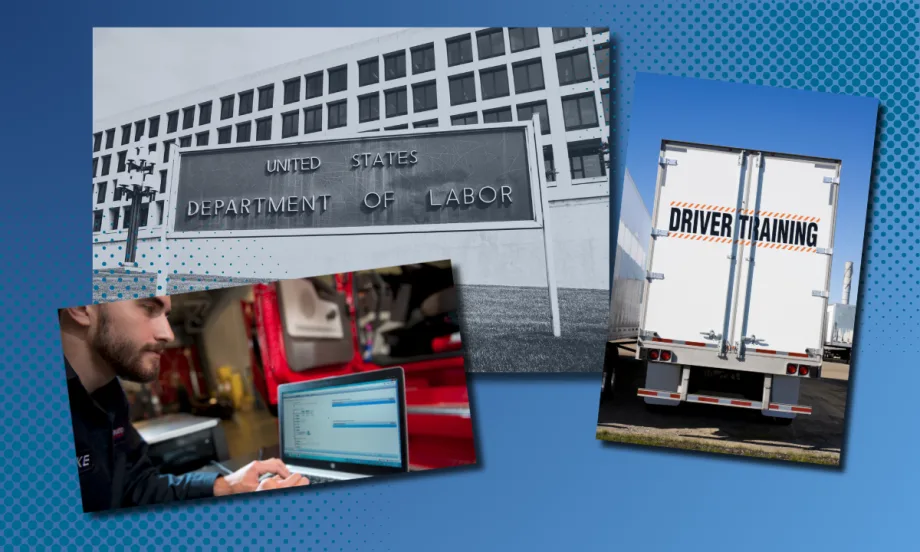
Most truck driver training and diesel technician training programs weren't eligible for Pell Grants in the past.
HDT Graphic
The Department of Labor plans to expand Pell Grant eligibility to some shorter workforce training programs, a move the American Trucking Associations said will help strengthen commercial driver training schools and diesel technician training programs.
In a notice of proposed rulemaking, the DOL explained that the proposed regulation stems from the One Big Beautiful Bill Act signed into law last July, including “one of the most significant changes to the Pell Grant Program in its history, to address America's workforce needs.”
Specifically, the OBBB expanded Pell Grant eligibility to eligible workforce programs. These programs are shorter in duration than the undergraduate programs currently eligible for Pell Grants.
The rule will establish a new “Workforce Pell Grant” pathway to allow eligible students to use Pell Grants for educational courses lasting from 8 to 15 weeks. Currently, Pell Grants can only be applied to programs that are 15 weeks or longer.
Under the proposal, they must meet specific accountability metrics related to graduate earnings, as well as indications of employer demand — requirements that are not applicable to other eligible programs.
“A great education and a better life do not necessarily require a traditional four-year college experience,” said Under Secretary of Education Nicholas Kent in a news release.
Pell Grants for Driver Training, Diesel Mechanic Schools
The proposal is welcome, ATA said, as the current Pell Grant program is only available for longer programs, “rendering students in shorter-term, high-quality job training ineligible for this crucial assistance.”
“The change would dismantle financial barriers that prevent students from low-income households from accessing the career pathways that lead to the trucking industry,” ATA said in a news release.
The new rule would allow students to receive Pell Grants for eligible workforce programs that consist of 150–599 clock hours of instruction and take at least eight weeks but less than 15 weeks to complete.
Additional Requirements for Workforce Pell Grants
The proposed rule sets additional eligibility requirements for the approval of eligible workforce programs, including approval by a governor, after consultation with the state’s workforce board.
Each program must also meet certain accountability benchmarks, including completion and job placement rates, as well as a value-added earnings measure.
If finalized, starting in July 2026, students will be able to use the Pell Grant to enroll in an eligible workforce program, which could be as short as eight weeks.
The proposed rule was published in the Federal Register and is now open for a public comment period before being finalized.
More Drivers

Trucker Path Expands Reserved Parking Network
Trucker Path has added close to 6,000 more truck parking spaces to its Trucker Path Reserved Parking Network with the addition of Safe Truck Parking.
Read More →
EEOC Sues Texas Trucking Company Over Driver Age Limits
The agency says Trancasa USA rejected applicants over 65 and applied tougher driving-record standards to those over 60.
Read More →
Nussbaum, Roehl Announce Second Driver Pay Increase This Year
This year has seen a swath of major truck driver pay increases as freight capacity has tightened.
Read More →
From One Generation to the Next: How Mentorship Builds Safer Truck Drivers
After three decades in trucking, Harold Perry shares what he's learned about driver safety, mentorship, and helping the next generation build confidence behind the wheel.
Read More →
Truck Drivers Need More Than Another Alert
Fleets have more visibility into truck health, safety events, and driver activity than ever. The next challenge is turning all that information into useful guidance for the person who has to decide what to do next.
Read More →
FMCSA Removes 110 Truck Driver Training Schools from Certified ELDT List
Federal regulators also are targeting more than 160 additional training providers and launching a nationwide audit of third-party CDL skills testers as part of a broader crackdown on trucking fraud.
Read More →
Hours of Service Pilot Programs: FMCSA Readies for 2027 Rollout
Two pilot programs could eventually reshape hours-of-service rules, giving truck drivers options to pause their 14-hour clock or use longer split sleeper rest periods.
Read More →
Medical Cards, English Proficiency Reshape Roadcheck Violations
Medical-card violations jumped to the top of the driver out-of-service list during CVSA’s 2026 International Roadcheck, while English-language proficiency violations appeared among the leading violations for the first time.
Read More →
Driver Trust Can Make or Break the Success of Fleet Safety Technology
New Teletrac Navman research suggests that onboarding, transparency about driver data, and positive feedback can play a significant role in how commercial drivers respond to safety and coaching technology.
Read More →
EEOC Sues KLLM Over Alleged Sex Discrimination in Driver Training
KLLM is facing a federal sex-discrimination lawsuit over policies the EEOC alleges put female truck driver trainees at a disadvantage.
Read More →