





FMCSA to Pilot 14-Hour Clock Pause, Split Sleeper Options for Truck Drivers
Hours of Service Pilot Programs: FMCSA Readies for 2027 Rollout
Two pilot programs could eventually reshape hours-of-service rules, giving truck drivers options to pause their 14-hour clock or use longer split sleeper rest periods.
August 27, 2026
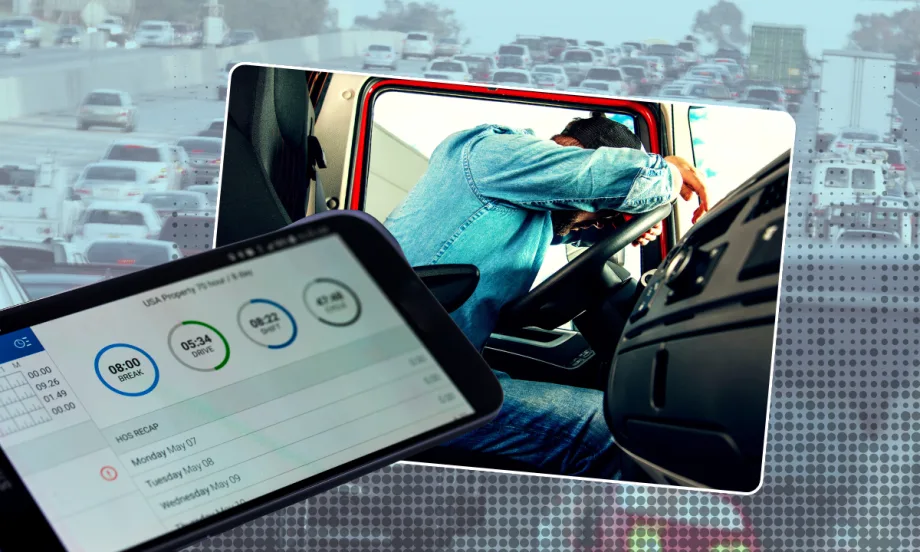
It's not the first time FMCSA has considered these hours-of-service options to give truck drivers more flexibility.
HDT Graphic
3 min to read
The Federal Motor Carrier Safety Administration gave a progress update on two Hours of Service Pilot Programs designed to evaluate whether providing truck drivers greater flexibility and control in scheduling their work can maintain or improve safety.
Launched in September 2025, the pilot programs could eventually reshape hours-of-service rules, giving truck drivers options to pause their 14-hour clock or use longer split sleeper rest periods.
As FMCSA prepares for the full launch of the pilot programs in 2027, the agency recently completed pre-tests with a select number of professional drivers.
The pre-tests allowed FMCSA to evaluate program procedures, data collection methods, and driver participation requirements before opening the pilot programs to more drivers next year.
Flexible Sleeper Berth Pilot Program
The Flexible Sleeper Berth Pilot Program will evaluate alternative split-sleeper options that allow drivers greater flexibility in matching their off-duty time to real-world conditions, work schedules, and their rest needs.
Under the pilot, participating drivers will be permitted to split that time into two periods in any combination, provided the two periods total at least 10 hours and one period includes at least five consecutive hours in the sleeper berth.
The pre-test ran from April 1 through June 11, 2026, and included nine drivers from three motor carriers in Ohio, Virginia, and Wisconsin. Drivers participated for six weeks and received $600 for their participation.
Split Duty Period Pilot Program
The Split Duty Period Pilot Program will evaluate whether drivers can safely pause their 14-hour driving window for up to three hours each day when they spend qualifying time in a non-driving status.
Qualifying time may include off-duty time, sleeper berth time, or on-duty time spent at a pickup or delivery location.
This added flexibility could allow drivers to better manage real-world conditions on the road, including waiting out traffic or severe weather, accounting for time lost to detention, or taking a break without unnecessarily reducing their available driving window.
Throughout the pilot, FMCSA will monitor shippers to ensure the increased flexibility does not lead to increased detention and exploitation of drivers.
It’s not the first time the agency has looked at drivers being able to “pause” the clock. This concept was part of the 2019 proposed rules on driver hours of service, but it did not make it into the final HOS rule published in 2020.
The pre-test ran from May 18 through July 17, 2026, and included nine drivers from three motor carriers in Minnesota, Wisconsin, and Ohio. Drivers participated for six weeks and received $600 for their participation.
When Will the Full Pilot Programs Start?
FMCSA is reviewing the pre-test results and will use the findings to refine the pilot programs ahead of the 2027 launch.
Each pilot program is expected to include 256 drivers, for a total of 512 participants. Drivers will participate for four months and receive up to $ 1,600 for completing all study tasks.
Professional drivers and motor carriers interested in future participation in the pilot programs or learning more about them can send their contact information to pilots@dot.gov to receive updates.
More Safety & Compliance

Sponsored•October 6, 2026
A Camera Isn't a Safety Program. Here's What Brokers Are Screening for Now
Footage alone may not be enough to pass broker vetting processes. Here's what counts as a defensible safety program now.
Read More →
Marijuana and Trucking’s Drug-Testing Dilemma
Marijuana is getting stronger, laws are changing, and drug tests still can’t reliably establish impairment. What does that mean for truck drivers and the fleets that employ them?
Read More →
PrePass, Kodiak Connect Driverless Trucks to Roadside Enforcement
The system will allow enforcement agencies to verify Enhanced Inspection information and decide whether Kodiak’s autonomous trucks can bypass roadside screening sites.
Read More →

From One Generation to the Next: How Mentorship Builds Safer Truck Drivers
After three decades in trucking, Harold Perry shares what he's learned about driver safety, mentorship, and helping the next generation build confidence behind the wheel.
Read More →
FMCSA Pauses Biennial-Update Enforcement Amid Motus Transition
Carriers whose updates were due on or after June 1 have more time, while FMCSA works to stabilize its new registration system and warns of phishing sites impersonating its new carrier registration system, Motus.
Read More →
ZF Expands Commercial Vehicle Push in North America
ZF is expanding its North American commercial-vehicle presence with new transmission applications, electrification, trailer technology and autonomous-driving systems.
Read More →
Truck Drivers Need More Than Another Alert
Fleets have more visibility into truck health, safety events, and driver activity than ever. The next challenge is turning all that information into useful guidance for the person who has to decide what to do next.
Read More →
Tesla Wants a Self-Driving Semi. Are Cameras Enough?
Could Tesla’s camera-only autonomous driving technology work on an 80,000-pound Semi? In this commentary, HDT's Deborah Lockridge takes a look at Tesla, Cybercab, and how autonomous trucks see the road.
Read More →
What DOT’s Automated Vehicle Strategy Means for Trucking
The U.S. Department of Transportation issued a new automated-vehicle strategy that outlines plans for driverless-truck regulations, cross-state freight corridors, and federal safety standards.
Read More →
NYC Expands Speed, Pedestrian Safety Tech Across Fleet
New York City is expanding intelligent speed assistance and pedestrian-alert systems across its municipal fleet, moving the technologies from pilot programs into vehicle procurement and retrofit requirements.
Read More →