





Whitepaper: ELDs: The Final Countdown
What Drivers Need to Know About ELDs for Roadside Inspections
Whether your fleet is already running ELDs or waiting till closer to the December deadline, there are important things your drivers need to know to make roadside inspections go as smoothly and as quickly as possible — and avoid citations.
August 23, 2019

Right now, inspectors are being patient with drivers who don’t know how to transfer the data files from their ELDs. Come December, they’re more likely to expect drivers to know how to do it without coaching.
Photo: CVSA
9 min to read
Whether your fleet is already running mandatory electronic logging devices or waiting till closer to the December deadline, there are important things your drivers need to know to make roadside inspections go as smoothly and as quickly as possible — and avoid citations.
An AOBRD, or automatic on-board recording device, was the previous standard for the optional electronic monitoring of driver hours of service as an alternative to paper logs. A different device standard was put into place for mandatory electronic logging devices. When the ELD mandate went into effect in December of 2017, fleets running AOBRDs at the time were given a two-year grandfather period to transition to ELDs.
There are still many fleets, especially small ones, that have not yet made that change. And even among those that have, some drivers still are fuzzy on the details of what they’re supposed to do during an inspection.
Kerri Wirachowsky, director of the roadside inspection program for the Commercial Vehicle Safety Alliance, says so far, inspectors have generally been lenient because of the transition period for grandfathered AOBRDs. CVSA has been training inspectors on ELD enforcement, as well, but some are more well-versed than others.
“I’m seeing a fair amount of variance in enforcement experiences,” says Travis Baskin, head of regulatory affairs for KeepTruckin, which provides an ELD among other services. “That is frankly very expected in my opinion. This is a very complicated rule, and there are so many different types of devices in the market now. They each give a different experience to an enforcement agent.”
“We have had surprisingly little issues with roadside inspections,” says Jeremy Stickling, vice president of safety for Illinois-based Nussbaum Transportation, which was about 65% transitioned to ELDs at the time we spoke.
“Perhaps one thing we’ve noticed, officers don’t seem comfortable yet with logs being digitally transferred. Most of them have simply asked to see the logs on the screen. We have a detachable tablet, so some of our drivers have just handed this over. It is an indicator to us that enforcement is still feeling their way through and tend to default to what they know they’ll understand in the moment.”
Currently, one of the first questions an enforcement officer will ask a driver is whether he or she is running an AOBRD or an ELD. But come Dec. 17, that point will be moot, and drivers will be assumed to have an ELD and that they know how to use it.
If a driver is exempt from the ELD mandate, such as those driving vehicles with engines of model-year 2000 or older or short-haul operations, those drivers need to be able to explain those exemptions to the enforcement official.
Data transfer
One of the big differences between an AOBRD and an ELD when it comes to roadside inspections is the ability to transfer data electronically.
The driver will be expected to show on the device the current day’s record of duty status as well as the previous seven days of electronic logs, and to transfer that data to the inspector if requested.
According to the ELD rule technical specifications, an ELD must support one of two options for electronic data transfer:
The first option is a “telematics” transfer type ELD. At a minimum, it must electronically transfer data to an authorized safety official on demand via wireless web services and email.
The second option is a “local” transfer type ELD. At a minimum, it must electronically transfer data to an authorized safety official on demand via USB2.0 and Bluetooth.
At this point, it appears that the most popular way to handle the data transfer is via wireless web services. The authorized safety official will give the driver a routing code, and the driver then initiates a web transfer to an FMCSA server to be retrieved by the inspector’s software.
Joe DeLorenzo, director of the Federal Motor Carrier Safety Administration’s Office of Enforcement and Compliance, says the data transfer is a top area where problems arise during roadside inspection.
“If the driver can’t do it and do it easily, it’s adding a lot of time onto that inspection. That driver training, letting the drivers know what they have and knowing how to do that data transfer, is what will help folks get through that process as quickly and as easily as possible.”
Wirachowsky notes that “even drivers with ELDs are still confused as to how to do the transfer.”
In fact, Baskin says, KeepTruckin’s 24-hour support line has fielded calls from drivers at the side of the road with an enforcement agent and walked them through the process.
What about connectivity?
One of the complaints about some ELDs is that the devices don’t have good wireless connectivity in the areas where carriers operate.
“If you think about it,” says Joe Beal, vice president, sales and marketing for Loadtrek, “the data needs to get from the device over the airwaves to our server farm, then over the internet to FMCSA’s server farm, over the internet again out to the state and to the roadside officer.”
CVSA’s Wirachowsky acknowledges that connectivity problems can happen. Ways that inspectors may try to determine if it’s a connectivity problem include checking their own equipment for connectivity and looking on the ELD itself for indications that it’s on the network — for ELDs that are running on phones, for instance, that’s usually pretty clear.
She explains that drivers will not be placed out of service if the file doesn’t transfer, but they may get a citation.
The driver must be able to make the device display the current day’s log as well as the previous seven days in case a data transfer cannot be completed.
If they can’t transfer the file and can’t show the inspector the logs on their device, they will be placed out of service. “If the ELD is compliant, it should always be able to show the hours of service on the screen.”
Documentation
Another problem area at roadside is the documentation required. The driver must produce an ELD information packet that includes:
A user’s manual for the driver describing how to operate the ELD
An instruction sheet describing the data transfer mechanisms supported by the ELD and step-by-step instructions
An instruction sheet for the driver describing ELD malfunction reporting requirements and recordkeeping procedures during malfunctions
Enough blank driver logs to record the driver’s duty status and other related information for a minimum of eight days.
The user’s manual, instruction sheet, and malfunction instruction sheet can be in electronic form, but the driver needs to know how to pull those up for the inspector on the ELD.
In addition, according to Reza Hemmati, vice president of product management at Spireon, under the ELD mandate, drivers are required to be able to show supporting documents if an inspector requests them.
“Prior to 2017, no such regulation existed. In the past, the drivers were only asked to provide bills of lading through the ELD.”
These supporting documents are pieces of hours-of-service evidence that drivers accumulate during the course of their trip. They include:
Bills of lading, itineraries, schedules, or similar documents that indicate the origin and destination of each trip
Dispatch records, trip records, or equivalent documents
Expense receipts related to any on-duty not-driving time, such as fuel and hotel receipts
Electronic mobile communication records transmitted through a fleet management system
Payroll records, settlement sheets, or other documents that indicate what/how a driver was paid.
If a driver has these items, Hemmati says, it is now a federal requirement to produce them for the inspector. If none are provided but the inspector finds they were in the driver’s possession, the inspector will assign the highest severity point rating in the CSA system. This rule also currently applies to drivers using grandfathered AOBRDs.

Before the ELD mandate, fleets with electronic logs reported they often were given little scrutiny by enforcement officers. Now that the playing field is leveled, that’s no longer the case.
Photo: Deborah Lockridge
Annotations and edits
Another big change with ELDs is the importance of edits and annotations.
“That’s one of the important features of ELDs for times when things don’t go right — making sure they’re in the habit of making those manual notations and annotations into the ELD,” says FMCSA’s DeLorenzo.
KeepTruckin’s Baskin cites as an example the appropriate use of personal conveyance during the middle of a 10-hour break, when a driver is required to move his or her vehicle from one parking spot to another by a safety official. “You’re groggy, you got woken up and told to move, and you forget to select personal conveyance [on the ELD]. That movement gets recorded as driving time, and the technical specifications don’t allow you to edit that. It requires that you put in an annotation. The FMCSA has made clear they advise putting in an annotation and be ready to explain that to officer at roadside.”
Personal conveyance is one area where annotations are important, DeLorenzo agrees, but he says it’s not the only case. “When there’s something that’s out of the ordinary, like adverse driving conditions, or something just goes wrong, I always recommend to drivers that they make that annotation in there,” he says. “Those go over to the roadside officer during the inspection process and it’ll be right there. Anything they want someone to see that’s reviewing their log, the ELD gives them the opportunity to do that.”
Citations
“Honestly, the things drivers are getting cited for are the most obvious things everyone needs to be aware of,” says DeLorenzo, such as “being able to have the documentation that’s required, knowing where the manual is, whether it’s electronic or on paper, the data transfer instruction sheet — a lot of those simple things are tripping folks up.”
Drivers forgetting to log in is another common error. Driving events are automatically triggered at 5 mph, which means drivers need to make sure they are properly logged in.
A common question is, “What happens if I’m one minute over?” If you’re 15 minutes over your hours or less, it’s a less serious violation than violations that are more egregious.
And DeLorenzo urges people to keep in mind that “everybody’s reasonable in this process. Everybody’s trying to work together and try to get through this and have compliancy maximized.” If there’s a good reason for that minute overage, make sure it’s annotated, and a reasonable inspector may not cite you for it.
Training is key
“The biggest secret to nailing a roadside inspection is training drivers to understand the device they are using,” says Spirion’s Hemmati. “Coaching your drivers on how to operate the device, what to do in the event of a device malfunction, and how to manage a roadside inspection is important. This includes knowing how to transfer data from the ELD to law enforcement.”
KeepTruckin’s Baskin says hands-on training “is extraordinarily important. I would encourage going through a mock inspection. How to find the output file and how to submit it.”
At Loadtrek, Beal says, the company has shifted much of the focus of the training on its TMS for new clients to the driver. “We’ve had to do it that way because companies are not adequately training their drivers. They don’t have time or don’t know how or don’t recognize the importance of it. But the majority of drivers out there aren’t being adequately trained — or you get the officer on the side of the road coaching the driver through the transfer. Is that their job? Are they a good trainer?”
Nussbum’s Stickling advises fellow fleets: “Do not simply ‘switch on’ ELDs and expect [drivers] to figure it out. Train, train, and train again. Over communicate. It’s worth the TLC you put into it.”
Subscribe to Our Newsletter
More Safety & Compliance

More Trailer Data Through the Same Seven-Way [Video]
Can trucking’s standard seven-way connector handle more cameras and trailer data? Grote’s Adam Slade shows HDT how the company is using new technology with its 4See trailer system, not only to add a new backup camera but also to expand other capabilities — without adding another connection.
Read More →
PrePass Intelligence Mines Fleet Bypass, Toll and Safety Data
PrePass Intelligence helps fleets measure bypass savings, flag potential toll overcharges, and spot suspicious transactions by combining data from separate systems.
Read More →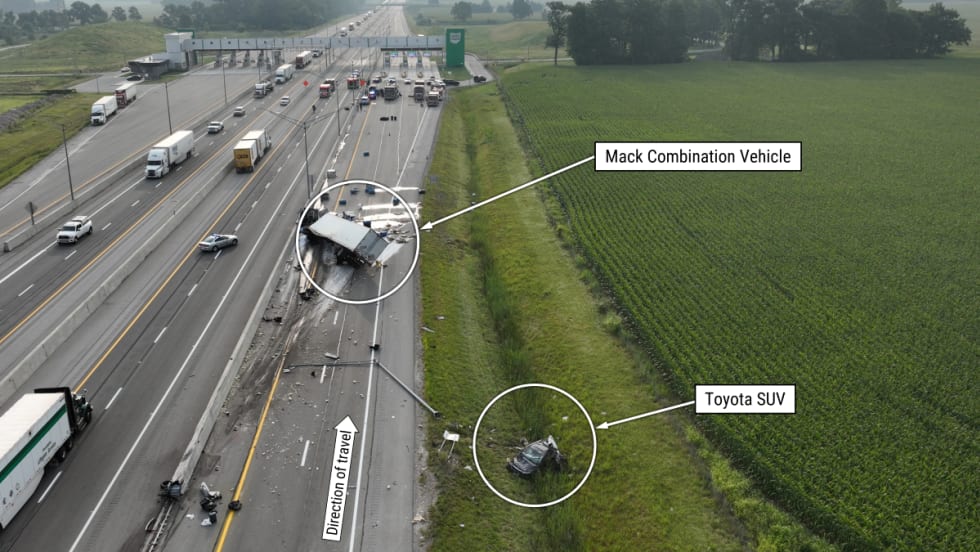
Fatal Crash Exposes Toll Plaza Risks
An NTSB investigation found that last-minute lane changes and large speed differences at an Ohio toll plaza created a hazard the truck driver couldn't avoid in time.
Read More →

When Language Stops the Truck: The Return of ELP Out-of-Service Orders
English language proficiency rules for commercial drivers aren’t new, but renewed out-of-service enforcement has raised the stakes. Here’s what carriers need to know before a driver reaches a roadside inspection.
Read More →
Sponsored•October 6, 2026
A Camera Isn't a Safety Program. Here's What Brokers Are Screening for Now
Footage alone may not be enough to pass broker vetting processes. Here's what counts as a defensible safety program now.
Read More →
Marijuana and Trucking’s Drug-Testing Dilemma
Marijuana is getting stronger, laws are changing, and drug tests still can’t reliably establish impairment. What does that mean for truck drivers and the fleets that employ them?
Read More →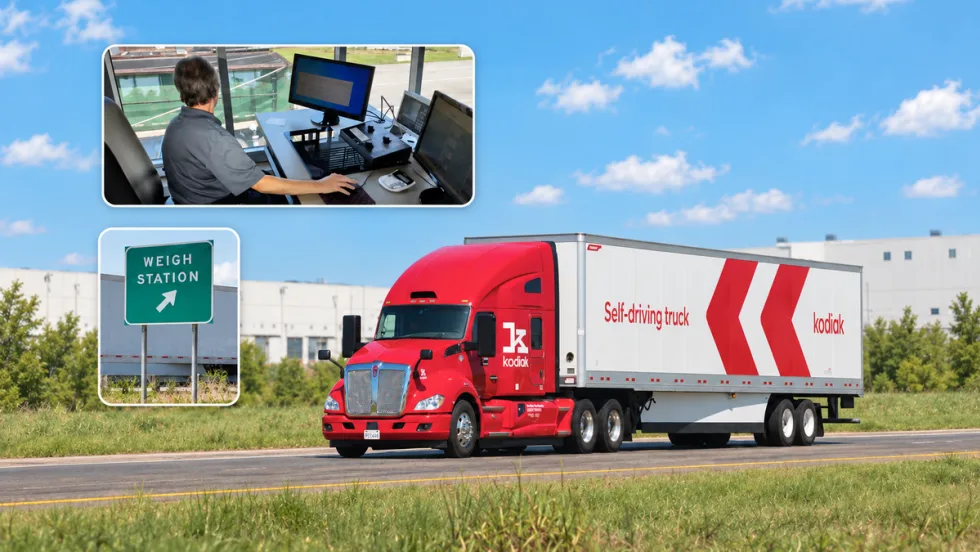
PrePass, Kodiak Connect Driverless Trucks to Roadside Enforcement
The system will allow enforcement agencies to verify Enhanced Inspection information and decide whether Kodiak’s autonomous trucks can bypass roadside screening sites.
Read More →
From One Generation to the Next: How Mentorship Builds Safer Truck Drivers
After three decades in trucking, Harold Perry shares what he's learned about driver safety, mentorship, and helping the next generation build confidence behind the wheel.
Read More →
FMCSA Pauses Biennial-Update Enforcement Amid Motus Transition
Carriers whose updates were due on or after June 1 have more time, while FMCSA works to stabilize its new registration system and warns of phishing sites impersonating its new carrier registration system, Motus.
Read More →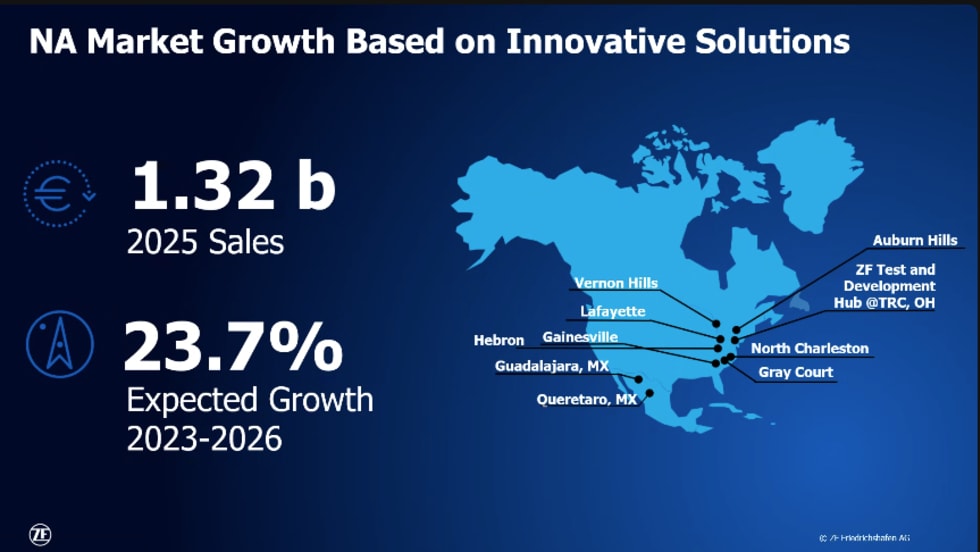
ZF Expands Commercial Vehicle Push in North America
ZF is expanding its North American commercial-vehicle presence with new transmission applications, electrification, trailer technology and autonomous-driving systems.
Read More →