





Related: OOIDA ELD Exemption Denied
Lawmakers Seek to Expand Hours-of-Service Exemptions for Agricultural Commodities
A newly introduced Senate bill and its reintroduced House version together amount to a solid push by agricultural interests to in effect exempt a larger number of haulers of farmed products from federal hours-of-service rules.
July 3, 2019
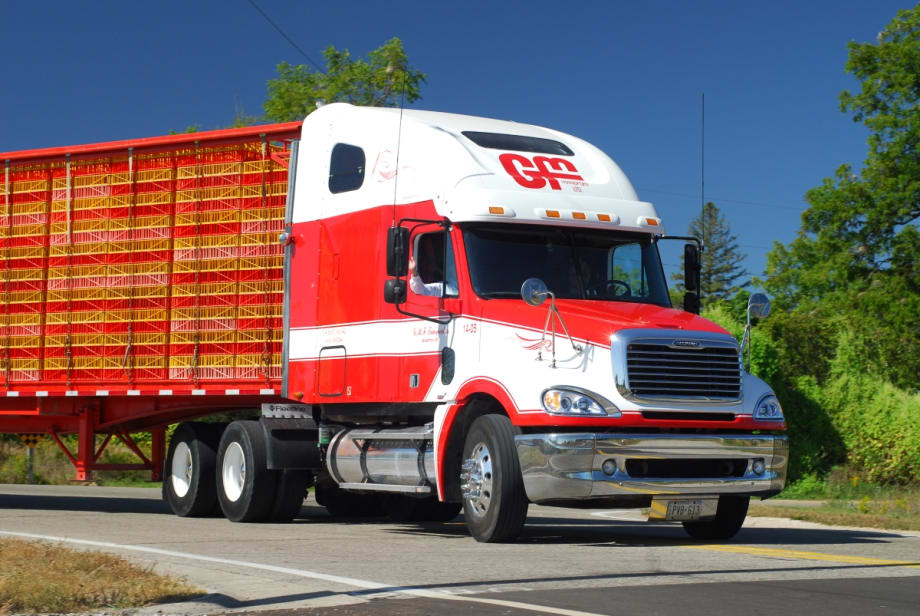
While the measures have not yet drawn support from major trucking lobbies, among the sponsors of the twin bills are heavy-hitters on committees charged with riding herd on agricultural policies on Capitol Hill.
Photo: Jim Park
3 min to read
A newly introduced Senate bill and its reintroduced House version together amount to a solid push by agricultural interests to in effect exempt a larger number of haulers of farmed products from federal hours-of-service rules.
Both measures seek to expand the definition of “agricultural commodity” so that motor carriers hauling such products can claim exemption from complying with federal hours-of-service rules as well as the attendant electronic logging device mandate.
While the measures have not yet drawn any support from major trucking lobbies, among the sponsors of the twin bills are heavy-hitters on committees charged with riding herd on agricultural policies on Capitol Hill.
The Senate proposal is companion legislation to the bipartisan Agricultural Trucking Relief Act (H.R. 1673) reintroduced in the House in March by Rep. Austin Scott (R-GA), as it had failed to move forward in the last session of Congress. That measure has been referred to the Subcommittee on Highways and Transit, which has yet to take it up.
Rep. Scott, who sits on the Agriculture Committee, said in a press release on his bill that H.R. 1673 would “more clearly define ‘agricultural commodities’ as applied to transportation laws, extending regulatory relief for all farm commodities including aquaculture, floriculture, and horticulture.”
“Transportation carriers are vital to the movement of goods and services from coast to coast and everywhere in between, and our farmers depend on them to ensure that we are able to feed and clothe not only our country, but the world," he said.
The Senate version of the Agricultural Trucking Relief Act was introduced on June 27 by several sponsors, Republican as well as Democratic.
“American truckers play a key role in transporting agricultural goods across the country, so they shouldn’t have to navigate confusing shipping regulations,” said one of the sponsors, Sen. David Perdue (R-GA).
“Right now,” he continued, “certain crops, animals, and other farm products that are considered an ‘agricultural commodity’ are treated differently the minute they are put on a truck. That makes no sense. This bipartisan bill will clarify the trucking rules, so agricultural products can be delivered further and faster.”
Sen. Jeff Merkley (D-OR), another co-sponsor and Ranking Member of the Appropriations Subcommittee on Agriculture, made a common-sense argument for why the bill is needed. “Small business operators, especially those shipping products that require immediate delivery— like flowers and trees— should not be in the dark about which shipping regulations apply to them. Yet confusingly, some goods that are recognized by the U.S. Department of Agriculture and the Environmental Protection Agency as ‘agricultural commodities’ are not eligible for the same transportation exemptions as other agricultural products.”
Sen. Cindy Hyde-Smith (R-MS), who is a member of the Senate Agriculture Committee, was even more specific as to the whys and wherefores of this legislation: “We need this bill to clarify which trucking rules apply to certain agriculture commodities. For example, our [Mississippi] catfish producers are held to different standards once their product is loaded onto a truck for shipping. This is an unnecessary federal burden that needs to be fixed.”
Commonsensical as the proposed legislation may be, it is doubtful that a Congress that right now is moving few bills of any sort forward will fall all over itself to get this one passed.
More Safety & Compliance

From One Generation to the Next: How Mentorship Builds Safer Truck Drivers
After three decades in trucking, Harold Perry shares what he's learned about driver safety, mentorship, and helping the next generation build confidence behind the wheel.
Read More →
FMCSA Pauses Biennial-Update Enforcement Amid Motus Transition
Carriers whose updates were due on or after June 1 have more time, while FMCSA works to stabilize its new registration system and warns of phishing sites impersonating its new carrier registration system, Motus.
Read More →
ZF Expands Commercial Vehicle Push in North America
ZF is expanding its North American commercial-vehicle presence with new transmission applications, electrification, trailer technology and autonomous-driving systems.
Read More →
Truck Drivers Need More Than Another Alert
Fleets have more visibility into truck health, safety events, and driver activity than ever. The next challenge is turning all that information into useful guidance for the person who has to decide what to do next.
Read More →
Tesla Wants a Self-Driving Semi. Are Cameras Enough?
Could Tesla’s camera-only autonomous driving technology work on an 80,000-pound Semi? In this commentary, HDT's Deborah Lockridge takes a look at Tesla, Cybercab, and how autonomous trucks see the road.
Read More →
What DOT’s Automated Vehicle Strategy Means for Trucking
The U.S. Department of Transportation issued a new automated-vehicle strategy that outlines plans for driverless-truck regulations, cross-state freight corridors, and federal safety standards.
Read More →
NYC Expands Speed, Pedestrian Safety Tech Across Fleet
New York City is expanding intelligent speed assistance and pedestrian-alert systems across its municipal fleet, moving the technologies from pilot programs into vehicle procurement and retrofit requirements.
Read More →
FMCSA Removes 110 Truck Driver Training Schools from Certified ELDT List
Federal regulators also are targeting more than 160 additional training providers and launching a nationwide audit of third-party CDL skills testers as part of a broader crackdown on trucking fraud.
Read More →
Beyond DOT Compliance: What Makes a Trucking Fleet Truly Safe?
A trucking fleet can follow every rule and still make unsafe decisions. The real test comes when safety conflicts with freight, productivity, or cost.
Read More →
Hours of Service Pilot Programs: FMCSA Readies for 2027 Rollout
Two pilot programs could eventually reshape hours-of-service rules, giving truck drivers options to pause their 14-hour clock or use longer split sleeper rest periods.
Read More →