





Related: ATA's Freight Forecast Projects Growth for Trucking
FTR’s Trucking Conditions Index Reflects Pro-Carrier Environment
FTR’s Trucking Conditions Index spiked in July reflecting the pro-carrier freight environment that is likely to remain throughout 2018.
September 24, 2018
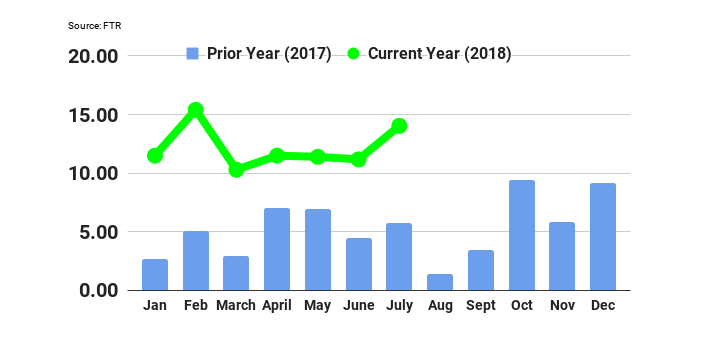
FTR’s Trucking Conditions Index for July, at a reading of 14.04, reflects the strongest conditions the industry has seen since early 2004.
Source: FTR
2 min to read
FTR’s Trucking Conditions Index spiked in July reflecting the pro-carrier environment that is likely to remain throughout 2018.
July’s TCI jumped from 11.18 in June to 14.04 in July, hitting the second highest point for the year and one of the highest readings since 2004, according to FTR. February’s TCI saw an all-time high reading of 15.05. For comparison, the July 2017 TCI reading was 5.75.
The Trucking Conditions index tracks changes in the U.S. truck market related to freight volumes, freight rates, fleet capacity, fuel prices, and financing and combines the metrics into a single score. A positive score reflects good conditions for trucking while a negative score represents bad conditions. FTR uses the TCI to show the industry’s health at a glance.
July’s TCI is likely to be the last high point for 2018 and FTR expects the TCI to moderate for the rest of the year. Manufacturing, construction, and retail sales all remain strong and are key freight generators. If holiday retail sales beat expectations, FTR could revise its outlook upwards.
“Carriers might not see stronger conditions in the current cycle, but they shouldn’t lose too much sleep over it,” said Avery Vise, vice president of trucking at FTR. “We expect the TCI to remain in double-digit territory into 2019. With manufacturing and construction hot and the labor market tight, it would be very difficult for capacity growth to outstrip freight demand for quite some time.”
FTR publishes the details of each Trucking Conditions Index in its most recent issue of the FTR Trucking Update.
More Fleet Management

Kodiak Lines Up Fleets for Driverless Trucking
An agreement for 75 trucks, a new Texas freight lane, and progress on safety validation move Kodiak closer to its planned driverless highway launch.
Read More →
ITS Logistics Settles Religious Harassment Case
The Nevada-based logistics firm agreed to pay more than $396,000 to settle a religious harassment charge involving an employee's Jewish identity.
Read More →
Your Trucks Are Busy. That Doesn’t Mean They’re Winning.
High utilization doesn’t always mean strong margins. Looking beyond the current load can help fleets make better dispatch decisions and get more value from each truck’s time.
Read More →
Why This Trucking Recovery Is Different
Freight demand remains sluggish, but rising costs and tougher enforcement have taken enough capacity out of the market to change the outlook for motor carriers.
Read More →
Platform Science Adds Dispatch and Safety Tools
Four additions to PS Fleet help fleets monitor loads, manage driver coaching, share truck locations and adjust video system settings.
Read More →
PrePass Intelligence Mines Fleet Bypass, Toll and Safety Data
PrePass Intelligence helps fleets measure bypass savings, flag potential toll overcharges, and spot suspicious transactions by combining data from separate systems.
Read More →
Motive Adds AI Agents for Fleet Operations
New tools automate follow-up on fleet data, from maintenance work orders to driver alerts, with two-way voice conversations planned for later this year.
Read More →
Can You Beat Our Trucking Trivia Challenge?
Test your truck knowledge with 19 trivia questions from Heavy Duty Trucking Exchange. Can you keep up with the fleet pros?
Read More →
BeyondTrucks Adds Rules Checks to Dispatch
New Compatibility Engine checks driver qualifications, equipment requirements and fleet policies before loads are dispatched.
Read More →
Diesel Prices Hijack Trucking’s Worry List
ATRI’s annual survey finds cautious optimism about freight, but diesel costs, litigation, and insurance continue to squeeze fleets. Drivers have different priorities on several issues.
Read More →