




How Trucking Fleets Are Dealing With a Hot Flatbed Sector
With a steadily improving economy and sectors such as manufacturing and construction going strong, many trucking companies are finding they have more freight than they have trucks to haul – but nowhere is that more true than in the flatbed sector.

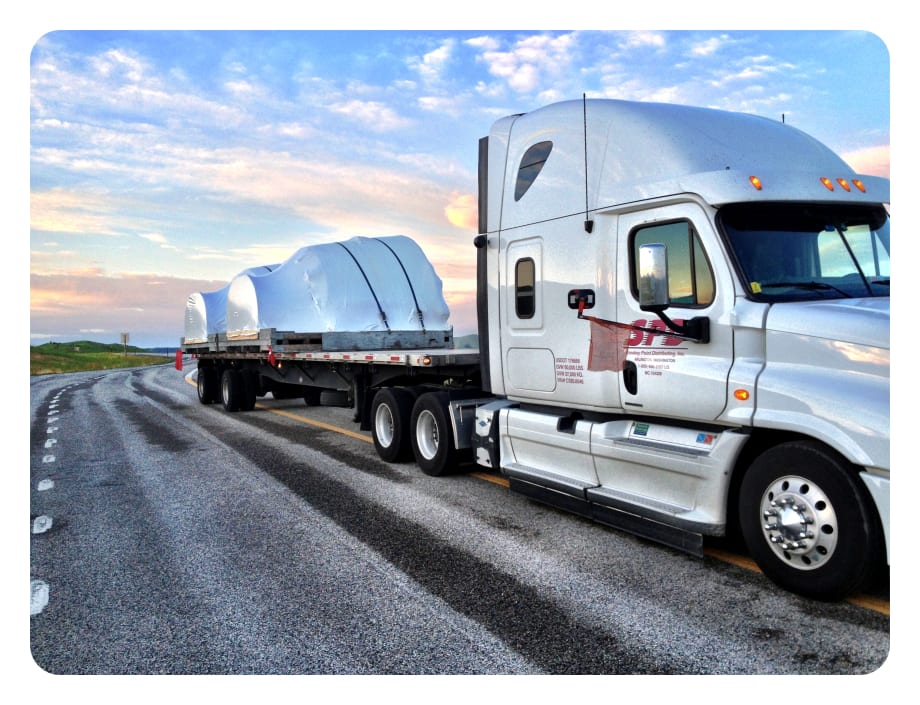
Smokey Point Distributing, a Daseke company, says the hot flatbed freight situation has forced it to become more efficient.
Photo courtesy Smokey Point Distributing
With a steadily improving economy and sectors such as manufacturing and construction going strong, many trucking companies are finding they have more freight than they have trucks to haul – but nowhere is that more true than in the flatbed sector.
“Volumes are definitely up; freight has surged. It’s extremely busy,” says Matt Cacace, chief operating officer of Smokey Point Distributing, a Daseke flatdeck carrier based in the Pacific Northwest hauling aerospace loads and other freight with about 250 trucks. He says it really started getting busy in late February or early March. “March and April have been particularly strong, and it has carried into May so far.”
For Covered Wagon Trucking, a small flatbed carrier in Georgia, “the flatbed market has gone nuts,” says President Gerald Stunkel. “My company covers the Southeast, and we somewhat have the perfect storm driving up rates.”
Jim Burg, owner of Michigan-based James Burg Trucking, handles a lot of automotive-related flatbed freight. “I’ll agree the flatbed sector is in good shape right now,” he told HDT. “I’d say about even with 2015. If 2016 and 2017 weren’t so depressed, this spurt wouldn’t look so good. Ask me in a year if this is a market, or a fad.”
Record flatbed spot rates, load ratios
Flatbed freight rates set another record in April, according to DAT Services, at $2.65 per mile including fuel, a 12-cent increase over the previous record in March. Flatbed rates were a full 58 cents higher in April than in the previous year. At 105.8 loads per truck, the ratio was 142% higher than in April 2017.
For the week ending May 12, flatbed load posts and rates dropped slightly, but the flatbed load-to-truck ratio was still 102 loads per truck. DAT’s load-to-truck ratio has been above 100 loads per truck for seven weeks in a row, meaning there are more loads posted on its load boards than there were trucks posted as available.
And according to FTR analysts, the hot flatbed market is likely to continue. In a recent State of Freight webinar, Avery Vise, FTR vice president of trucking research, called the flatbed sector “very hot,” noting, “we expect loadings to be up 7 to 9% year over year throughout the year, and the risk is for that to be higher.”
Vise said Truckstop.com’s Market Demand Index is overall in record territory, principally due to “unprecedented tightness” in flatbed. Vise reported that flatbed rates are up 45 cents a mile since the end of last year, while van and reefer freight are down from year-end highs.
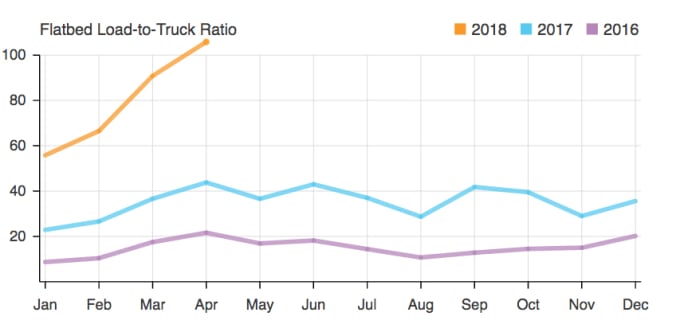
DAT's flatbed load-to-truck ratios are off the chart for April.
Things could soften by the end of the year, he said, as new trailer orders work their way through the system – assuming fleets can find drivers.
“Flatbed may be in a fairly extended period of being in a pro-carrier situation,” Vise said. For instance, rates per mile were up 10% for flatbed carrier Daseke Inc., according to its first-quarter financial report.
Why is flatbed freight on such an unprecedented ride?
“The core reason for the spike is an improving economy,” Burg says. “ I like to call it the Trump effect. The tax cuts are showing benefits to all, which improves executive and consumer confidence and increases their spending. And the cycle repeats.”
On the demand side, crude oil futures have doubled in the past couple of years, leading to a resurgence in domestic oil production and more need for transport of pipe and other oilfield necessities. Some flatbeds are even being used to transport frac sand and other materials usually carried by tanker.
In addition, Florida and southeastern Texas have been rebuilding from hurricanes last September, meaning a need for more building supplies in those areas. Construction and homebuilding are strong overall and will only increase now that milder weather has reached the northern parts of the country.
And the economy as a whole is doing well, meaning more demand for transport of the raw materials used to manufacture cars and other goods, as well as transport of final products.
Meanwhile, the driver shortage and the electronic logging device mandate have been conspiring to reduce capacity. “Many people think the ELD mandate is hitting flatbed hardest, because these carriers tend to lag in compliance,” Vise said.
Stunkel says the biggest factor is ELDs. “Flatbed companies struggle harder to attract drivers, so the increasing driver shortage is felt harder in this area.”
Burg agrees that drivers are a key sticking point. “We still have a long way to go to address the longer term challenges of creating a sustainable qualified driver pool,” he says. “Provided our customers don’t turn on us again, this will be a good start.”
How flatbed fleets are responding
Stunkel says he has transitioned one of his road drivers into a local driver. “We now have as many loads as possible preloaded so that our road drivers can drop and hook from our yard. Each road driver can get an extra one to two loads each week.”
Smokey Point’s Cacace says the situation has forced the company to get more efficient. The carrier has been working to develop ways to measure and reduce dwell time (the time between loads). “We had to become much more efficient in our planning,” for instance, assigning or preplanning loads well in advance.”
The company already enjoys a lower than typical driver turnover rate, Cacace says, and recently rolled out a new salary-based pay package that has been generating a lot of interest among potential driver recruits.
“And the customers are getting a little more diligent about their load tenders; they’re feeling the pinch too as to when they can get trucks.”
“We’re leveraging our own fleet really well, we’re using outside carriers through our logistics model, we’re in a time that’s as good as I’ve seen it in the trucking industry.” And he’s been in it for 38 years.
Note: This article has been updated to include Gerald Stunkel's title.
More Fleet Management

Color Match Smarter: Tools That Restore & Perform
For fleet managers and collision repair professionals keeping heavy-duty trucks on the road, getting the color right the first time isn't just about appearance — it's about efficiency, turnaround time, and bottom-line results. Discover how today's digital color tools are transforming the repair process from guesswork to precision.
Read More →
FMCSA Pauses Biennial-Update Enforcement Amid Motus Transition
Carriers whose updates were due on or after June 1 have more time, while FMCSA works to stabilize its new registration system and warns of phishing sites impersonating its new carrier registration system, Motus.
Read More →
2026 Blueprint for Countering Smarter Supply Chain Theft
Cargo theft is no longer just the cost of doing business. It's a multi-billion-dollar criminal enterprise exploiting vulnerabilities across your fleet, drivers, and supply chain.
Read More →


How Telematics Improves Visibility, Control, and Performance in Refrigerated Fleets
Explore how telematics help refrigerated fleets improve visibility, uptime, efficiency, compliance, and cargo protection across connected cold chain operations.
Read More →
What the U.S.-Canada Trade War Means for Trucking
Escalating U.S.-Canada tariffs could disrupt cross-border freight, reduce truck volumes, raise costs, and create new uncertainty for carriers on both sides of the border.
Read More →
What Are Trucking’s Top Concerns for 2026?
The American Transportation Research Institute wants to know what's worrying trucking fleet managers, drivers, and other stakeholders in its annual Industry Issues survey.
Read More →
American Trucking Associations Looks for a New Leader
ATA President and CEO Chris Spear abruptly left his job at the association on August 21, at a pivotal time for the trucking industry.
Read More →
Public Wi-Fi Cybersecurity Risks: How Truck Drivers and Fleets Can Protect Their Data
Public Wi-Fi can expose truck drivers and fleets to credential theft, malware, and other cyber threats. Here’s how to reduce the risk on the road.
Read More →
For Nicky Cupp, Fleet Innovation Starts With Frustration
HDT Truck Fleet Innovator Nicky Cupp turns everyday pain points at Fraley & Schilling into opportunities for better technology and smarter processes.
Read More →
Adam Buttgenbach’s Approach to Electric Trucks: Start With Where They Fit
HDT Truck Fleet Innovator Adam Buttgenbach helped PepsiCo build one of North America’s largest EV fleets by focusing on where electric trucks make operational sense.
Read More →