





Related from the HDT archives -- Finding and Keeping Drivers With The One-Two Punch: Pay & Respect (2014)
Finding and Keeping Drivers in A. Duie Pyle's Dedicated Fleet Business
A. Duie Pyle's Customized Solutions Group aims to take the headaches of running a private fleet off of customers' hands. We talked to the head of CSG to learn more about how it deals with the driver shortage.
June 17, 2016

Photo courtesy A. Duie Pyle.
4 min to read
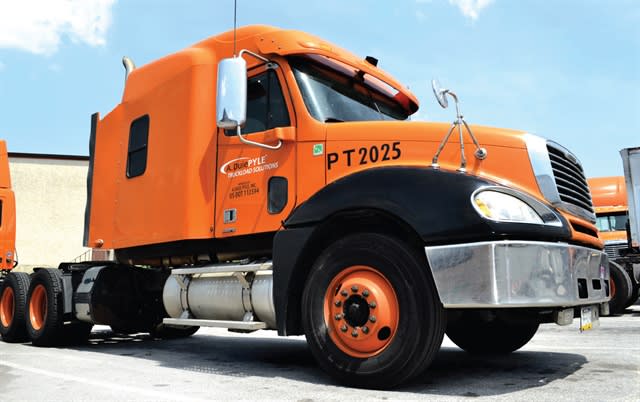
Photo courtesy A. Duie Pyle.
Two years ago, A. Duie Pyle, known largely as a less-than-truckload provider in the Northeast, launched its Customized Solutions Group. Essentially, CSG gives customers the benefits of operating a customized private fleet without any of the headaches of hiring, firing, insuring and maintaining their own fleet.
“When Pyle’s customers entrust us to handle part or all of their private fleet needs, they shift to us the responsibility for staying on top of constantly evolving DOT regulations, the significant risk of cargo and personal liability, and the costs and distractions of recruiting and retaining professional drivers,” said Keary Mueller, chief operating officer of the new CSG unit, in an announcement at the time.
We recently caught up with Mueller to talk about that last item – how does Pyle deal with the need to find and keep drivers?
Drivers and pay
Mueller says there always have been shortages that wax and wane as jobs such as home building compete with trucking for drivers. But a major culprit, he says, is pay and compensation, a topic he says he is passionate about.
“I’ve always believed the driver wage was way too low relative to the job they did,” he says. “If you’re a longer haul guy you’re not at home very often, or if you’re a P&D local driver, it’s a very physical job. It is a highly skilled job, it’s not unskilled labor, and frankly the industry suffers from pay.
“But you’re starting to see driver pay go up. When we’re looking at private fleet replacement, i know from my own deals, we’ve been pricing driver wages higher.”
When talking to customers about rate increases and the need to pay drivers more, Mueller says he asks them, “Look around – are you raising your children to be truck drivers? It’s not a profession people are getting into.”
“At the end of the day if you don’t have the driver, you don’t have the service.”
Another change is that in the past, long-haul truckload operations were the main area hit by driver shortages, but that has changed.
“If you go back to the 90s and even the early 2000s, that dedicated job or home every night job, the turnover in those sectors was low — you are seeing it creep up,” Mueller says. “Even if you’re home very night doesn’t mean the job’s not difficult. Our dedicated drivers here in the Northeast, it’s a tough row to hoe, and you throw in the infrastructure the weather, it’s a tough job. And I’ll go back and relate that to compensation. You have to make it worth people’s while to get into the business.”
How can fleets afford to pay drivers more? Mueller says when it comes to taking over operations for private fleets, Pyle is able to implement efficiencies that allow them to increase driver compensation.
In the world of small private fleets, "there’s quite a lot of opportunity related to inefficiencies,” he says. Maybe they have more equipment than they really need, or they’re still doing static routes instead of using dynamic routing software, or they don’t have the latest in in-cab communications, electronic logs, electronic confirmation of delivery, etc. A lot of this technology is beyond the reach of a small private fleet, he says, but Pyle is able to enjoy economies of scale.
“You’d better be efficient with what you have,” he says. “You’re not going to get a 5 or 10% rate increase to pass on to your drivers; you have to be more efficient.”
Beyond Pay

A. Duie Pyle's driver academy turns warehouse workers and others into CDL drivers. Photo courtesy A. Duie Pyle.
Pay, of course, is not the only factor in attracting and retaining drivers.
“From the private fleet perspective, it’s a combination of not just pay, not just compliance in regulation and quality of life. A lot of the private fleets we see – how can i put this politely – have equipment applications that aren’t necessarily the best to perform the job. Maybe they’re aged, maybe you’re susceptible to get pulled over and get a writeup on maintenance item as a driver.
"At times we are interviewing drivers who were driving for a private fleet, they’re concerned about driving conditions; do you have the right equipment that I can do my job safely. That’s something real important — people don’t want to put themselves into situations where they’re not confident the equipment is safe or is such that it would damage their CDL or their CSA record.”
In addition, many fleets say even with higher pay and good equipment, it’s still hard to find people to get into the business. A. Duie Pyle is one of a number of fleets that are “growing their own.”
For instance, it has its own driver training school. Top workers in warehouse operations and other areas can get their commercial driver’s license through the company. This year they expect to graduate about 100 drivers.
Subscribe to Our Newsletter
More Drivers

Platform Science Adds Dispatch and Safety Tools
Four additions to PS Fleet help fleets monitor loads, manage driver coaching, share truck locations and adjust video system settings.
Read More →
When Language Stops the Truck: The Return of ELP Out-of-Service Orders
English language proficiency rules for commercial drivers aren’t new, but renewed out-of-service enforcement has raised the stakes. Here’s what carriers need to know before a driver reaches a roadside inspection.
Read More →
Samsara Launches Custom AI Agent Builder
Agent Studio lets fleets create AI tools for hours-of-service monitoring, reporting and driver support, including agents that communicate by phone.
Read More →
Trucker Path Expands Reserved Parking Network
Trucker Path has added close to 6,000 more truck parking spaces to its Trucker Path Reserved Parking Network with the addition of Safe Truck Parking.
Read More →
EEOC Sues Texas Trucking Company Over Driver Age Limits
The agency says Trancasa USA rejected applicants over 65 and applied tougher driving-record standards to those over 60.
Read More →
Nussbaum, Roehl Announce Second Driver Pay Increase This Year
This year has seen a swath of major truck driver pay increases as freight capacity has tightened.
Read More →
From One Generation to the Next: How Mentorship Builds Safer Truck Drivers
After three decades in trucking, Harold Perry shares what he's learned about driver safety, mentorship, and helping the next generation build confidence behind the wheel.
Read More →
Truck Drivers Need More Than Another Alert
Fleets have more visibility into truck health, safety events, and driver activity than ever. The next challenge is turning all that information into useful guidance for the person who has to decide what to do next.
Read More →
FMCSA Removes 110 Truck Driver Training Schools from Certified ELDT List
Federal regulators also are targeting more than 160 additional training providers and launching a nationwide audit of third-party CDL skills testers as part of a broader crackdown on trucking fraud.
Read More →
Hours of Service Pilot Programs: FMCSA Readies for 2027 Rollout
Two pilot programs could eventually reshape hours-of-service rules, giving truck drivers options to pause their 14-hour clock or use longer split sleeper rest periods.
Read More →