




Outsourcing Your Tire Program
The service truck arrives at 8:30 Sunday morning, as usual. The two tire techs unload 16 freshly mounted and balanced, retreaded drive tires, eight new steer tires on reconditioned wheels, and a take-off drive tir

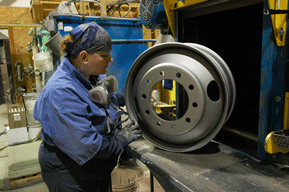
Many fleets keep a technician trained on wheel and tire procedures to look after the day-to-day work, but farm out the mounting and dismounting, retreading, etc. to a vendor. Photo by Jim Park.
The service truck arrives at 8:30 Sunday morning, as usual. The two tire techs unload 16 freshly mounted and balanced, retreaded drive tires, eight new steer tires on reconditioned wheels, and a take-off drive tire
sent out for a section repair the previous week.
One tech goes to work exchanging the steer tires while the other begins the yard check. Every tire in the yard will be inspected for damage and wear, pressure checked and re-inflated if necessary, and tread depths will be noted for wear analysis. A handheld data collector makes the chore easy and record keeping even easier.
Three trailer tires are marked for removal and repair. They'll be changed out before the crew leaves.
At 3:15, the last of the exchanged drive and steer tires are loaded on the truck, along with the three damaged trailer tires. The lead tech notes the time and presses send on the data recorder. He locks the gate and the pair heads back to the tire shop.
Just then, the fleet maintenance manager's Blackberry pings to alert him to an incoming email. He confirms that all the trucks and trailers in the yard have been serviced, 24 tires were replaced, and the rest pressure-checked and inspected. On Monday, he'll visit the tire vendor's Web portal to confirm the condition of the returned casings, and try to track down that missing drive tire, the one that was sent in for a section repair the previous week.
Tire management chores complete, the maintenance manager returns to the task of lining up a tricky putt for par on the rolling 16th green.
That little anecdote is fictitious, or course -- a composite of tales recounted during interviews for this article illustrating the advantages of outsourcing tire maintenance and management chores. Yet with the right service partner, tire management really can be that simple.
"Outsourcing your wheel/tire program is the best thing since sliced bread," swears Terry Clouser, former director of maintenance at UPS, retired and doing some consulting after 27 years, and one of HDT's Truck Fleet Innovators for 2011.
"It's the way to go for large and small companies," Clouser says. "Outsourcing reduces staffing needs along with a lot of the associated risk and exposure, and non-productive costs such as workers comp, possible OSHA citations, etc. It also reduces shop space, and the need for all that tire-related equipment."
Clouser says when you deal with a good tire service vendor, you also get expert service from trained technicians, assured pricing, consistency in the process and procedure, and rather importantly, recourse.
"If an in-house repair fails, you have no warranty recourse," he explains. "You eat the cost. You have warranty on work done by the tire vendor. Tire vendors do this work every day of the week. They are professionals. In-house people might do tires one day and change oil the next. Plus, the vendors are supported by manufacturers."
When outsourcing your tire and wheel service, you have the opportunity to set up a program that works for your fleet. You could, for example, opt for "tire management light," where the vendor does the heavy lifting, but you maintain a small tire inventory and do installs, rotations and the like. At the other end, you can go 100% into it and have the vendor deliver mounted tires, install them, do yard checks on a weekly basis, manage your retreading, and provide you with regular reports.
The folks at BWI Companies of Texarkana, Texas, hardly touch their tires anymore. BWI is a wholesale distributor of lawn and garden products running a fleet of 84 straight trucks and tractors and more than 100 trailers, serving 15 states from eight distribution centers. They buy all their tires from Heintschel Tire of Texarkana, and not long ago, they began outsourcing most of their tire and wheel service to Heintschel.
"They do all of our retreading and wheel refurbishing at their facility in Texarkana, and they look after all the tire service for the corporate office," says BWI CEO Robert Bunch. "We move the tires around on our intercompany moves, and our distribution centers do some of their own tire service, and they outsource some."
Heintschel runs all of BWI's equipment through the shop every week. Their techs check pressures and tread depth, and provide complete fleet analysis every week, including reports of all tire damage.
"We try to stay on top of that sort of thing so we can go back to the DC and try to find out why it happened," Bunch says. "We try -- and usually do -- get three caps out of a casing. Most of our casings are in service for about seven years."
BWI is a regional fleet, with trucks run 70,000-80,000 miles a year. They replace drive tires about every two years (150,000 miles) and steers last about 18 months. Bunch describes the environment as a high-scrub application that's tough on tires.
"Before we got onto this maintenance program, most of our drive tires would not go past 100,000 miles," he says. "Since Heintschel has been doing our tire maintenance and inspections, our steers have gone from 50,000 to 120,000 miles. That's double the life because of thorough maintenance."
Scott Gray, maintenance and breakdown manager of Paschall Truck Lines in Murray, Ky., is also a big proponent of outsourced tire maintenance. He looks at the skill and experience the vendors bring compared to what he could hope to hire and train locally.
"They are tire professionals," he says. "That's what they do best. I could probably get the work done cheaper internally, but I wouldn't have the expert opinion and problem diagnosis I get with a vendor."
Knowing that neither love nor money will encourage drivers to do pressure checks, and that under-inflation is probably the single biggest contributor to on-road tire failures, having weekly pressure checks done and records kept is a perfect countermeasure. The question is, at what cost?
Cost is a perennial concern, but tire maintenance is a value proposition. What do you get for what you pay?
Michelin's Bill Guzick, vice president of business development for Michelin North Americas Truck Tires, says it's hard to find cost savings in tire maintenance because regardless of who is doing the work, the costs won't be that different.
"The value lies in relieving the fleet of that one challenge and leaving more resources to focus on the operation," he says. "The other benefits are less tire-related downtime and fuel savings."
Done effectively, a tire and wheel program should all but eliminate maintenance-related failures such as leaky valves, under inflation, tire wear related to poor mounting, etc. And as Clouser pointed out, you have recourse and warranty when someone else is responsible for shoddy work.
Michelin's Commercial Service Network will build customized maintenance programs with fleet-specific service manuals outlining maintenance and service protocols technicians must follow when servicing that particular fleet. The beauty of that, of course, is that your tires are serviced to your standards, and you decide what level of care and attention you are willing to pay for.
The tracking and reporting component can be a valuable offering, too. If you're not currently tracking tires due to the complexity or the cost of collecting the data, tire service vendors, which have developed their own efficiencies, can gather data and present reports that can prevent tire wear by identifying problems and do brand-to-brand comparisons so you can optimize your tire buy.
Paschall's Gray also credits Goodyear FleetHQ with relieving his dispatch and breakdown coordinators of the burden of managing on-road problems.
"It keeps my people off the phone," he says. "We know the situation is being managed, and we're kept in the loop, but we don't have to participate in the event."
Wi
More Maintenance
New Agentic Predictive Maintenance Report Demonstrates How Degraded Aftertreatment Systems Waste Fuel
Questar analyzed a large mixed-class fleet and discovered it was wasting as much as $30 in fuel per vehicle, per day, because of mechanically degraded aftertreatment systems.
Read More →
Mack, Volvo Issue ‘Do Not Drive’ Recall on Possible Wheel-Offs
Owners will be sent advance notice not to operate their affected vehicles until the remedy is performed.
Read More →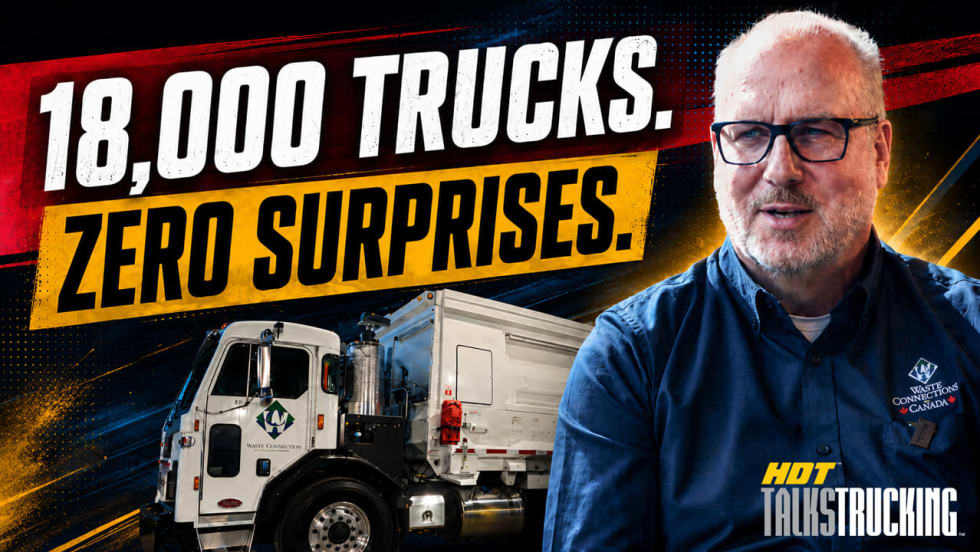
Why Fleet Data Matters More Than Ever at Waste Connections [Watch]
Waste Connections' Chuck Palmer explains how telematics, predictive maintenance, safety analytics, and AI help keep vehicles on the road and drivers safe in this episode of HDT Talks Trucking.
Read More →
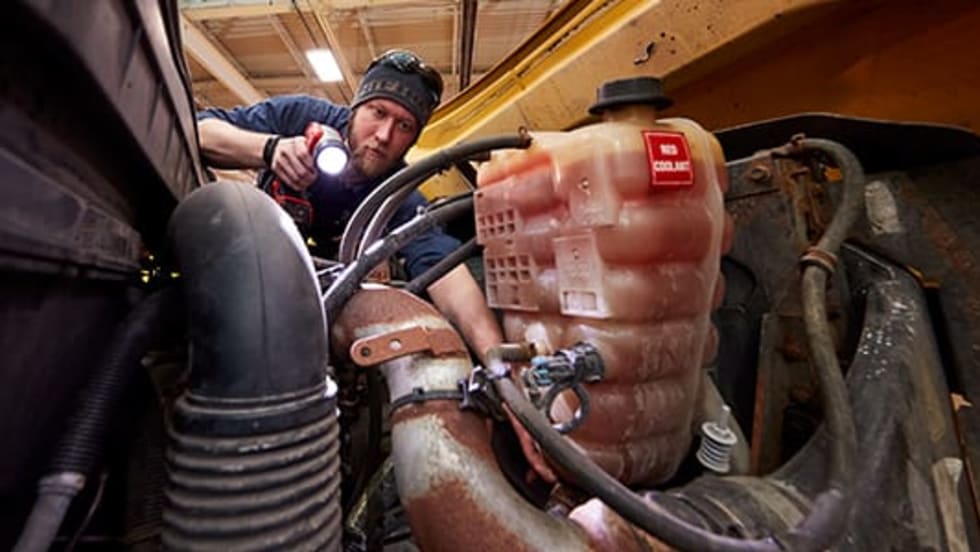
How to Prevent Summer Truck Cooling System Failures
Summer heat puts heavy-duty truck cooling systems under intense strain. Learn how preventive maintenance and accurate repair information can help reduce downtime.
Read More →
Deadline Extended for HDT Truck Fleet Innovators Nominations
Heavy Duty Trucking has extended the deadline for nominations for its Truck Fleet Innovators awards. The deadline has been extended to May 22.
Read More →
Why VMRS Is the Natural Link Between AI, Predictive Analytics, and Vehicle Repairs [Commentary]
Jon White was a leading figure in the development of VMRS. Now, after five decades of service, White says VMRS is becoming essential to the AI-driven future of truck maintenance.
Read More →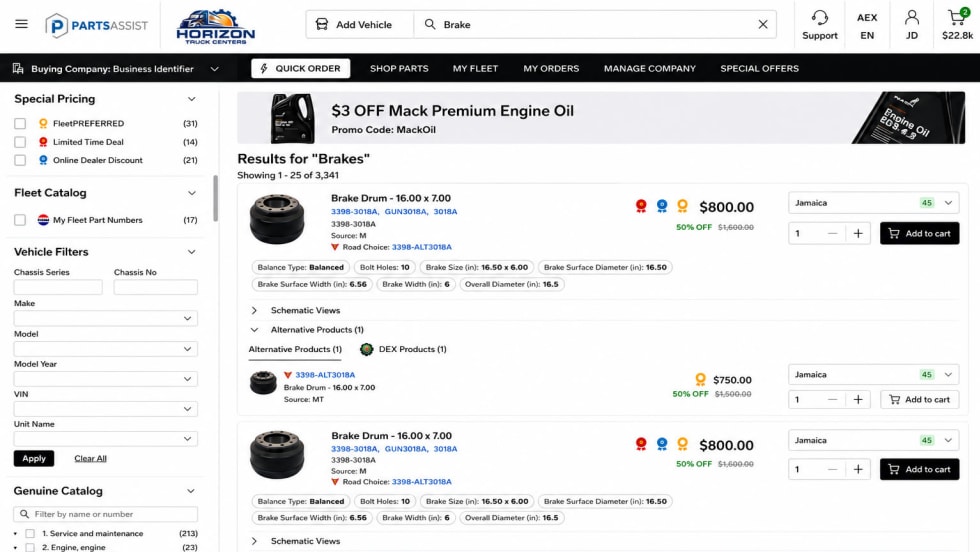
Mack Trucks Revamps PartsASIST Platform with Faster Performance, Improved Navigation
Mack Trucks has launched a redesigned version of its PartsASIST online ordering platform, adding faster search, real-time inventory visibility and enhanced order tracking.
Read More →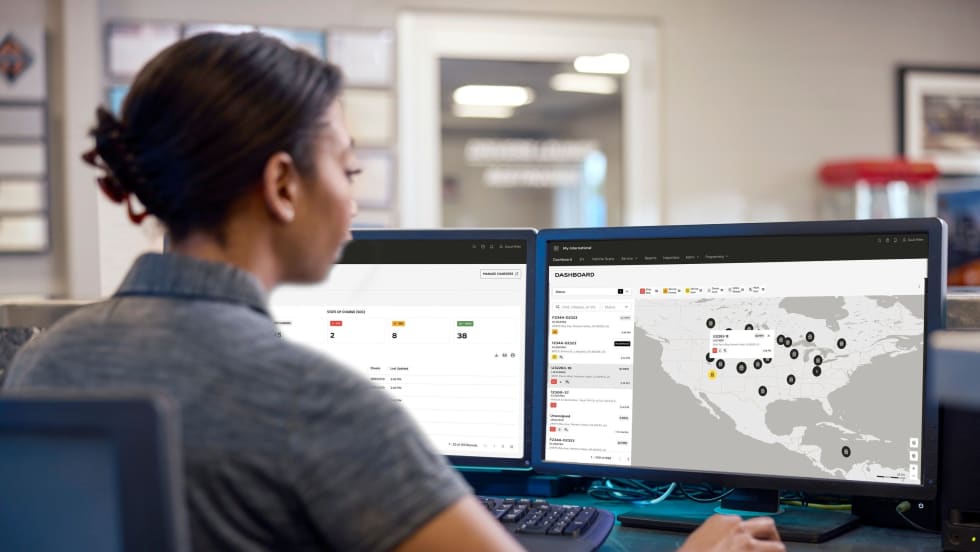
International Debuts ‘My International’ Connected Platform to Centralize Fleet Data, Service, and Dealer Communication
International’s New digital ecosystem unifies telematics, maintenance, and dealer interaction into a single interface, aiming to reduce downtime and deliver predictive fleet insights.
Read More →
Saving Fuel at the Wheel End
Wheel ends are often overlooked in the quest for better fuel economy. But Joshua Kucera, product manager, Stemco, warns that neglecting wheel ends can reduce fuel economy and increase maintenance headaches.
Read More →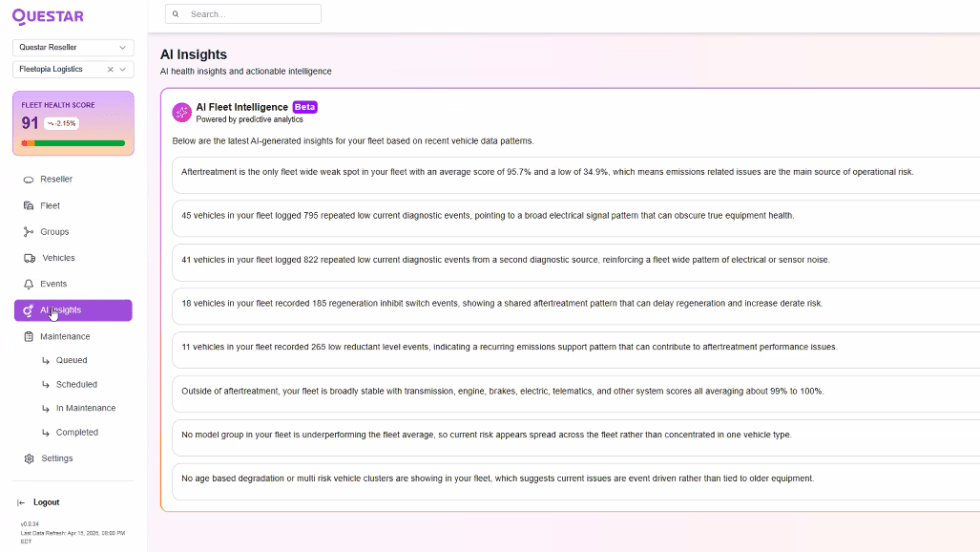
Beyond Predictive: Questar Adds AI-Driven Repair Recommendations to Fleet Maintenance
Questar’s latest maintenance platform uses AI to flag potential failures, recommend repairs, and estimate the cost of waiting, helping fleets prioritize maintenance and save money and downtime.
Read More →