




"This business has absolutely nothing to do with trucks. Who you hire is the most important decision you're ever going to make."
'Making it Work' Key to Dedicated Fleets Success at Cardinal Logistics
All trucking is competitive, but the corner occupied by Cardinal Logistics Management Corp. is particularly tough. Find out why Cardinal's Vin McLoughlin is a 2011 HDT Truck Fleet Innovator.
by Oliver Patton
May 2, 2011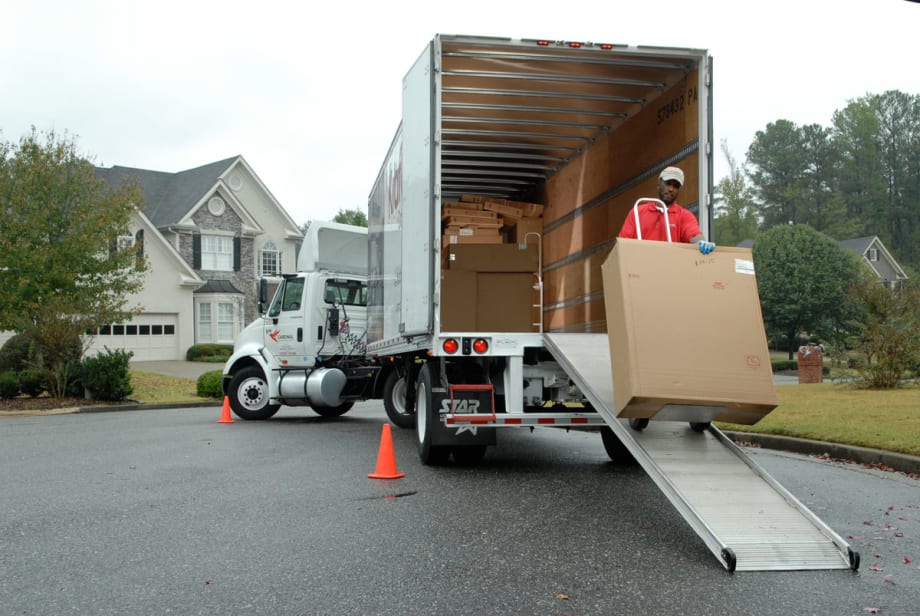
McLoughlin says drivers are the most important part of the team. They have to interact personally with customers, a key feature of the dedicated business.
Photo: Cardinal
7 min to read
All trucking is competitive, but the corner occupied by Cardinal Logistics Management Corp. is particularly tough. Cardinal's dedicated logistics business calls for a highly customized, hands-on, top-level service that few can provide, says industry analyst John Larkin. There's not a lot of room for failure in customer relations, he said.
Or, as Cardinal Chairman Vin McLoughlin puts it, "We try and do the hard stuff."
McLoughlin recounts getting a phone call from a customer who wanted him to know that Cardinals' chief information officer, Clay Holmes, was out on the dock, crawling over skids and scanning boxes.
"The guy said, 'that doesn't happen.' I said, 'Well, he grew up doing that and that's how you make sure it works.'"
Roadway Docks and Banana Boats
McLoughlin, who with his team founded and has directed the growth of Cardinal's $300 million business over the past 14 years, grew up in the trade. His dad was a traffic manager for Arrow shirts, and he started working around trucks in his hometown of Troy, N.Y., at age 14. Roadway docks and banana boats were where he earned his spending money and learned how trucking works.

Cardinal's Vin McLoughlin is an HDT Truck Fleet Innovator for 2011.
Photo: Cardinal
Making it work is one cornerstone of Cardinal's approach.
"If it's just banging docks, that's a fungible skill," McLoughlin says. "But if it's hard and there's a technology piece to it, we think we've got technology that will rival anybody in the industry."
The hard stuff might include providing real-time status information in 6-minute increments, an order management system, dynamic route monitoring, tracking refrigerated trailer temperature before and after delivery, integrating a logistics management system or providing any of a dozen other services to a customer — and then providing a different cluster of services to another customer.
"It's unbelievably customized," McLoughlin says.
Cardinal's customer base crosses a broad swath of U.S. industry, from retail, manufacturing and building products to automotive, food services and bulk transport. Among the familiar names: Eastman Kodak, Land O'Lakes, Office Depot, PetSmart and Kraftmaid Cabinetry.
Hiring Smarter People
Cardinal's edge in technology comes from many years of cultivating people and building in-house expertise — without reinventing stuff that others have already built.
"The only thing I've done right in my business career is hire people who are smarter and more capable than I am, especially in esoteric areas like technology," McLoughlin says.
He doesn't keep 300 code-writing MIT grads locked in the basement, he adds.
Cardinal starts with its own base systems and then finds systems that other people have developed that it can integrate into its own and customers' systems.
"The thing that we do best is how we build that connection with our customer's system."
An example would be Cardinal's home-built Dynamic Workflow system, which uses a handheld device to deliver to the driver a step-by-step procedure for fulfilling a customer's transportation requirements.
The data is all stored in a server, but it shows up on the device as a simple reminder or check-box that walks the driver through what needs to be done. Clay Holmes compares it to having a single universal remote with only as many buttons as you need, rather than one remote for the TV, another for the screen, a third for the cable box and another for the DVD player — each with a dozen or more buttons.
Dynamic Workflow, by the way, is the core of a new line of business Cardinal just launched. The software as a service, or SaaS, offers Cardinal's logistics software and service systems to other trucking companies. It launched six months ago and brought its first customer on early in February.
More than Technology
Technology may be the key to Cardinal's edge in the market, but McLoughlin ranks it third of three differentiators.
The first is trust, he says.
"There's a leap of faith that the customer has to make in this business. People put their jobs on the line when they make the decision to outsource. It's a game of who do you trust."
The second is execution. The technology has to work, it has to work early and at a reasonable cost, and it has to provide value, he says.
What ties it all together, McLoughlin says, is the team.
"This is a people business," he says. "This business has absolutely nothing to do with trucks. Who you hire is the most important decision you're ever going to make."
The Cardinal Management Team
Cardinal's key management people have been together for 20 or more years. McLoughlin's trucking resume includes stints at Roadway ("an unbelievable business college") and Ryder Truck Lines before grad school (Northwestern's Kellogg Graduate School of Management). He spent almost a decade at Ryder's dedicated services operation, then in the early 1990s was tapped to head J.B. Hunt's contract carrier services division. There, he and vice president Thomas Hostetler (now CEO of Cardinal) built a $175 million business over four years.
His next move was in 1997 when, as McLoughlin put it, a private equity firm out of Chicago, GTCR, bought his team a truckload carrier, Cardinal Freight Carriers.
CFC was a regional operator that did not have the scale to compete with the likes of J.B. Hunt, Schneider National or Swift Transportation. "But it was a very good fulcrum for us," McLoughlin recalls. "It paid the light bill as we began to grow dedicated." Eventually they sold CFC to Swift.
"We have grown the dedicated business with pretty much the same people we knew at Ryder, who followed us to Hunt and came over to Cardinal," he says.
Drivers: Most Important Part of the Team
McLoughlin says the company's truck drivers are the most important part of the team. Cardinal's business is not long-haul — routes go up to 250 miles out and back — so the company is able to get drivers home almost every night. But it does place high demands on drivers because they have to interact personally with customers, a key feature of the dedicated business.
Hiring a driver is a multi-million dollar decision, McLoughlin says.
"Putting a $10,000 ad in the Newark, N.J., paper isn't going to do you much. You don't want to hire the guy who doesn't have a job. You want to hire the guy who's had a long-term job, with very few companies and a long record of success, who has a sense of stability in his community and in his life. You want to get him home and let him see his son or daughter score the next soccer goal."
Customers have a say in gauging driver performance. Each account is asked to score its drivers, and the manager who hired the driver will see that score reflected in his bonus.
The company is in the process of linking pay to an account's CSA score — the new federal safety enforcement system going into effect this year. Scores are localized by store, rather than the overall account, and each manager is judged on his local operation, McLoughlin says. The company uses Vigillo to manage its CSA data.
Photo: Cardinal
McLoughlin, like many others, believes CSA is a game-changer for the trucking industry. And he likes that.
"The tighter you make the rules in terms of driver qualifications, the happier we are," he says. "We'd like to place a bet on us recruiting and training and retaining the right kind of guys. If it's tough, we like it. And it's the right thing to do. There's a moral imperative to have the right people on the road."
Cardinal suffered during the recession, as the housing collapse hit the building materials business hard, but McLoughlin sees some positives coming. "You feel that things are incrementally better. Customers are willing to talk about doing things now."
Converting Private Carriers to Dedicated Fleets
The company's opportunities going forward continue to lie in converting private carriers, he says. Many private carriers are doing an excellent job, he says. "You can make a sales call to a private fleet and in a short amount of time close your briefcase and walk out because they are doing all the right things."
But as their driver ppulation ages, private carriers come under increasing pressure to find the right drivers, he explains. "It's going to be a lot harder for them to find a young kid who fits the safety profile, the productivity profile that they had with their prior drivers."
That's a problem Cardinal thinks it can solve for potential customers. Still, it's not an easy sell. "The gestation period for a sell in this business approaches that of an elephant," McLoughlin says.
The trigger is often an event — a business circumstance that forces a company to cut back on transportation or add transportation services, or a bad accident.
"As you call on these private fleets consistently, nothing may happen for three to five years, and then an event happens. You want to be one of the folks they call, and when you get in there you want to be trustworthy and smart and experienced and bring something new in technology that they haven't been able to execute themselves. That's what will get you a sale."
Subscribe to Our Newsletter
More Fleet Management

Sponsored•September 16, 2026
Color Match Smarter: Tools That Restore & Perform
For fleet managers and collision repair professionals keeping heavy-duty trucks on the road, getting the color right the first time isn't just about appearance — it's about efficiency, turnaround time, and bottom-line results. Discover how today's digital color tools are transforming the repair process from guesswork to precision.
Read More →
FMCSA Pauses Biennial-Update Enforcement Amid Motus Transition
Carriers whose updates were due on or after June 1 have more time, while FMCSA works to stabilize its new registration system and warns of phishing sites impersonating its new carrier registration system, Motus.
Read More →
Sponsored•September 14, 2026
2026 Blueprint for Countering Smarter Supply Chain Theft
Cargo theft is no longer just the cost of doing business. It's a multi-billion-dollar criminal enterprise exploiting vulnerabilities across your fleet, drivers, and supply chain.
Read More →


Sponsored•September 1, 2026
How Telematics Improves Visibility, Control, and Performance in Refrigerated Fleets
Explore how telematics help refrigerated fleets improve visibility, uptime, efficiency, compliance, and cargo protection across connected cold chain operations.
Read More →
What the U.S.-Canada Trade War Means for Trucking
Escalating U.S.-Canada tariffs could disrupt cross-border freight, reduce truck volumes, raise costs, and create new uncertainty for carriers on both sides of the border.
Read More →
What Are Trucking’s Top Concerns for 2026?
The American Transportation Research Institute wants to know what's worrying trucking fleet managers, drivers, and other stakeholders in its annual Industry Issues survey.
Read More →
American Trucking Associations Looks for a New Leader
ATA President and CEO Chris Spear abruptly left his job at the association on August 21, at a pivotal time for the trucking industry.
Read More →
Public Wi-Fi Cybersecurity Risks: How Truck Drivers and Fleets Can Protect Their Data
Public Wi-Fi can expose truck drivers and fleets to credential theft, malware, and other cyber threats. Here’s how to reduce the risk on the road.
Read More →
For Nicky Cupp, Fleet Innovation Starts With Frustration
HDT Truck Fleet Innovator Nicky Cupp turns everyday pain points at Fraley & Schilling into opportunities for better technology and smarter processes.
Read More →
Adam Buttgenbach’s Approach to Electric Trucks: Start With Where They Fit
HDT Truck Fleet Innovator Adam Buttgenbach helped PepsiCo build one of North America’s largest EV fleets by focusing on where electric trucks make operational sense.
Read More →