




Et Tu Greece? Makes For Crazy Ride on the Fleet Fuel Express
Greece provided help last week to the fleet fuel markets helping drive down fuel costs by over $11 a barrel for crude oil and near 30 cents a gallon for diesel fuel

Greece provided help last week to the fleet fuel markets helping drive down fuel costs by over $11 a barrel for crude oil and near 30 cents a gallon for diesel fuel.
While the diesel fuel cost went down on the open market, at the retail station they actually went up another half cent a gallon, leading some to wonder why. We can tell what goes up fast, always comes down slow, especially in fleet fuel.
Transportation firms enjoyed seeing the crude oil prices die because they know in due time they will be seeing the benefits at the truckstop pump. Unfortunately, for almost everyone as crude oil went down so did everything else, including the stock market, taking a hit for almost 1,000 points at one period of time on May 6.
On Friday, May 7, I got to my office early expecting a very busy day with clients wanting to know about locking in fixed price contracts or anything else that they could do to take advantage of this market dip. I listened and watched (out my left eye) as they talked about how fast all of these trades were being made at one time and that there were problems with the trades. Investigation had already begun by Friday morning. A large chunk of the dip in the stock market that day had to do with computerized trading that have algorithmic trading plugged into the program to sell or buy if certain things happen. This can cause a real mess like we saw, especially if you owned Accenture and watched your stock fall to a penny.
The one interesting and very believable story from last Thursday was that some fat fingered trader mistakenly punched in the wrong number of shares, mis-typing billion instead of million, setting off a panic.
Many times during my fuel management career, I have written articles and have been a guest speaker about mistakes that are never caught in the fuel industry. It doesn't matter if you're buying bulk fuel, truckstop fuel, or mobile fuel, somewhere along the line someone's fingers had to enter or not enter something. In fuel, with so many transactions and such big numbers, it's easy for it to happen, so do you do fuel audits on all of your fuel purchases? Read on.
Friday begins about 7 a.m. with the phone ringing, with people asking for our fuel buying advice. I felt good that if you weren't covered by a hedge of some sort for the next couple of months, Friday was the day to do it. By 9 a.m., some of our clients had given us the approval to buy over 55 million gallons of fixed fuel pricing for them. This wasn't a couple of paper trades but wet fuel purchases across the entire country, one or two contracts at a time.
As midday arrives, I am having an issue with a fuel vendor to whom I gave a verbal approval to buy five contracts a month for 12 months or just over 2.5 million gallons of fuel at the best price he could buy it for. I get his price and in my mind his pricing is off by 10-13 cents a gallon. Since I had seen hundreds of trades that day, I knew how the fuel pricing was lining up throughout the country.
The fuel vendor insisted he was correct to the point, when he intimated that I could be having fuel buyer's remorse. He also forwarded the fuel purchase order from his supplier. I still knew there was an issue. I made calls; I sent e-mails. You name it, I did it.
The whole weekend I kept thinking about this and of course I kept our client informed of what was going on. On Monday morning, I received a call that says, 'Mr. Sokolis you're right and we were wrong. We had several keypunch errors that occurred during that period of time that we didn't even notice until you brought it to our attention.' Several! Several errors! Do you believe that this is a Fortune 20 company? The mistake they made on our client's contract was for only 11 cents but it was on 2.5 million gallons or $275,000 dollars. That is very real money. We brought it to their attention; did they bring it to all of their other clients' attention?
Make sure you fuel audit, and just think of the article I wrote a few weeks ago that listed all of things that can make diesel fuel costs go up. We never mentioned all of the things that can make diesel fuel costs go down. Let's be truthful: would you have really put Greece on your list?
Glen Sokolis is president of Sokolis Group, a nationwide fuel management and fuel consulting company, www.FuelManagementSokolisGroup.com. You can reach him at gsokolis@sokolisgroup.com or (267) 482-6160.
Previous installments of "Friday Fuel:"
* "Successful Fuel Management Program Equals Discipline", 9-11-09
* "Who's Watching Your Fuel Program," 9-18-09
* "Fleet Fuel Margins: Are You Paying Too Much?" 9-25-09
* "How Do You Audit Your Fleet Fuel Invoices?" 10-2-09
* "Fleet Fuel Price Negotiating: Details, Details", 10-9-09
* "Mobile On-Site Fueling", 10-16-09
* "The Bees Are Still Buzzing: Handling Fuel on a Daily Basis", 10-23-09
* "Fleet Fuel Card Shopping", 10-30-09
* "Is Your Fuel Management Ready for Winter?", 11-6-09
* "Don't Let the Weather Freeze Your Deliveries", 11-13-09
* "Fuel Management or Fuel Inventory? That is the Question", 11-20-09
* "Put Your Fleet Fueling Policy in Place For 2010, Part I", 12-4-09
* "Put Your Fleet Fueling Policy in Place For 2010, Part II", 12-11-09
* "Be Safe, Not Sorry With Fuel Management During the Holidays", 12-18-09
* "Looking Back: 2009 Fuel Management in Review", 12-23-2009
* "Oil's Ups and Downs", 1-8-2010
* "Why Oil Does What It Does When It Comes to Prices", 1-15-2010
* "Controlling Fuel Efficiency When Fuel Prices Are Unpredictable", 1-22-2010
* "The Motivation Behind Mobile Fleet Fueling", 1-29-2010
* "Fleet Fuel Prices: What are They Now?", 2-5-2010
* "Fuel Management Lost at Sea," 3-5-10
*
More Fleet Management

How Innovative Trucking Leaders Turn Change Into an Advantage
As the pace of change accelerates in trucking, the fleets that adapt best have more than the latest technology. They have cultures that embrace improvement.
Read More →
Freight Broker Bonds Just Got Harder to Get. Here's What That Means for Your Fleet.
When it gets harder for a freight broker to prove they are financially sound, the ones who cannot clear that bar get pushed out of the market. And those are exactly the brokers who used to leave motor carriers holding the bag.
Read More →
Long-Awaited Canadian Border Bridge to Open in Detroit
For trucking, the bridge opening should offer immediate improvements in efficiency and reliability, with new customs facilities, expanded inspection capacity, and direct freeway-to-freeway connections.
Read More →
Aurora Rolls Out Next Generation of Driverless Trucks for Commercial Freight
Aurora's latest autonomous trucks it's rolling out with International feature lower-cost hardware designed for a million miles as the company expands commercial driverless freight operations across the U.S. Sun Belt.
Read More →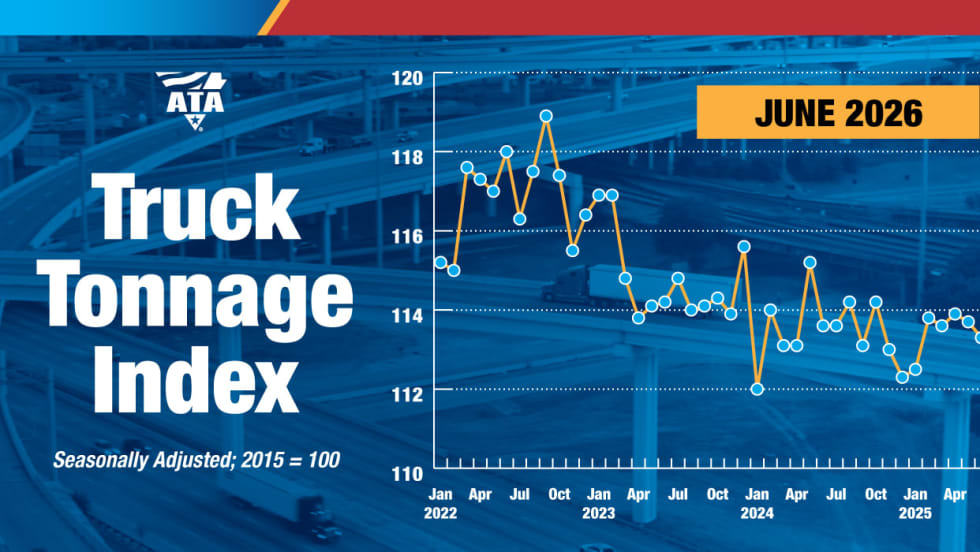
Freight Tonnage Down, Rates up, as Lower Capacity Powers Trucking Recovery
The recovery from the freight recession continues to be driven by reduction in capacity rather than by increased demand.
Read More →
Think Your Trucking Fleet Isn't Using Much AI? Think Again
Shadow AI — the use of unauthorized artificial intelligence tools at work — is becoming increasingly common, putting sensitive company data at risk. Learn how trucking fleets can protect sensitive data while embracing AI.
Read More →
ArcBest Consolidates Brands, Cuts Workforce
The company will bring three business units under the ArcBest brand, eliminate about 2% of positions, and expects the changes to generate $40 million in annual savings.
Read More →
Trucking Fleets Faced Record Operating Costs During Third Year of Freight Recession
ATRI's annual operational cost report shows carriers trimmed fleets, delayed equipment purchases, and ran older trucks as expenses continued to outpace freight rates.
Read More →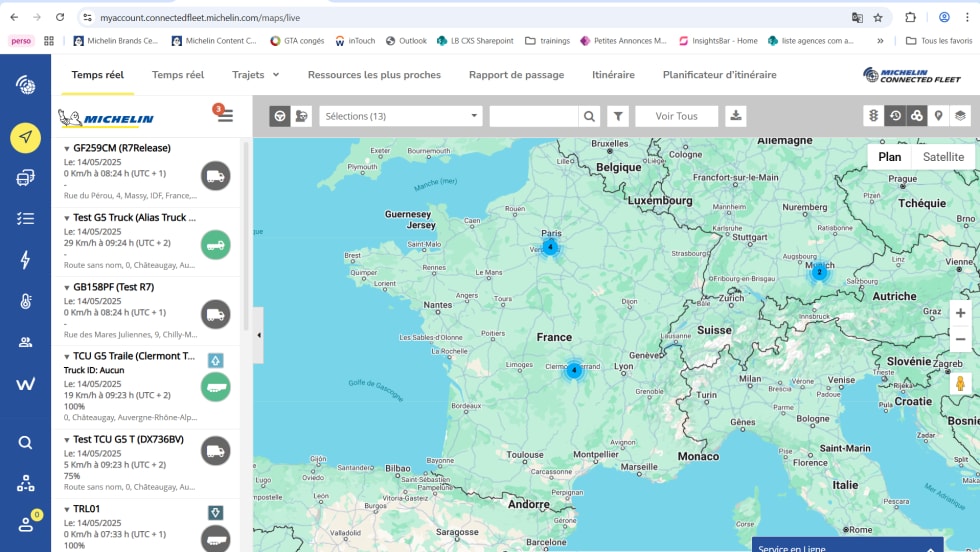
Michelin Adds AI Assistant to MyConnectedFleet Platform
Michelin’s new generative AI tool delivers instant fleet insights, helping managers analyze fuel use, tire maintenance, vehicle status, and operational performance without manually creating reports.
Read More →
LytxOne Platform Now Features AI, Compliance, and Asset Tracking Tools
New enhancements add AI-powered insights, asset tracking, compliance automation, and configurable privacy controls to Lytx's all-in-one fleet management platform.
Read More →