



Smith Electric Vehicles is returning to the U.S market after it announced an agreement to form a joint venture with FDG Electric Vehicles, a Hong Kong-based electric vehicle and battery manufacturer.
 MENU
MENU SEARCH
Smith Electric Vehicles is returning to the U.S market after it announced an agreement to form a joint venture with Hong Kong-based FDG Electric Vehicles.

Photo via Smith EV
Smith Electric Vehicles is returning to the U.S market after it announced an agreement to form a joint venture with FDG Electric Vehicles, a Hong Kong-based electric vehicle and battery manufacturer.
The purpose of the joint venture is to accelerate the electrification of commercial fleets in the U.S. market. The $35 million investment will bring together Smith’s Newton platform configuration and subsystems with the FDG all-electric commercial EV platform.
FDG will supply the lithium-ion batteries and kits ready for assembly, while Smith will be responsible for product development services, vehicle manufacturing, service and support.
Smith suspended production of its vehicles in 2013 amid reports that the company had lost $127.6 million in a three-year span.
Last year, Smith announced that it was getting a $42 million investment from Sinopoly Battery Limited so it could resume operations. Sinopoly was to be a strategic shareholder in Smith Electric and become Smith's supplier for batteries and certain other electric vehicle components.
According to the FDG website, Shanghai's Sinopoly Battery Research Center is one of its electric vehicle R&D centers, along with the Jasmin New Energy Electric Vehicle R&D Center.
Smith originally planned to resume production in its Kansas City, Mo., facility in mid-summer last year, but now says it restarted production of its Newton line in January.
“The reason for this transaction is simple: We believe the time is now for market acceptance of commercial electric vehicles,” said Byran Hansel, CEO of Smith Electric. “We are seeing all of the indications that the market that we helped establish has now turned the corner from the R&D phase to the commercial phase.”

In recent months, Smith and FDG have collaborated on a new commercial electric vehicle platform in the Class 3-4 medium-duty segment. The design will be offered in multiple configurations including cab/chassis, van, step-through van, and transit. It is being designed for applications such as postal and parcel delivery and people transit. Smith is also bringing its existing Newton platform in the Class 5-6 segments.
Smith restarted production of the Newton line in January and expects to scale up manufacturing operations in the U.S. over the next 18-24 months in conjunction with the launch of the new vehicle platform.
“FDG believes that the electric vehicle is the future mainstream of the global automotive industry and that’s why we are a pure electric vehicle company,” said Cao Zhong, executive chairman of FDG. “We deeply value our relationship with Smith and the formation of the joint venture represents the mutual recognition of each other’s technologies.”
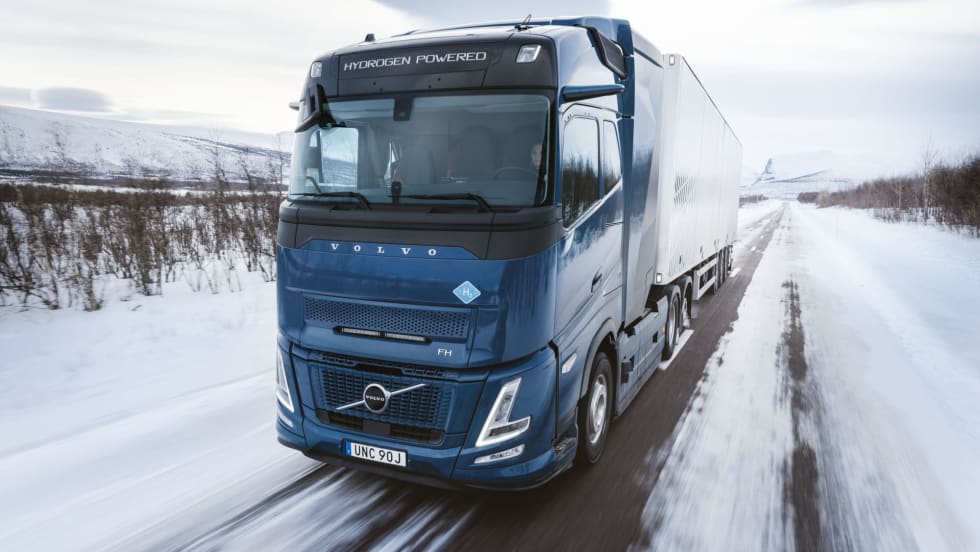
Hydrogen combustion engine trucks will be especially suitable over longer distances and in regions where there is limited charging infrastructure or time for recharging of battery-electric trucks, according to the company.
Read More →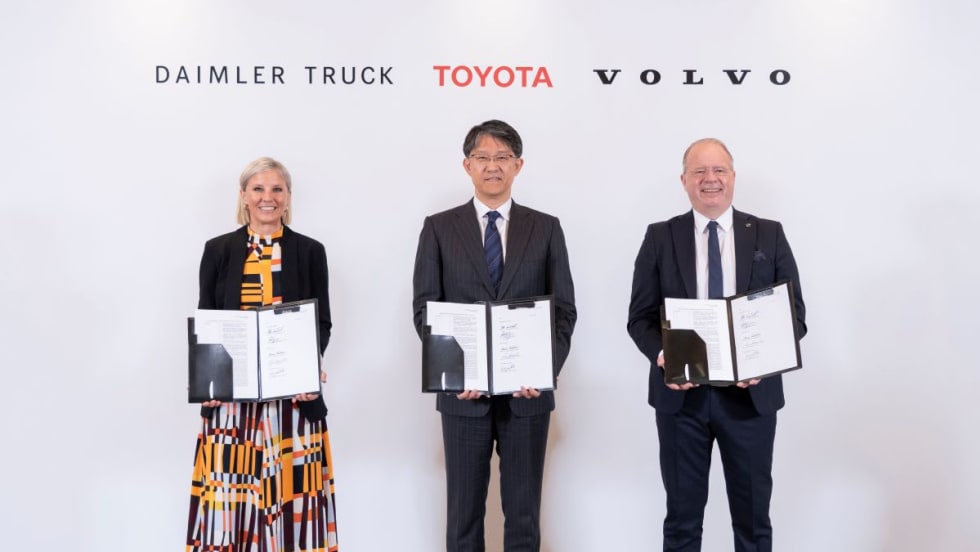
By joining Daimler Truck and Volvo, Toyota brings fuel cell expertise to a joint effort aimed at making hydrogen viable for heavy-duty transport.
Read More →
Trucking operators are slowing speeds, cutting empty miles, and declining unprofitable freight as diesel costs continue to rise due to conflict in the Middle East.
Read More →
New guidance allows engine makers to replace problematic DEF sensors with NOx-based systems, aiming to reduce unnecessary derates and downtime caused by failures in the sensors designed to monitor diesel exhaust fluid on trucks.
Read More →
Is your company a leader in sustainability efforts among trucking fleets? If so, Heavy Duty Trucking's editors want to hear from you.
Read More →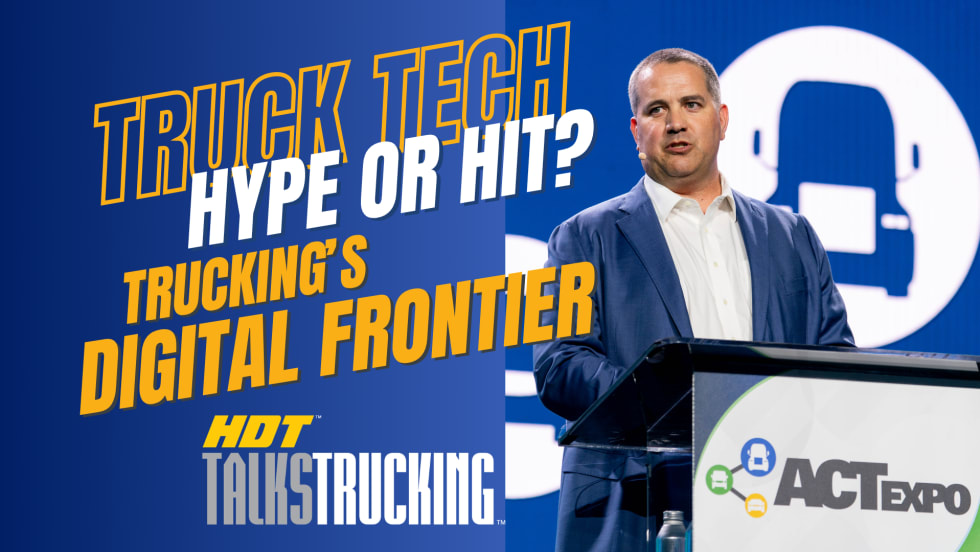
Artificial intelligence, the software-defined vehicle, telematics, autonomous trucks, electric trucks and alternative fuels, and more in this HDT Talks Trucking interview
Read More →With global oil flows disrupted, U.S. diesel prices have topped $5 across every region, climbing sharply in the past few weeks.
Read More →
The impact of the Iran conflict extends beyond fuel costs, bringing more fraud and cybersecurity risks to the trucking industry.
Read More →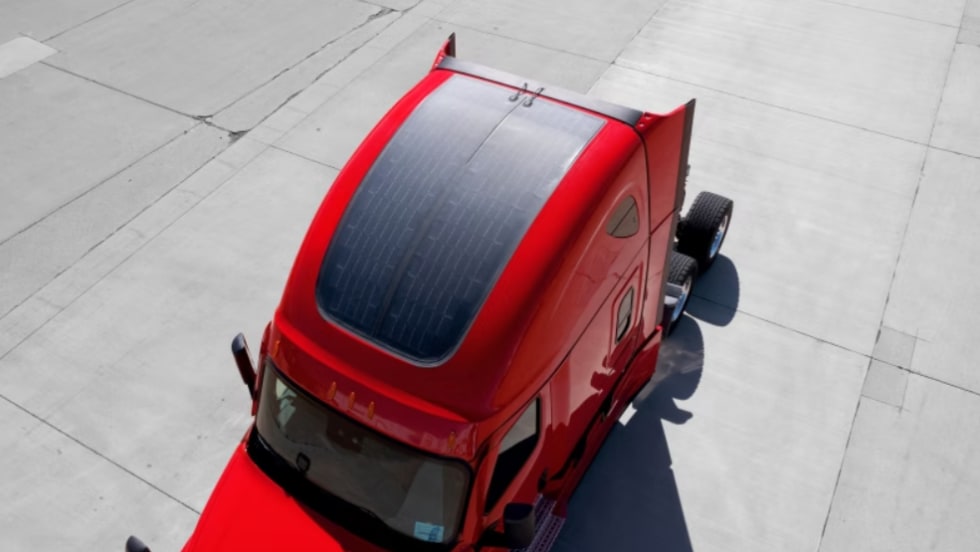
The company’s expanded EPEQ ecosystem includes flexible solar panels, lithium batteries, hydraulic power systems, and a portable fast charger for electric trucks.
Read More →
Listen as Mike Roeth of the North American Council for Freight Efficiency shares insights into battery-electric trucks, natural gas, biofuels, and clean diesel on this episode of HDT Talks Trucking.
Read More →