




Smith Electric Still Alive, CEO Says, But Phones Go Unanswered
Reports of Smith Electric Vehicles’ death may have been exaggerated. Published news stories quote the company’s president as saying it will restart operations in a few months with new financial backing, more efficient manufacturing and a revised line of battery-electric trucks.

Reports of Smith Electric Vehicles’ death may have been exaggerated.
Published news stories quote the company’s president as saying it will restart operations in a few months with new financial backing, more efficient manufacturing and a revised line of battery-electric trucks.
Bryan Hansel, Smith’s CEO, told the Kansas City Business Journal that he suspended production because the company was losing money. He said no assembly or support people were laid off, and the plant will resume assembling improved versions of Newton and Edison trucks by mid-summer.
While the company’s website remains active, the phones at its Kansas City, Mo., headquarters go unanswered and a spokesperson has been difficult to contact.
A report in the Canada Free Press said that Smith lost $127.6 million in 2009 through June 2012, and that it used most of a $32 million grant from the U.S. Department of Energy to build a total of 439 electric trucks by the end of 2013. That’s when the plant shut down, according to a disclosure to federal officials.
According to published reports, Hansel said Smith remains committed to its Kansas City plant as well as new assembly operations promised for Chicago and New York City under previously announced municipally backed electric-truck programs. Smith also has operations in Europe and Asia, and their status is not clear.
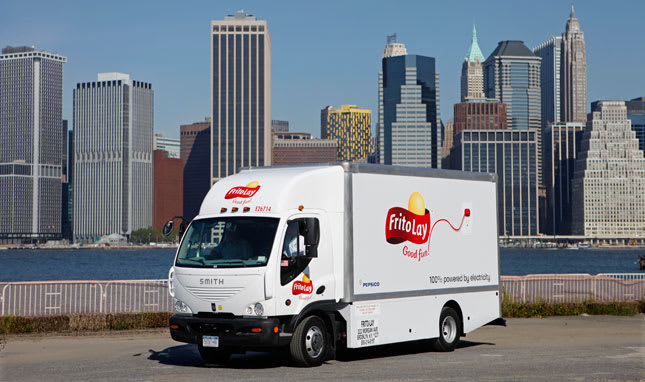
As the Journal of Commerce points out in an article, the problems don't seem to be the quality of the trucks; customers give them high marks. Smith’s Newton medium-duty battery-electric trucks are being operated by Staples, Frito-Lay and other commercial firms, as well as U.S. Government agencies.
It's not even the high price, JOC notes, as Smith claims fuel and maintenance savings of up to 70% over the lifetime of one of its vehicles.
The real problems, JOC reports, are its scale and its supply chain costs.
"We started out building 10 trucks a month,” Hansel told the JOC in 2012. “You can only attract certain providers at that volume,” he said. To reduce manufacturing costs, “you have to move from boutique to more mainstream suppliers."
We will continue to try to reach a Smith Electric Vehicles spokesperson and report more details as they become available.
More Fuel Smarts

How Volvo Updated Its D13 for EPA 2027 [Watch]
Volvo’s updated D13 promises lower emissions without sacrificing performance or fuel economy. Take a closer look at what changed inside the engine in this HDT Spotlight video.
Read More →
Diesel Price Spike Shortens Payback for Natural Gas Trucks, Report Says
Energy Vision estimates fleets could recover the higher purchase price of an RNG-fueled Class 8 tractor in 1.3 to 2.8 years under current fuel-price scenarios.
Read More →
Calstart Becomes Catalyst Mobility, Reflecting Broader Focus
Calstart is now Catalyst Mobility, reflecting the nonprofit’s growing national role in clean transportation, including zero-emission trucks, infrastructure and incentive programs.
Read More →

Record Diesel Prices Squeeze Trucking Fleets
Average U.S. diesel prices have climbed to nearly $6 a gallon, surpassing the 2022 record as tight refinery capacity and Middle East disruptions keep fuel costs elevated.
Read More →
How Fuel Delivery Shapes Engine Performance
Fuel delivery depends on more than what happens at the injector. For fleet, maintenance and technical professionals, looking at the full path from pump to injector can provide useful context for understanding engine performance.
Read More →
East Coast Port Launches $45M Electric Truck Push
The Port Authority of New York and New Jersey announced millions in incentives for zero-emission drayage trucks, yard tractors, and new charging hubs near the port.
Read More →
California Bill Could Shed Light on Electric Truck Prices
Why do battery-electric Class 8 trucks remain so expensive? A California bill headed to Gov. Gavin Newsom would give fleets and state agencies more visibility into what manufacturers charge.
Read More →
Detroit Opens Orders for EPA 2027 Engines
Detroit isn’t starting from scratch to meet EPA 2027 diesel emissions standards. Its Gen 6 DD13 and DD15 engines keep much of today’s platform while updating the fuel and aftertreatment systems.
Read More →
Zero-Emission Truck Corridor Planned for West Coast
California, Oregon, Washington, British Columbia and Baja California are coordinating plans for truck charging and hydrogen fueling from Canada to Mexico.
Read More →
A Closer Look at Kenworth’s Electric T880E Vocational Truck [Video]
Learn more about Kenworth's T880E battery-electric vocational truck at the Paccar Technical Center, including its range, applications, upfitting considerations, and PTO options, in this HDT Spotlight video.
Read More →