




Ferro to Step Down as FMCSA Chief
Anne Ferro will step down next month from her post as chief of the Federal Motor Carrier Safety Administration. She has served as Administrator since 2009. She will become president and CEO of the American Association of Motor Vehicle Administrators.


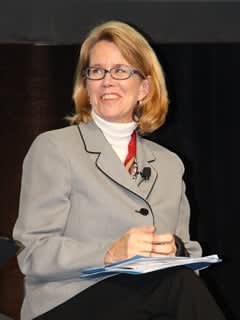
Anne Ferro will step down next month from her post as chief of the Federal Motor Carrier Safety Administration. She has served as Administrator since 2009.
She will become president and CEO of the American Association of Motor Vehicle Administrators.
Transportation Secretary Anthony Foxx announced Ferro’s departure “with great disappointment.”
“Anne has been a true leader in safety throughout her time at (the Department of Transportation) and has become a trusted advisor and friend to me during my time as Secretary,” Foxx said in a statement.
“Under Anne’s leadership, FMCSA has ushered in a new culture of safety into the commercial bus and trucking industries. She has made it more difficult for companies that jeopardize the public’s well-being to stay in business and easier for consumers to make informed choices when choosing a shipper or buying a bus ticket,” he said.
Ferro’s “infectious enthusiasm” has made DOT a better place to work, Foxx added.
In a farewell message to agency staff, Ferro said it has been her greatest privilege to work with them to advance FMCSA’s safety mission.
“While the opportunity to assume this position at AAMVA is another personal dream come true, no job can match the immense honor I have had serving President Obama, and Secretaries Foxx and LaHood with you – the dedicated individuals who persevere every day to make safe transportation a reality for all of us,” Ferro said.
Ferro mentioned initiatives the agency has undertaken during her tenure, including greater accountability for companies and drivers, stronger oversight of high-risk carriers, better tools for law enforcement and more data for industry and the public.
“On a daily basis we have also recognized the significant contributions that commercial truck and bus drivers make to roadway safety and our nation’s economic vitality,” she said.
She noted that she has highlighted the pressure drivers face because they are paid by-the-mile or load instead of their total time on-duty.
“We are seeking to change that compensation model so drivers receive fair wages for every hour they spend working – including time detained unloading and loading at the mercy of shippers and receivers,” she said.
More Fleet Management

Why Private Fleets Are Taking More Freight
Private fleets are putting their own trucks on demanding customers and high-cost lanes as companies seek greater control over service, costs, and capacity.
Read More →
Color Match Smarter: Tools That Restore & Perform
For fleet managers and collision repair professionals keeping heavy-duty trucks on the road, getting the color right the first time isn't just about appearance — it's about efficiency, turnaround time, and bottom-line results. Discover how today's digital color tools are transforming the repair process from guesswork to precision.
Read More →
FMCSA Pauses Biennial-Update Enforcement Amid Motus Transition
Carriers whose updates were due on or after June 1 have more time, while FMCSA works to stabilize its new registration system and warns of phishing sites impersonating its new carrier registration system, Motus.
Read More →


2026 Blueprint for Countering Smarter Supply Chain Theft
Cargo theft is no longer just the cost of doing business. It's a multi-billion-dollar criminal enterprise exploiting vulnerabilities across your fleet, drivers, and supply chain.
Read More →
How Telematics Improves Visibility, Control, and Performance in Refrigerated Fleets
Explore how telematics help refrigerated fleets improve visibility, uptime, efficiency, compliance, and cargo protection across connected cold chain operations.
Read More →
What the U.S.-Canada Trade War Means for Trucking
Escalating U.S.-Canada tariffs could disrupt cross-border freight, reduce truck volumes, raise costs, and create new uncertainty for carriers on both sides of the border.
Read More →
What Are Trucking’s Top Concerns for 2026?
The American Transportation Research Institute wants to know what's worrying trucking fleet managers, drivers, and other stakeholders in its annual Industry Issues survey.
Read More →
American Trucking Associations Looks for a New Leader
ATA President and CEO Chris Spear abruptly left his job at the association on August 21, at a pivotal time for the trucking industry.
Read More →
Public Wi-Fi Cybersecurity Risks: How Truck Drivers and Fleets Can Protect Their Data
Public Wi-Fi can expose truck drivers and fleets to credential theft, malware, and other cyber threats. Here’s how to reduce the risk on the road.
Read More →
For Nicky Cupp, Fleet Innovation Starts With Frustration
HDT Truck Fleet Innovator Nicky Cupp turns everyday pain points at Fraley & Schilling into opportunities for better technology and smarter processes.
Read More →