



Cummins and Peterbilt announced Tuesday their latest version of their SuperTruck demonstration tractor-trailer achieved 10.7 mpg last month under real-world driving conditions.
 MENU
MENU SEARCH
Cummins and Peterbilt announced Tuesday their latest version of their SuperTruck demonstration tractor-trailer achieved 10.7 mpg last month under real-world driving conditions.
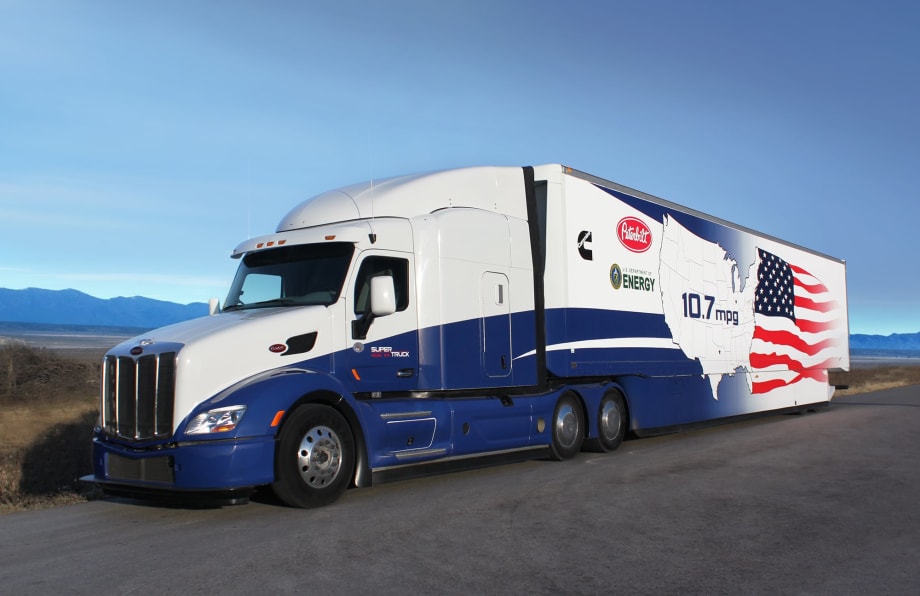
Cummins and Peterbilt announced Tuesday their latest version of their SuperTruck demonstration tractor-trailer achieved 10.7 mpg last month under real-world driving conditions.
It averaged a 75% increase in fuel economy, a 43% reduction in greenhouse gas emissions and an 86% gain in freight efficiency in 24-hour, head-to-head testing against a 2009 baseline truck, according to a release. This surpasses the program goal of a 68% increase in freight-efficiency, a trucking metric based on payload weight and fuel efficiency expressed in ton-miles per gallon.
The Peterbilt Model 579, powered by a Cummins ISX15 engine, achieved the latest results last month between Denton, Texas, and Vernon, Texas. The 312-mile route was the same one used two years ago, when the first version of the Cummins-Peterbilt SuperTruck averaged just under 10 mpg.
The testing in both instances was conducted on a round-trip basis, to negate any wind advantage that might have been gained by traveling one way. Each tractor-trailer had a combined gross weight of 65,000 lbs. running at 64 mph. A longer, 500-mile route between Denton and Memphis, Texas, was also used to demonstrate the vehicle's fuel-efficiency improvement over a 24-hour test cycle.
The Cummins-Peterbilt SuperTruck was on display Tuesday for President Barack Obama's announcement of firm deadlines for the next generation of national fuel-efficiency and GHG emissions standards for heavy-duty commercial vehicles.
The goal of the SuperTruck program, initiated by the U.S. Department of Energy, is to improve long-haul Class 8 vehicle freight efficiency. It focuses on advanced and highly efficient engine systems and vehicle technologies that meet prevailing emissions and Class 8 tractor-trailer vehicle safety and regulatory requirements.
In addition to the benefits of reduced fuel consumption and petroleum usage, the improvements in engine system efficiency will deliver a significant reduction in GHG emissions, according to both companies. The project objectives have included development and demonstration of a highly efficient and clean diesel engine, an advanced waste heat recovery system, an aerodynamic tractor and trailer combination and a lithium ion battery-auxiliary power unit, to reduce engine idling.
The Cummins-Peterbilt SuperTruck engine converts exhaust heat into power delivered to the crankshaft, and has electronic control software that uses route information to optimize fuel use. The SuperTruck also includes chassis refinements, improvements in the aerodynamics and other significant advances in the engine. Lighter weighing components throughout the tractor-trailer also enable increased freight efficiency.
Eaton, also part of the Cummins-Peterbilt SuperTruck project team, is developing a next-generation automated transmission that improves fuel efficiency in heavy-duty trucks. Eaton's contribution includes the design, development and prototyping of an advanced transmission that facilitates reduced engine-operating speeds. Cummins and Eaton jointly designed shift schedules and other features to yield further improved fuel efficiency.
The increase in fuel economy for the Cummins-Peterbilt SuperTruck would save about $27,000 annually per truck based on today's diesel fuel prices for a long-haul truck traveling 120,000 miles per year, according to the companies. It would also translate into a more than 43% reduction in annual GHG emissions per truck. The potential savings in fuel and GHGs are enormous, given that there are about 2 million registered tractor-trailers on U.S. roads today, according to the American Trucking Associations.
Cummins is a prime contractor leading one of four teams under the DOE's SuperTruck project, one of several initiatives that are part of the 21st Century Truck Partnership. The partnership is a public-private initiative to further stimulate innovation in the trucking industry through sponsoring by government agencies, companies, national laboratories and universities.
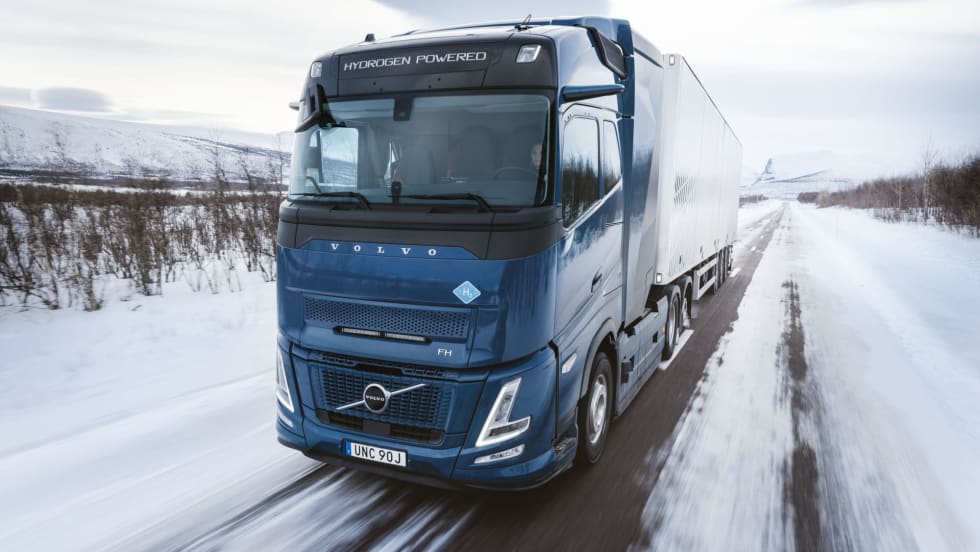
Hydrogen combustion engine trucks will be especially suitable over longer distances and in regions where there is limited charging infrastructure or time for recharging of battery-electric trucks, according to the company.
Read More →
By joining Daimler Truck and Volvo, Toyota brings fuel cell expertise to a joint effort aimed at making hydrogen viable for heavy-duty transport.
Read More →
Trucking operators are slowing speeds, cutting empty miles, and declining unprofitable freight as diesel costs continue to rise due to conflict in the Middle East.
Read More →
New guidance allows engine makers to replace problematic DEF sensors with NOx-based systems, aiming to reduce unnecessary derates and downtime caused by failures in the sensors designed to monitor diesel exhaust fluid on trucks.
Read More →
Is your company a leader in sustainability efforts among trucking fleets? If so, Heavy Duty Trucking's editors want to hear from you.
Read More →
Artificial intelligence, the software-defined vehicle, telematics, autonomous trucks, electric trucks and alternative fuels, and more in this HDT Talks Trucking interview
Read More →With global oil flows disrupted, U.S. diesel prices have topped $5 across every region, climbing sharply in the past few weeks.
Read More →
The impact of the Iran conflict extends beyond fuel costs, bringing more fraud and cybersecurity risks to the trucking industry.
Read More →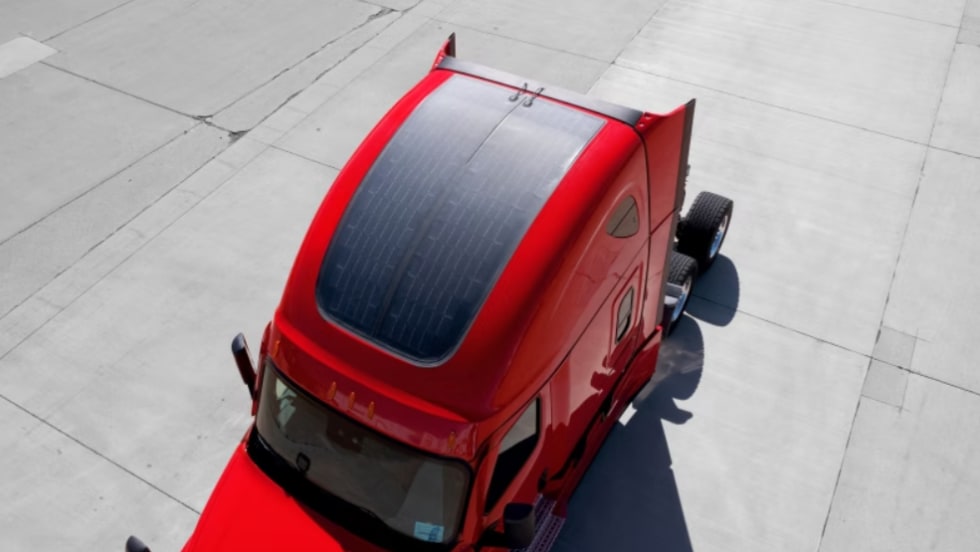
The company’s expanded EPEQ ecosystem includes flexible solar panels, lithium batteries, hydraulic power systems, and a portable fast charger for electric trucks.
Read More →
Listen as Mike Roeth of the North American Council for Freight Efficiency shares insights into battery-electric trucks, natural gas, biofuels, and clean diesel on this episode of HDT Talks Trucking.
Read More →