




Electric Terminal Tractors Lead the Charge
There are solid business and operational cases for electric yard tractors.

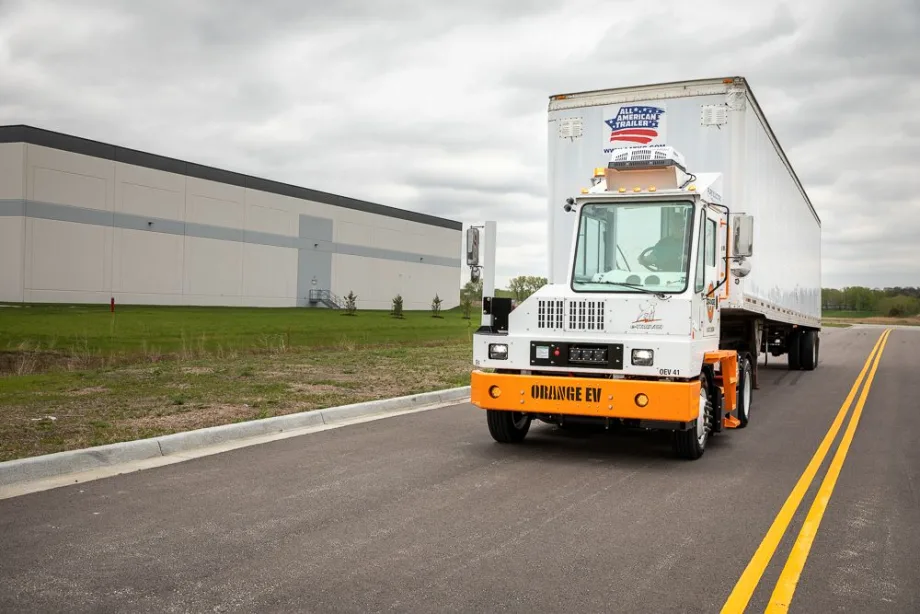
Electric terminal tractors work well in logistics operations -- provided you're willing adjust how your drivers work.
Photo: Orange EV
Electric trucks have been around since the dawn of motorized transport. However, despite an initial strong start, electric powertrains eventually died out. The early advantages of internal combustion engines proved to be too much for EVs to overcome at the time.
But battery-electric trucks are getting a second look today in the quest for more environmentally friendly ways to move freight.
So far, the results have been mixed. Long-haul applications have been problematic, but battery-electric trucks are making their way into urban and regional-haul applications.
And things have indisputably gone well in trucking’s small, but vital, yard tractor segment.
Zack Ruderman, vice president, sales and marketing, Orange EV, says that’s because electric yard tractors are the “perfect marriage” of application and duty cycle.
“Yard tractors are the low-hanging fruit of fleet electrification,” Ruderman explains. “They run in a fixed location with predictable duty cycles, so charging is easy. Electric units deliver instant torque, zero idling losses, and lower costs without giving up performance.
"And the duty cycle is ideal for electrification: Short runs, frequent starts and stops, and the ability to charge on-site make diesel units look outdated.”
Jerry Looney, senior director of sales for Capacity, also notes the suitability of electric trucks as yard jockeys.
“Yard tractors primarily do not travel over the road for distance and are generally confined to a closed, finite operating space,” Looney says. “Range is not a problem for yard trucks, so this makes them very attractive for electrification in this application.”
Charging Challenges
For battery-electric trucks, one of the main issues fleets must contend with is charging times. Despite advancements over the past decade, recharging electric vehicle batteries takes far longer than refueling a diesel truck.
“The BEV today is challenged with putting enough batteries on board to get the minimal necessary requirements,” Capacity's Looney explains.
“Typically, OEMs are trying to get enough to operate up to 12-plus hours without needing to recharge. And of course, operations come into play. The distance the trucks travel, the weights being carried, as well as any grades that need to be climbed, all factor into how long a battery charge will last.”
But, says Erich Streich, zero-emission terminal tractor sales for Kalmar, the solution to that problem is to simply get people to think outside of the box when it comes to terminal operations.
And the key to that approach, he says, is understanding “opportunity charging.”
“The mindset that it takes a little longer to recharge these tractors is one of the biggest challenges we face when we talk to customers,” Streich says.
It takes around 15 minutes to fuel up a 50-gallon diesel tank, and that truck is good to go for another 22 to 26 hours of work.
“When we talk to customers, we help them find efficiencies in their operations they can take advantage of to plug the tractor in during a 15-minute coffee break,” Streich explains.
“That’s what ‘opportunity charging’ is. The mindset that the truck tractor will be plugged in and charged at every available opportunity. That means during a 30-minute lunch break or an hour between your first and second shifts. Any chance you get to charge the tractor, you take it.”
Orange EV terminal tractors take anywhere from two to seven hours to fully recharge batteries, depending on the type of charger being used, Ruderman says.
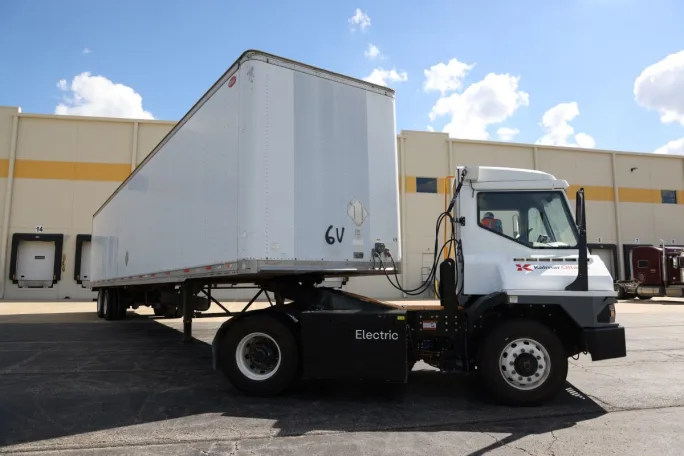
Return on investment for electric yard tractors hinges on the unit specifications and the availability of federal funding.
Photo: Kalmar
Once fully charged, those trucks will run from 18 to 24 hours before the battery is depleted.
“So generally, recharging times aren’t an issue if charging strategies are planned correctly,” Ruderman says. “And that’s an easy fix.
"In fact, with the right battery and charger, there is less time lost to charging than there is to fueling diesel trucks, because charging is done when the driver is on a break.
Streich says that "If you can get people to realize that these efficiencies exist in their operation, then an electric tractor will deliver what a diesel can do.
“But, crucially, it may also generate better profitability at their bottom line. Because they've got efficiencies in their operation that they didn't know existed. And they can capitalize on them with electric trucks.”
How Many Hours Do You Operate?
Many of these problems can be anticipated and dealt with up front when considering electric yard trucks.
Looney recommends carefully considering the number of trucks and chargers that will be required. That will help determine the power requirements you’ll need from your local utility.
“But,” he cautions, “you need to make sure when you talk to your local utility that the power requirement you’ll need is available. And you need to determine how long it will take to get the necessary power to the site.”
The key question fleets need to seriously dive into when considering an electric yard tractor is how many hours a day does a unit actually operate?
"I talk to fleets all the time who tell me they run two eight-hour shifts, and their yard trucks run 16 hours a day,” Looney says. “Well – not really.
"Once they dive into their operation and really look at things, they realize that over two eight-hour shifts, a yard truck only physically moves around 12-and-a-half hours.”
A recent customer demo in Mira Loma, California, bore this model out, Streich says.
“The customer had our electric truck for about three weeks,” he says. “Once we evaluated their operations, we found that in a 12-hour period, the trucks were only moving about eight-and-a-half hours. The rest of that time was what is considered ‘idle time’ for a diesel-powered unit.
"Uncovering inefficiencies like that shows that it’s possible to opportunity-charge trucks without disrupting your current operations. But it also shows you areas that you can improve your fleet’s overall daily efficiencies to help you save money and generate more profit.”
High Prices
Another problem that stymies interest in many electric vehicles, not just yard tractors, is their higher acquisition costs. This is normal for new technologies that have not scaled up to full production.
Looney says currently, a new electric yard tractor can cost one-and-a-half to two times the price of a comparable diesel unit. But, he says, payback on the electric tractors is very quick.
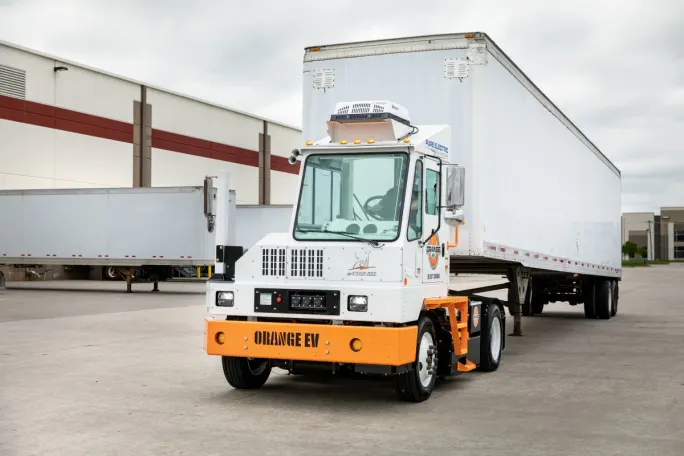
Electric terminal tractors deliver instant torque, zero idling losses, and lower costs without giving up performance.
Photo: Orange EV
“Return on investment for electric yard tractors hinges on the unit specifications and the availability of federal funding,” Streich says. “And depending on those factors, some fleets can see ROI in as little as three-and-a-half to four years. Others could be as long as six years.”
Funding is really the incentive that dictates ROI, Streich says.
Unfortunately, a Federal Commercial Clean Vehicle Tax Credit worth up to $40,000 expired on September 30. But Looney notes, there are many state and utility incentives on top of that that are worth checking into.
“One of the best options is the South Coast Air Quality Management District in California," Streich says. "If you qualify, you can receive up to $120,000 for new electric trucks. And there are other federal, state and local funds available as well.”
Applying for grants and incentives may seem daunting, but it’s not a process you have to undertake by yourself.
Dealing with environmental agencies and utility companies is new ground for many fleet managers. That's why most EV manufacturers have taken an advisory role to help EV customers through the unfamiliar processes.
“We have relationships with several charger manufacturers that can work with our customers on infrastructure,” Kalmar's Streich explains.
“They can help them identify and apply for incentive programs. And, in some cases, they can even help customers with permits and put them in contact with contractors who can lay out the appropriate conduit and install the charging systems.”
The Upsides of Electric Yard Tractors
Electric yard tractors outperform their diesel counterparts in several critical operating areas, experts say.
“Electric tractors cut repairs and maintenance by about 75% and eliminate diesel headaches,” Orange EV's Ruderman says. “There’s no fuel to purchase, store and put in the trucks. There are no filters. No transmission rebuilds. No emissions control systems. No DEF. And far less downtime.”
Looney agrees.
“Electric yard tractors aren’t just cleaner; they’re quieter, safer, and cheaper to run," he says. “Our customers are saving $50,000 to $90,000 per truck every year, and with the significantly improved uptime from our trucks, diesel simply can’t compete.”
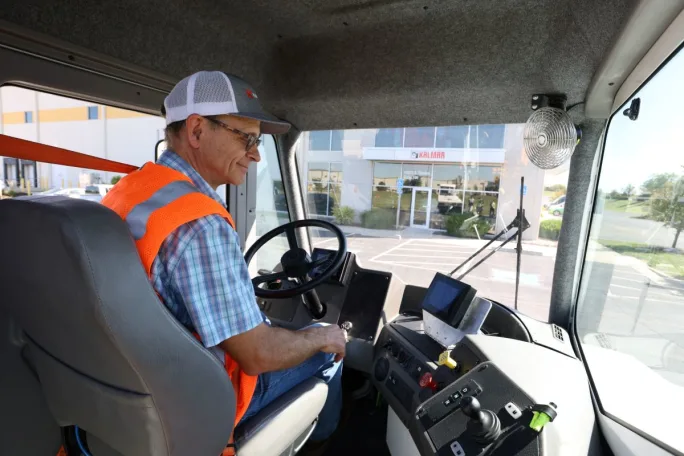
Kalmar made a point of keeping the operator's station as close to that on a diesel-powered unit as possible to minimize EV training times.
Photo: Kalmar
However, he adds, the high-voltage electrical systems on the vehicles present a challenge to the maintenance and repair people.
“That’s why training is essential,” he says. “Understand going in that the requirements for EV certification are different than those for a diesel technician.”
Driver acceptance is generally high for electric yard tractors, Streich adds. And he says training is generally straightforward.
“Generally, we do a 10- to 15-minute ride-along with a driver and they feel comfortable and are ready to go,” he says.
“The main thing they need to do is get a feel for the accelerator and brake pedal. We want them to learn to use the regenerative braking system on the trucks as efficiently as possible. Because if they do so, and drive the truck in the right way, you’re going to recoup some energy from the batteries during the workday.
"Just allowing the technology on the trucks to do what it’s capable of can extend range while saving wear and tear on the equipment.”
More Fuel Smarts

Why Diesel Price Relief Efforts May Fall Short
Diesel prices have eased from September’s record high, but doubts about additional Russian supply and limits on dyed-diesel tax relief mean trucking fleets still face expensive fuel. And prices could go higher.
Read More →
Why Small Fuel Savings Matter in Trucking
Can better fuel economy help pay for driver raises? In this podcast, GP Transco explains how small efficiency gains create room to reinvest in its people.
Read More →
How GP Transco Cuts Trucking Fuel Costs, a Tenth of a Gallon at a Time
What’s another tenth of a mile per gallon worth? GP Transco shares how equipment upgrades and driver coaching turn small gains into meaningful fuel savings.
Read More →
Electric Yard Tractors Move Beyond Pilots
Operating-cost savings have overtaken sustainability goals as the leading reason surveyed fleets are adopting battery-electric terminal tractors, according to new NACFE research.
Read More →
Geotab Links Fleet Card to Vehicle Data
The new card combines fuel discounts with telematics-based purchase controls. Geotab’s analysis also points to potential savings from choosing lower-priced fuel stops.
Read More →
Fleet Economics Shape Electric Truck Outlook
ACT Research expects costs, charging infrastructure, and technology improvements to drive zero-emission commercial vehicle adoption as federal regulations and incentives retreat.
Read More →
Wex Adds Cardless Fuel Payments for Over-the-Road Customers
A new fuel card feature for Wex customers offers convenience and security.
Read More →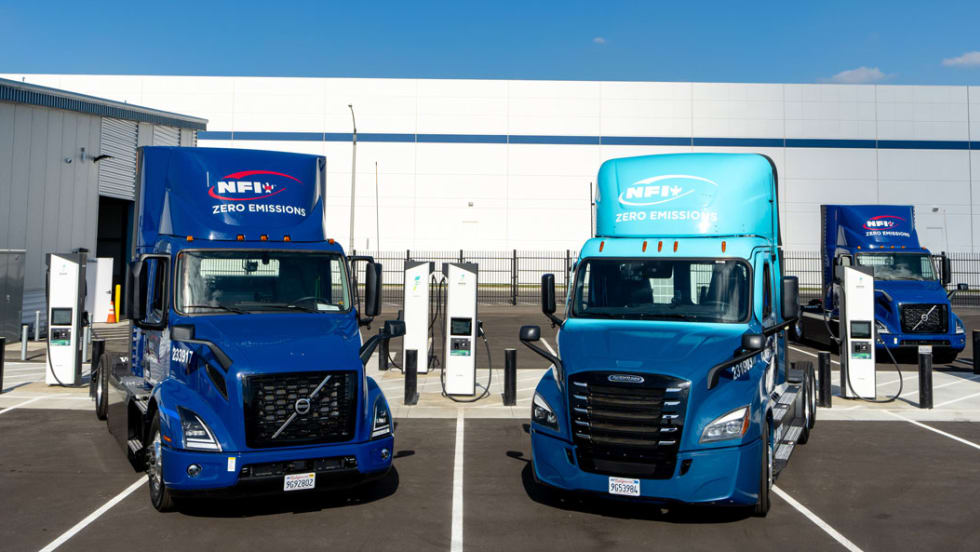
New California Law Could Shed Light on Electric Truck Prices
Why do battery-electric Class 8 trucks remain so expensive? A California bill signed by Gov. Gavin Newsom would give fleets and state agencies more visibility into what manufacturers charge.
Read More →
How Volvo Updated Its D13 for EPA 2027 [Watch]
Volvo’s updated D13 promises lower emissions without sacrificing performance or fuel economy. Take a closer look at what changed inside the engine in this HDT Spotlight video.
Read More →
Diesel Price Spike Shortens Payback for Natural Gas Trucks, Report Says
Energy Vision estimates fleets could recover the higher purchase price of an RNG-fueled Class 8 tractor in 1.3 to 2.8 years under current fuel-price scenarios.
Read More →