





Transportation Secretary Promises to Go After 'Bad Actors' in Trucking
Trump Administration Pauses Truck Driver Visas
As the Trump administration freezes issuance of work visas for truck drivers amid a larger focus on immigration, trucking groups point to non-domiciled CDLs as a larger problem.
August 22, 2025

As part of the Trump administration's scrutiny of foreign visas, it has paused issuing truck driver work visas.
Photo: HDT
6 min to read
The Trump administration said it is immediately pausing the issuance of worker visas for commercial truck drivers.
Secretary of State Marco Rubio announced it on the X social media platform the evening of August 21.
"The increasing number of foreign drivers operating large tractor-trailer trucks on U.S. roads is endangering American lives and undercutting the livelihoods of American truckers," he said in the post. "Effective immediately we are pausing all issuance of worker visas for commercial truck drivers."
The pause in visa processing applies to applicants seeking to operate commercial trucks in the H-2B, E-2, and EB-3 visa classifications. Foreign truckers in the U.S. are usually working on H-2B visas.
Although the announcement comes in the wake of a fatal crash in Florida when an illegal immigrant made an illegal U-turn, that driver, Harjinker Singh, wasn’t in the U.S. on a visa. That was a non-domiciled CDL, another area the Trump administration is investigating (see more below).
In addition to pausing truck driver visas, the Trump administration is vetting more than 55 million U.S. visa holders for possible deportable infractions.
This is part of the Trump administration’s larger focus on immigration, including in trucking.
Other parts of that effort have included renewed enforcement of federal English language proficiency requirements for commercial truck drivers.
What Type of Visas Does This Affect?
Rubio did not outline in his tweet exactly what type of visas were affected by the announcement.
There are several ways foreign truck drivers may be in the U.S.
Some involve employee sponsorship.
Under the H-2B visa process, employers can bring in drivers within two to three months. These are temporary visas, designed for seasonal work or in the face of a labor shortage. Most foreign truckers in the U.S. are usually working on H-2B visas.
There’s also the EB-3 process, a permanent solution, which take one to two years. Employers can petition for a foreign person to come to the U.S. to fill a position if the employer was not able to find a suitable employee from the American workforce.
B-1 Visas Not Affected?
The Private Motor Truck Council of Canada reached out to the U.S. embassy seeking clarity on whether this affected Canadian-based foreign nationals who drive for a Canadian carrier delivering into the U.S. from Canada and returning. These drivers operate under a B1/B2 Visa.
“We have confirmed this order only effects E and H visas,” the embassy told PMTC. “This order does not affect B1/B2 visas, which most third-country-national drivers in Canada use to enter the United States, so the order should not affect them.”
The embassy did, however, remind the association that as part of their visa interview, drivers must display a strong level of English language skills, or they can be refused the visa.
A B-1 visa allows foreign nationals to enter the U.S. temporarily for business purposes. In trucking, B-1 visa holders — typically from Mexico or Canada — may transport international freight into or out of the U.S. But it’s illegal for them to operate domestically in the U.S.
But that doesn’t stop many of them, leading to concerns in the trucking industry about cabotage. B-1 visa holders often cross the border with legal loads and then take on domestic freight movements.
Averitt explained on its website that it has been competing against operations that were cutting corners for years, including the illegal use of B-1 drivers to transport domestic freight.
"When a B-1 driver lives in their truck for weeks, moving domestic freight at cut rates, it creates unfair pressure on those of us who play by the rules," Averitt said.
Trucking: Great, but What About Non-Domiciled CDLs?
The Owner Operator Independent Drivers Association and the American Trucking Associations issued statements praising the administration for the move, but urging it to address the problem of non-domiciled CDLs as well.
“The misuse of visa programs along with the rise of non-domiciled CDL holders in recent years has fueled a flood of drivers into our country who struggle to operate safely in full compliance with regulations,” said OOIDA President Todd Spencer.
American Trucking Associations President and CEO Chris Spear said in a statement that ATA supports pausing work visas for commercial drivers.
ATA believes the issuance of non-domiciled CDLs needs serious scrutiny, including the enforcement of entry-level driver training standards.
“At a minimum, we need better accounting of how many non-domiciled CDLs are being issued, which is why we applaud Transportation Secretary Duffy for launching a nationwide audit in June upon our request,” Spear said.
Going Beyond Visas: Non-Domiciled CDLs
Earlier this week, OOIDA called on U.S. DOT and states to immediately suspend non-domiciled CDL programs.These licenses allow operation of commercial vehicles without the driver being a resident of the issuing state.
“We believe there are dangerous gaps in meeting records requirements for foreign-based individuals applying for a CDL,” the association said in one of those letters.
“It is not clear that states or federal regulations are adequately capturing information that should disqualify an individual, especially when this information would need to be obtained from foreign countries and jurisdictions.”
According to OOIDA, federal regulations permit, but do not require, states to issue non-domiciled CDLs to foreign individuals who are not citizens of their state.
“But there are major safety loopholes when these CDLs are issued,” OOIDA explained. “For example, for U.S. citizens applying for a CDL, federal regulations require states to request 10 years of a driver’s motor vehicle history for all states where he or she has been licensed. Similarly, prospective employers are supposed to obtain three years of driving history from an applicant, which would include information on any disqualifying offenses.
“Surprisingly, when someone applies for a non-domiciled CDL, federal regulations do not require that states or potential employers seek out these records from foreign jurisdictions,” OOIDA said. “This means foreign-domiciled individuals are not subject to the same safety standards as U.S.-domiciled applicants.”
USDOT is currently conducting a nationwide audit of the issuance of these licenses.
What is a Non-Domiciled CDL?
Trucksafe.com recently published a “primer” on non-domiciled CDLs in the wake of the news that the driver in the Florida U-Turn had a non-domiciled CDL.
An article from the trucking safety and regulatory consulting firm explains that non-domiciled CDLs are typically issued when a driver can't get a license from their home state or country due to regulatory barriers.
For instance, foreign nationals from countries without reciprocal licensing agreements.
Another case would be if the driver is from a state that’s temporarily barred from CDL issuance due to non-compliance with federal mandates. But no such states exist at the moment, according to Trucksafe.
For foreign-domiciled individuals, requirements include presenting an unexpired employment authorization document from USCIS or a foreign passport with an approved I-94 form, waiving proof of U.S. domicile.
All applicants must undergo the same testing as standard CDL holders, including knowledge and skills exams, and notify the issuing state of any driving infractions.
States are supposed to issue non-domiciled CDLs under strict protocols that closely mirror standard CDL issuance. And, as of November 18, 2024, states must query the Drug and Alcohol Clearinghouse before using a non-domiciled CDL.
“These measures are intended to ensure accountability, but lapses — like those in the Florida case — highlight enforcement gaps,” said Trucksafe.
More Drivers

Platform Science Adds Dispatch and Safety Tools
Four additions to PS Fleet help fleets monitor loads, manage driver coaching, share truck locations and adjust video system settings.
Read More →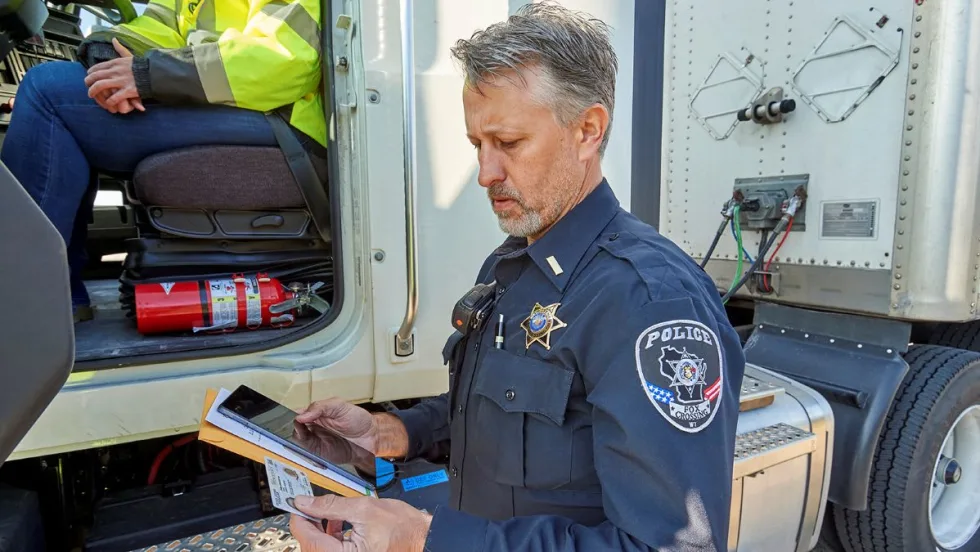
When Language Stops the Truck: The Return of ELP Out-of-Service Orders
English language proficiency rules for commercial drivers aren’t new, but renewed out-of-service enforcement has raised the stakes. Here’s what carriers need to know before a driver reaches a roadside inspection.
Read More →
Samsara Launches Custom AI Agent Builder
Agent Studio lets fleets create AI tools for hours-of-service monitoring, reporting and driver support, including agents that communicate by phone.
Read More →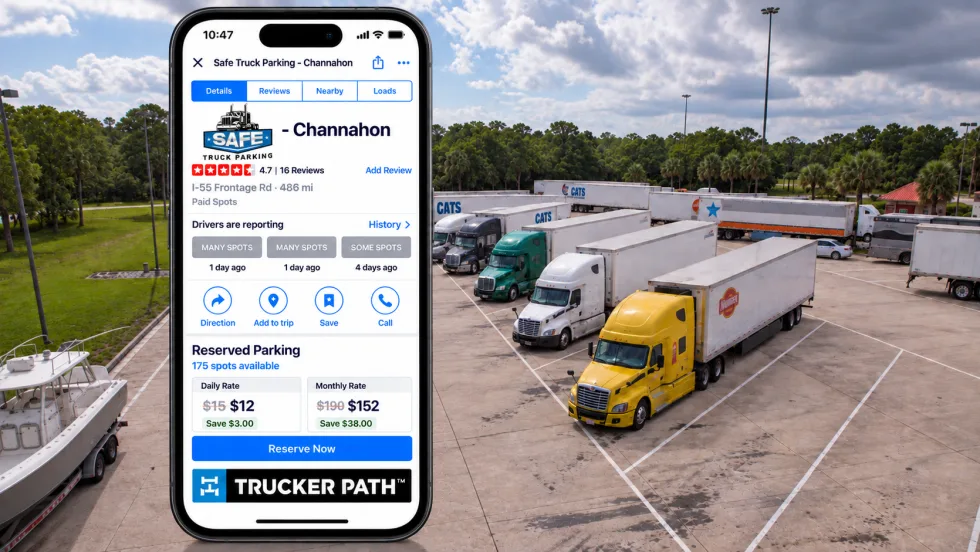
Trucker Path Expands Reserved Parking Network
Trucker Path has added close to 6,000 more truck parking spaces to its Trucker Path Reserved Parking Network with the addition of Safe Truck Parking.
Read More →
EEOC Sues Texas Trucking Company Over Driver Age Limits
The agency says Trancasa USA rejected applicants over 65 and applied tougher driving-record standards to those over 60.
Read More →
Nussbaum, Roehl Announce Second Driver Pay Increase This Year
This year has seen a swath of major truck driver pay increases as freight capacity has tightened.
Read More →
From One Generation to the Next: How Mentorship Builds Safer Truck Drivers
After three decades in trucking, Harold Perry shares what he's learned about driver safety, mentorship, and helping the next generation build confidence behind the wheel.
Read More →
Truck Drivers Need More Than Another Alert
Fleets have more visibility into truck health, safety events, and driver activity than ever. The next challenge is turning all that information into useful guidance for the person who has to decide what to do next.
Read More →
FMCSA Removes 110 Truck Driver Training Schools from Certified ELDT List
Federal regulators also are targeting more than 160 additional training providers and launching a nationwide audit of third-party CDL skills testers as part of a broader crackdown on trucking fraud.
Read More →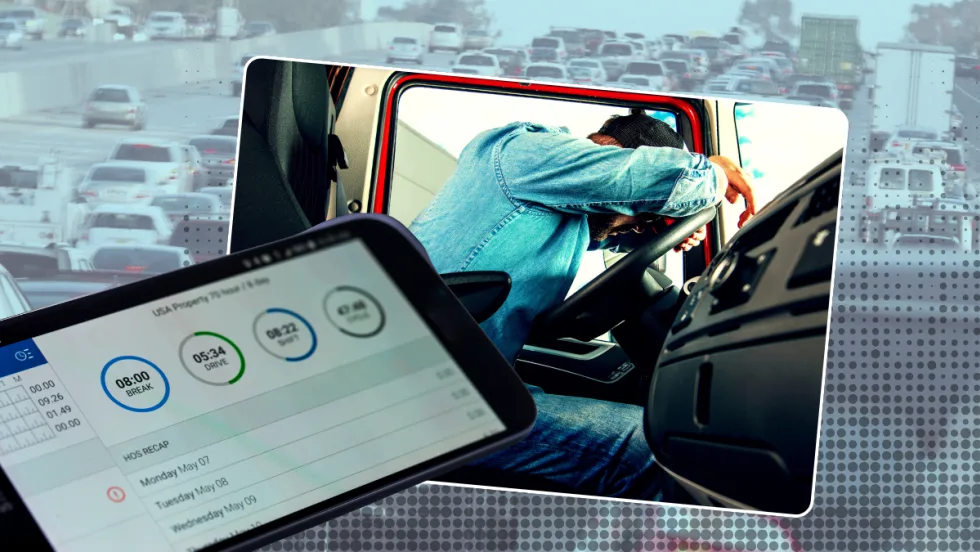
Hours of Service Pilot Programs: FMCSA Readies for 2027 Rollout
Two pilot programs could eventually reshape hours-of-service rules, giving truck drivers options to pause their 14-hour clock or use longer split sleeper rest periods.
Read More →