



Part 3 in a Series
Part 1: Smart Post-Crash Actions to Protect Your Trucking Fleet
Note: This series is a longer version of a feature in HDT's July/August 2025 print issue
 MENU
MENU SEARCH
To set your trucking fleet up for success in defending against litigation and processing insurance claims, it’s vital to document and preserve evidence after a crash.

Preservation of evidence after a truck crash, no matter how minor, is a part of defending against litigation.
Image: HDT Graphic
In the chaotic aftermath of a truck crash, one misstep — like failing to save camera footage — can cost your company dearly in court. Evidence preservation is essential to protecting your drivers, your company's reputation, and the bottom line.
Jennifer Akre, managing partner at legal defense firm Tyson & Mendes, remembers one case where failing to preserve the load led to a courtroom nightmare for her trucking client.
Six months after the crash, the plaintiff’s team claimed the truck was overweight at the time of the crash, affecting following distance. But since the crash, the load had absorbed months’ worth of humidity.
That moisture inflated the truck’s weight, leading to a fierce legal debate over admissibility and liability.
Failure to preserve evidence, whether physical evidence like the vehicle, photos or video, or data, can be a major factor in a lawsuit.
“You do not want to start deleting information, because that will result in spoliation,” says Adam Lang, who is director of customer advisory services at Netradyne and a former award-winning fleet safety manager.
Spoliation of evidence means the destruction or significant alteration of evidence, or the failure to preserve evidence, for another’s use in pending or future litigation. It can have serious repercussions down the road.
Doug Marcello, a longtimetrucking defense attorney with the Saxton & Stump law firm, says plaintiff attorneys "routinely weaponize" evidence preservation demands in truck accident cases, creating costly burdens for carriers while setting up "spoliation" claims as litigation leverage.
Even minor accidents, Marcello says, often "trigger sweeping preservation letters demanding everything from electronic control module downloads to driver phones — not because the data is needed, but to create legal tripwires"
Courts can punish spoliation (failure to preserve evidence) by instructing juries to assume missing evidence was unfavorable, and in extreme cases, automatically finding fault with the trucking company, Marcello says.
Increasingly, he says, plaintiff attorneys are bypassing warning letters entirely, obtaining preliminary injunctions without notice. That puts carriers under immediate court orders before they can respond.
"This isn't about justice — it's litigation gamesmanship," Marcello says.
He also suggests pushing back strategically when attorneys are demanding excessive evidence:
“When we start talking about data preservation, a lot of that is done on the admin side versus the driver,” says Lang, who led award-winning safety efforts at Halvor Lines for 10 years.
But the truck driver, being the one involved in a crash, has a large role in preserving evidence.
“Photos definitely help, and you want the driver to do that,” Lang says. “Now a lot of drivers are just taking walk-around videos to see what’s going on.”
Make sure you get those photographs and video from the driver and that they are preserved.
Lang says he asks drivers to push the driver notification button on the in-cab camera to bookmark an area where you could start pulling video footage if an alert was not triggered, which can happen in a low-inertia crash.
“I would want them to bookmark it, but I would not want them to disconnect the camera or do anything with the equipment,” Lang says. “It all needs to be kept as is, so that photos can be taken, police can do their investigation and all of those things can take place.”
Marcello says data from the electronic control module is key evidence fleets need to preserve after an accident — even when it seems like a minor crash.
The ECM, or engine control module, logs critical data such as:
“That data is streaming and will continue to go through, just like a Netflix movie,” Marcello explains. “But when there is a triggering event, such as a sudden deceleration, most companies' engines will lock down that data for so many seconds.” (Exactly how many depends on the manufacturer.)
That data is also recorded on a last-stop basis, he says.
“When your truck stops post-accident or stops at the end of the day, there’s data in there for so many seconds for some of the manufacturers, not all,” Marcello says.
“The key thing is, when you start the truck up and move it down the road post-accident, guess what? It’s written over, like a wedding video with a Penn State football game.”
While hard braking or other sudden impact triggering events preserve data for that timeframe regardless of subsequent actions, Marcello says, minor accidents — slow stops, sideswipes, minor impacts — may not trigger recording systems, leaving you without documentation when facing aggressive legal pursuit.
“In today’s ‘jackpot justice’ environment, this data represents the difference between proving minimal impact and facing inflated claims from billboard lawyers targeting minor accidents,” Marcello says.
Some of the most valuable evidence after a crash is the video from an in-cab camera or dash cam.
Nick Saeger, assistant vice president for transportation products and pricing at Sentry Insurance, calls them “the silver bullet or the golden goose in exonerations.”
“Video probably keeps claims out of courts more often than it actually ends up in front of a jury,” he says.
“If you have [camera footage], it can make or break your case… If you don't have it, you will face questions throughout the litigation about why you don’t have it,” Akre says.
Plaintiff’s attorneys will work to paint a picture of the trucking fleet as too cheap to invest in cameras (and other safety technology), that it puts profit over people, and so on.
Netradyne’s Lang believes the clarity provided by in-cab cameras is a must, a view he developed when working at Halvor Lines.
“You need to have a camera in the vehicle, period, to help with exoneration or help to show the truth on the driver’s side,” Lang says.
“There’s a lot of plaintiffs’ attorneys out there that take the approach that it is negligent to not have a camera in the vehicle, and they will attack that if they go to court,” he says. “So you need that camera.”
But if you don’t make sure the video from the crash is preserved, it’s not going to do you much good.
“Cameras get erased all the time,” Akre says.
She frequently sees cases where an accident was minor, so trucking companies didn’t see a need to preserve the video from the camera. And typically, dash cams only keep video for a certain amount of time before overwriting it.
If a lawsuit does later come out of that minor accident, if you no longer have that video, it’s your word against theirs.
Make sure you have policies and procedures in place to prevent the destruction or erasure of a camera from a truck involved in a crash.
“The data, the camera footage, get that downloaded immediately,” Lang says.
Depending on what camera system you’re using, the amount of time it retains that footage varies. If you haven’t done something to save or download that data after a crash before that time period’s up, you could find yourself without it if a lawyer later comes knocking on your door.
In addition to the camera footage, Lang says, make sure you’re keeping any supporting information about coaching the driver had in the past, alerts that were triggered, and what you did to address those alerts.
“Every little bit helps to ensure that you're preserving your data post-crash.”

New York City is expanding intelligent speed assistance and pedestrian-alert systems across its municipal fleet, moving the technologies from pilot programs into vehicle procurement and retrofit requirements.
Read More →
Federal regulators also are targeting more than 160 additional training providers and launching a nationwide audit of third-party CDL skills testers as part of a broader crackdown on trucking fraud.
Read More →
A trucking fleet can follow every rule and still make unsafe decisions. The real test comes when safety conflicts with freight, productivity, or cost.
Read More →
Two pilot programs could eventually reshape hours-of-service rules, giving truck drivers options to pause their 14-hour clock or use longer split sleeper rest periods.
Read More →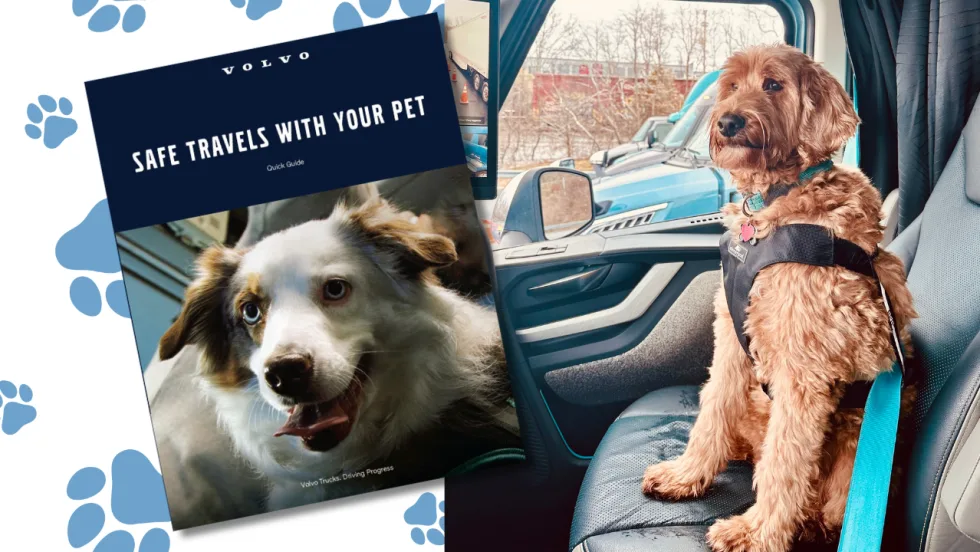
Hundreds of thousands of pets travel in truck cabs. A new safety guide from Volvo Trucks and the Center for Pet Safety offers practical advice for truck drivers who bring dogs and cats along for the ride.
Read More →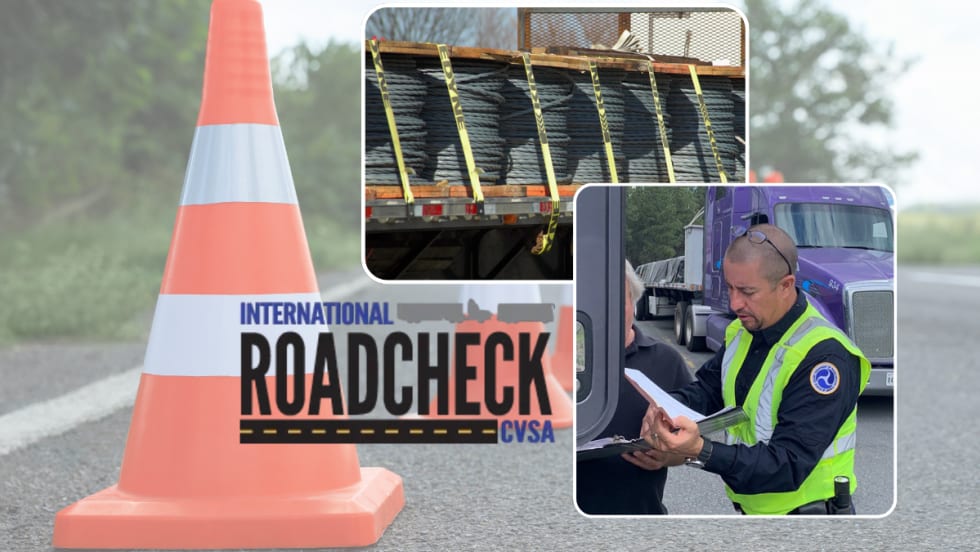
Medical-card violations jumped to the top of the driver out-of-service list during CVSA’s 2026 International Roadcheck, while English-language proficiency violations appeared among the leading violations for the first time.
Read More →
HDT Truck Fleet Innovator Lance Evans brings lessons from law enforcement to K&B Transportation’s approach to safety technology, data, driver coaching, and compliance.
Read More →
Steve Dowling joins FMCSA after serving as senior director of safety at Covenant Logistics and in leadership roles in commercial motor vehicle industry organizations.
Read More →
New Teletrac Navman research suggests that onboarding, transparency about driver data, and positive feedback can play a significant role in how commercial drivers respond to safety and coaching technology.
Read More →
Fleets and drivers must replace the revoked ELDs with ones on the FMCSA's registered device list of electronic logging devices.
Read More →