





This is an opinion column reflecting the author's viewpoint.
Driver Monitoring Tech Won’t Prevent Crashes Without Fleet Oversight
A fatal crash involving a fatigued driver and three parked trucks underscores a truth safety managers need to remember: Driver monitoring technology only helps if fleets act on the data they provide.
May 28, 2025

Greyhound had the tools to see this crash coming — but a lack of policy and oversight turned safety tech into a missed opportunity.
Image: HDT Graphic
3 min to read
I first wrote about truck driver fatigue and the problems that come from disrupting circadian rhythms more than 30 years ago.
Yet driver fatigue is still a problem, as evident in the National Transportation Safety Board’s May meeting discussing results of its investigation into a fatal bus-truck crash at a Highland, Illinois, rest area in 2023.
In this case, the fatigued driver was behind the wheel of a bus rather than a truck. But the problems are still the same whether you’re hauling freight or transporting passengers.
It was nearly 2 a.m. when the Greyhound bus, westbound on Interstate 70, veered off the interstate onto the exit ramp of the westbound Silver Lake Rest Area. It crashed into three tractor-trailers parked on the ramp’s right shoulder. Three people died.
While the three illegally parked trucks were a factor in the crash (and the lack of truck parking is another thing that is still a problem 30 years later), the NTSB investigation points to a fatigued bus driver as the primary cause.
Bus passengers told investigators the driver had been weaving in and out of his lane in the hours before the crash. He had an irregular work-rest schedule that messed with his circadian rhythms. And apparently, he had been awake for a prolonged time, not having taken advantage of the Greyhound-provided hotel room for his mandated rest period.
NTSB Issues 'Chilling' Report on Silver Lake Rest Area Crash
NTSB board member Michael Graham called the language in the report “quite chilling.”
“I want to quote that here,” he said. “‘The likely result of this work/rest variability was constant lack of synchronization between the driver's work hours and his normal circadian rhythm, making him constantly at risk to the effects of fatigue while on duty.’
“‘Constantly at risk,’” Graham said. “That sounds like an accident waiting to happen. And it was.”
But here’s what struck me: Greyhound had plenty of indications that this driver had recurring safety problems and did not address them.
A paper-based recordkeeping system meant previous warnings to the driver about unsafe driving weren’t readily available and therefore didn’t prompt action from his supervisors.
Investigators found only three entries on the driver’s official record at Greyhound. However, in his paper personnel file, there were 13 written reprimands for various offenses, nine of them for speeding.
Monitoring Risky Driving
The official record also did not include information from the onboard camera system. Greyhound has a driver monitoring system in each bus with an inward- and outward-facing camera to identify risky driver behavior.
While the company had policies prohibiting tampering with the system, it did not have any policies on using the system to improve driver behavior, according to the NTSB. To get the real benefit of these systems, fleets need to use them for driver coaching, incentivizing safe driving, or informing disciplinary action.
In the year before the crash, the bus driver had 71 risky driving “events” on the driver monitoring system. Based on his camera system scores, he was on a list of the company's worst 20 drivers.
This tragic case underscores a broader truth: Even with clear signs of danger and advanced technology, safety still depends on how that information is used.
The best safety policies in the world don’t matter if you’re not enforcing them. Buying safety technology like dashcams doesn’t matter if you’re not using that data. It’s an investment — and a chance to save lives — wasted.
Subscribe to Our Newsletter
More Safety & Compliance
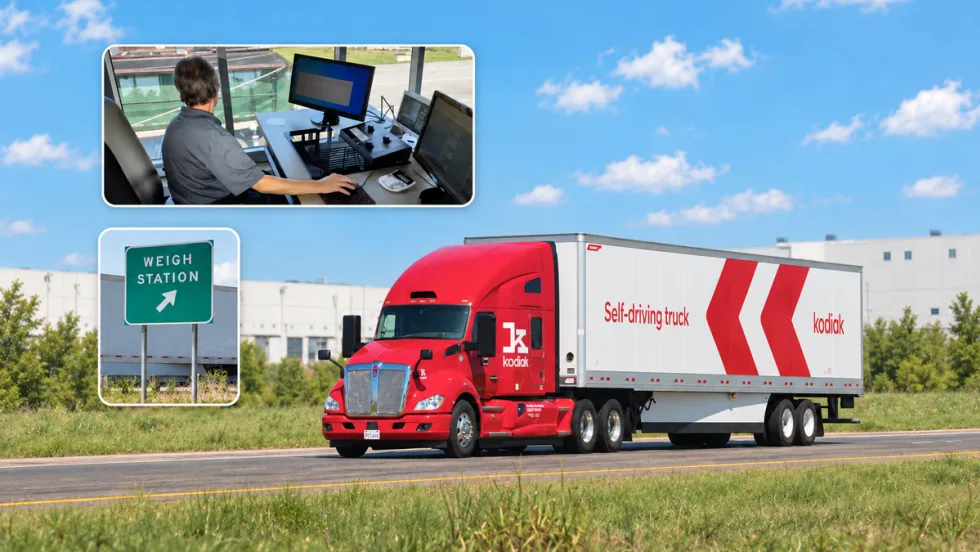
PrePass, Kodiak Connect Driverless Trucks to Roadside Enforcement
The system will allow enforcement agencies to verify Enhanced Inspection information and decide whether Kodiak’s autonomous trucks can bypass roadside screening sites.
Read More →
From One Generation to the Next: How Mentorship Builds Safer Truck Drivers
After three decades in trucking, Harold Perry shares what he's learned about driver safety, mentorship, and helping the next generation build confidence behind the wheel.
Read More →
FMCSA Pauses Biennial-Update Enforcement Amid Motus Transition
Carriers whose updates were due on or after June 1 have more time, while FMCSA works to stabilize its new registration system and warns of phishing sites impersonating its new carrier registration system, Motus.
Read More →
ZF Expands Commercial Vehicle Push in North America
ZF is expanding its North American commercial-vehicle presence with new transmission applications, electrification, trailer technology and autonomous-driving systems.
Read More →
Truck Drivers Need More Than Another Alert
Fleets have more visibility into truck health, safety events, and driver activity than ever. The next challenge is turning all that information into useful guidance for the person who has to decide what to do next.
Read More →
Tesla Wants a Self-Driving Semi. Are Cameras Enough?
Could Tesla’s camera-only autonomous driving technology work on an 80,000-pound Semi? In this commentary, HDT's Deborah Lockridge takes a look at Tesla, Cybercab, and how autonomous trucks see the road.
Read More →
What DOT’s Automated Vehicle Strategy Means for Trucking
The U.S. Department of Transportation issued a new automated-vehicle strategy that outlines plans for driverless-truck regulations, cross-state freight corridors, and federal safety standards.
Read More →
NYC Expands Speed, Pedestrian Safety Tech Across Fleet
New York City is expanding intelligent speed assistance and pedestrian-alert systems across its municipal fleet, moving the technologies from pilot programs into vehicle procurement and retrofit requirements.
Read More →
FMCSA Removes 110 Truck Driver Training Schools from Certified ELDT List
Federal regulators also are targeting more than 160 additional training providers and launching a nationwide audit of third-party CDL skills testers as part of a broader crackdown on trucking fraud.
Read More →
Beyond DOT Compliance: What Makes a Trucking Fleet Truly Safe?
A trucking fleet can follow every rule and still make unsafe decisions. The real test comes when safety conflicts with freight, productivity, or cost.
Read More →