





May 22 Update: Congress Revokes EPA Waivers for California's Clean Truck, NOx Rules
Republicans Try to Kill Off CARB Regulations
It's up to the Senate now to act on the House vote to revoke EPA waivers for California heavy-duty-truck emissions rules.
May 1, 2025

Republicans in Congress are looking for ways they can kill off California's strict emissions rules for cars and trucks.
Image: HDT Graphic
8 min to read
UPDATED: The U.S. House of Representatives has sent two resolutions to the Senate attempting to invalidate waivers allowing California's stricter emissions rules for heavy-duty trucks. But the legality of their action is in question and it's unclear what action the Senate may take.
On April 30, the House passed two Congressional Review Act resolutions (CRAs) attempting to block California (and the states that adopt its regulations) from implementing its Advanced Clean Trucks and NOx pollution rules. The federal waivers needed for the state to enforce those rules were approved by the Environmental Protection Agency during the Biden administration.
But whether or not it is legal for the House to now revoke those waivers remains an open question. Both the Government Accountability Office and the Senate Parliamentarian have said the EPA is not subject to Congressional Review Act, which Republicans are using to try to claw back the California regulations.
What are Republicans Trying to Do?
The regulations in question are centered on the California Air Resource Board’s Advanced Clean Trucks and Omnibus NOx waivers granted to California.
Specifically, Republicans are going after a series of waivers issued by President Biden’s EPA that would allow California and other CARB states to set tough emissions rules that would phase out gasoline- and diesel-powered vehicles in favor of zero-emission vehicles.
“Setting national policy is the responsibility of Congress, not California," said Todd Spencer, president of the Owner-Operator Independent Drivers Association. "It’s no wonder small-business truckers have left the state in droves to find better opportunities elsewhere.
"So far, there is no convincing evidence that electric commercial motor vehicles are a viable option for small-business truckers given the high costs and inadequate charging infrastructure. Additionally, CARB's overreaching Omnibus NOx rules have already raised prices on new vehicles and increased maintenance costs for trucks currently on the road."
The American Trucking Associations also praised the move, with President & CEO Chris Spear reiterating his catchphrase, “This is not the United States of California."
H.J.Res. 87, which was introduced by Rep. John James (R-Michigan) and approved by a vote of 231-191, would revoke the waiver allowing California and other states to enforce its Advanced Clean Trucks (ACT) regulation if also passed by the Senate and signed into law.
ACT, which has been adopted by 11 states, requires medium- and heavy-duty truck manufacturers to sell increasing percentages of zero-emission vehicles from 2024-2035.
H.J.Res. 89, introduced by Rep. Jay Obernolte (R-California) and approved by a vote of 225-196, would revoke the waiver allowing California and other states to enforce its Low NOx Omnibus rule. This rule, which has been adopted by 10 states, imposes stringent emissions standards on new truck sales.
"Both mandates are untethered from reality and would be extraordinarily costly to fully implement," ATA said.
The Trucking Association of New York called on its state government to take action.
"New Yorkers did not vote for a one-size-fits-all EV mandate which fails to consider the structural limitations preventing our industry from meeting this requirement in the first place — including, a lack of charging infrastructure, limited grid capacity, high equipment costs, and operational and range limitations," said TANY President Kendra Hems in a statement.
"What New Yorkers did vote for is for strong leadership from our leaders in Albany, who now must delay ACT, and set their own course by developing a realistic and reasonable plan for New York."
Previous coverage:
Can CARB be Contained?
Under the Clean Air Act, CARB was granted broad powers to set tough emissions standards — provided EPA approves of the regulations.
Other states are then free to follow California's regulations — an arrangement that gives CARB the power to set pollution policies for large parts of the U.S.
Upon winning reelection last year, President Trump indicated that his administration would seek to aggressively rollback various Greenhouse Gas Phase 3 emissions regulations.
However, the clock was ticking.
Two months ago, Trump’s new EPA Administrator, Lee Zeldin, sent a trio of California’s clean vehicle rules to Congress for Congressional Review Act (CRA) consideration. The EPA had never sent previous CARB waivers to Congress for approval.
There is only a 60-day window to use a CRA once a rule has been opened up for review. Which meant that Republicans had to act before mid-April to kill the waivers before the window of opportunity closed.
On April 3, Reps. John Joyce (R-PA), John James (R-MI), Jay Obernolte (R-CA), Russ Fulcher (R-ID), Doug LaMalfa (R-CA), Kevin Kiley (R-CA), and Lisa McClain (R-MI) introduced three resolutions in Congress that would allow lawmakers to undo those CARB regulations.
H.J. Res. 88, from Rep. Joyce, would reverse the EPA waiver for California to phase out gasoline-powered cars in a move that would favor electric vehicles.
H.R. Res. 89, issued by Rep. Obernolte, would terminate EPA’s waiver for nitrogen oxide (NOx) engine emission standards (Omnibus NOx rules)
And H.J. Res. 87, from Rep. James, would undo California’s push for zero-emissions trucks under its Advanced Clean Trucks.
Congressional Review Act Does Not Apply to CARB Waivers
However, Senate Parliamentarian Elizabeth MacDonough ruled late Friday (April 4) that the waivers are not "rules" so cannot be undone through the Congressional Review Act vote.
Previously the Government Accountability Office had come to the same conclusion. The GAO is an independent, non-partisan agency that provides general oversight to Congress.
And, according to the GAO, the waivers are not actual rules. Instead, the agency said, they “adjudicatory orders” state applied for.
In other words, they aren’t rules or laws that Congress can alter.
Sen. Adam Schiff, (D-CA) said that the GAO’s ruling should be the final word on the matter.
According to Politico, however, Senate Republicans may ignore the parliamentarian’s decision.
“I will continue to address all options available to strike down these rules and eliminate the consequential impact they would make across our country,” said Environment and Public Works Chair Shelley Moore Capito (R-WV).
Using Legislation to Revoke Clean Air Act Exemption
Another path Republican are pursuing is for Congress to pass a new law essentially changing the Clean Air Act to remove California's special status altogether.
Congressman Troy E. Nehls, a Texas Republican, last month reintroduced the Stop California from Advancing Regulatory Burden (CARB) Act of 2025.
Senator Mike Lee (R-UT) is leading the Senate companion to this legislation.
The Stop CARB Act would:
Repeal California’s waiver exemption in Section 209 of the Clean Air Act.
Repeal Section 177 of the Clean Air Act, preventing other states from adopting California’s emissions standards.
Clean up references to the waiver in other statutes.
“The radical liberal state of California should never be able to govern for our great state of Texas,” said Nehls.
“California should not be legislating for the rest of the country. My bill will ensure that California only governs California, not hard-working patriots in my district, by repealing California’s waiver.”
Strong Trucking Industry Support for Anti-CARB Actions in Washington
Various trucking industry advocacy groups reacted positively to the news that Republican lawmakers were taking CARB head-on and urged them to continue to fight.
American Trucking Associations President Chris Spear sent a letter to Republican leaders in the House and Senate urging them to move this legislation forward quickly.
ATA also recognized Reps. Joyce, James, Obernolte, Fulcher, LaMalfa, Kiley and McClain for introducing the anti-CARB resolutions.
“The trucking industry commends our congressional champions for introducing these resolutions, which would take the regulatory keys away from unelected CARB bureaucrats whose mad dash to zero poses a grave threat to the supply chain and our economy,” Spear said.
“The patchwork of unachievable EV mandates enabled by EPA’s waivers to California threatened to significantly raise costs for American consumers without delivering the promised environmental benefits," he said.
“Thanks to the leadership of these lawmakers, Congress can restore EPA’s authority to set commonsense, achievable national standards that promote innovation and put us back on the path to lowering emissions while accounting for the operational realities of our essential industry."
An Unrealistic Regulatory Agenda
Striking a similar note, the American Truck Dealers also applauded the Republican representatives who introduced the resolutions to roll back CARB regulations.
"The standards set forth in these two regulations have already significantly impacted truck dealers’ ability to sell trucks in the state, with California dealerships experiencing a reduction in year-over-year sales by over 50 percent,” ATD said in a statement.
“Much higher prices, limited charging and alternative fueling locations, and reduced operational performance have contributed to very limited adoption of zero-emission technology in the heavy-duty truck sector.
"California’s unrealistic regulatory agenda is driving fleets to keep older trucks on the road longer, setting up family-owned dealerships for failure, and increasing the cost of transportation. If these regulations aren’t stopped, American consumers will pay the price.
"ATD supports one national standard for heavy-duty truck emissions with realistic timelines and requirements that can deliver innovative and cost-effective emissions solutions. The CRAs are an important step in that direction, and ATD supports their passage."
Additionally, the National Automobile Dealers Association (NADA) said in a statement, “Allowing the California Zero Emission Vehicle mandate to go into effect later this year will drastically curtail the availability of gas-powered and hybrid vehicles, leave millions of consumers far fewer vehicle choices, and force consumers everywhere to pay more for new and used vehicles.”
And the Specialty Equipment Market Association said the “EV mandate” would inflict significant damage to the country’s economy by “causing irreparable harm” to parts suppliers for internal combustion engines.
More Fuel Smarts
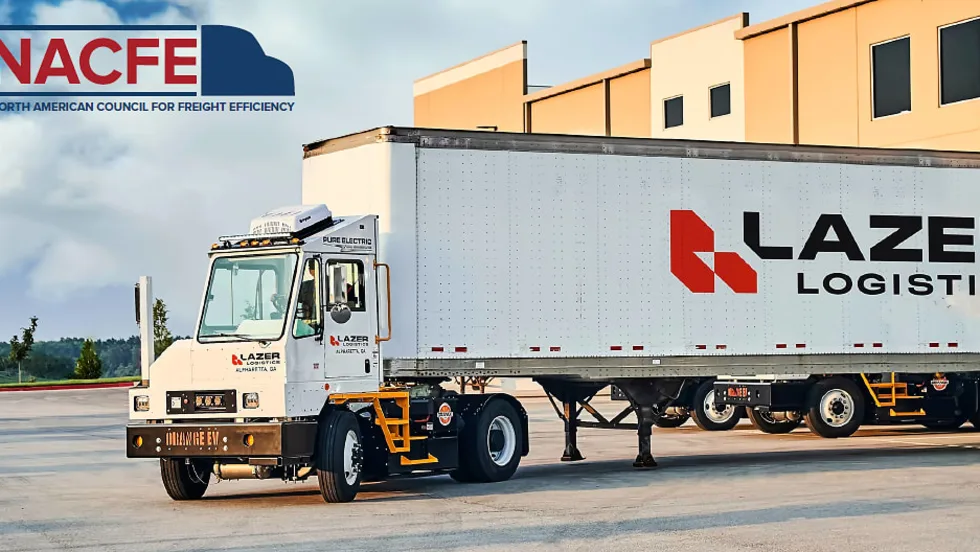
Electric Yard Tractors Move Beyond Pilots
Operating-cost savings have overtaken sustainability goals as the leading reason surveyed fleets are adopting battery-electric terminal tractors, according to new NACFE research.
Read More →
Geotab Links Fleet Card to Vehicle Data
The new card combines fuel discounts with telematics-based purchase controls. Geotab’s analysis also points to potential savings from choosing lower-priced fuel stops.
Read More →
Fleet Economics Shape Electric Truck Outlook
ACT Research expects costs, charging infrastructure, and technology improvements to drive zero-emission commercial vehicle adoption as federal regulations and incentives retreat.
Read More →

Wex Adds Cardless Fuel Payments for Over-the-Road Customers
A new fuel card feature for Wex customers offers convenience and security.
Read More →
New California Law Could Shed Light on Electric Truck Prices
Why do battery-electric Class 8 trucks remain so expensive? A California bill signed by Gov. Gavin Newsom would give fleets and state agencies more visibility into what manufacturers charge.
Read More →
How Volvo Updated Its D13 for EPA 2027 [Watch]
Volvo’s updated D13 promises lower emissions without sacrificing performance or fuel economy. Take a closer look at what changed inside the engine in this HDT Spotlight video.
Read More →
Diesel Price Spike Shortens Payback for Natural Gas Trucks, Report Says
Energy Vision estimates fleets could recover the higher purchase price of an RNG-fueled Class 8 tractor in 1.3 to 2.8 years under current fuel-price scenarios.
Read More →
Calstart Becomes Catalyst Mobility, Reflecting Broader Focus
Calstart is now Catalyst Mobility, reflecting the nonprofit’s growing national role in clean transportation, including zero-emission trucks, infrastructure and incentive programs.
Read More →
Record Diesel Prices Squeeze Trucking Fleets
Average U.S. diesel prices have climbed to nearly $6 a gallon, surpassing the 2022 record as tight refinery capacity and Middle East disruptions keep fuel costs elevated.
Read More →
Sponsored•September 9, 2026
How Fuel Delivery Shapes Engine Performance
Fuel delivery depends on more than what happens at the injector. For fleet, maintenance and technical professionals, looking at the full path from pump to injector can provide useful context for understanding engine performance.
Read More →