




California Postpones Periodic Smog Test Check for Trucks
The California Air Resources Board has delayed the first periodic testing deadline for the Clean Truck Check Program to Jan. 1, 2025. But registration and fee requirements remain in place.

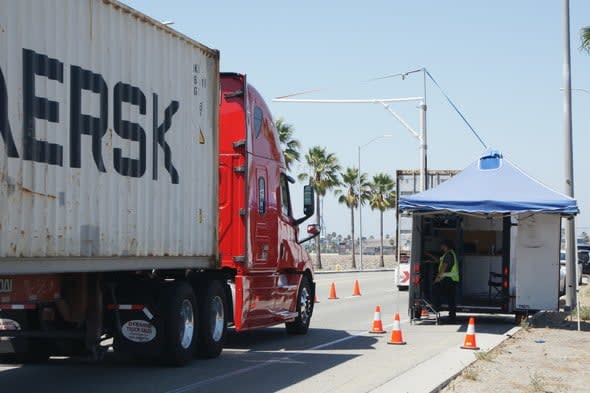
California has deployed emissions monitoring devices to monitor the exhaust of heavy-duty vehicles as they pass and flag potential violators of emissions regulations.
Photo: CARB
The California Air Resources Board has delayed the first periodic testing deadline for the Clean Truck Check Program to Jan. 1, 2025.
However, this does not delay requirements to register and pay fees for 2023. The rollout of DMV registration holds for non-compliance is beginning to ramp up, notes the California Trucking Association.
Fleets must also still plan to pay fees for 2024, which will be due in the later half of this year.
Late last year, CARB extended the Clean Truck Check reporting deadline to the end of January 2024.
About Clean Truck Check
Clean Truck Check, previously called the Heavy-Duty Inspection and Maintenance Program, is the commercial truck version of the state’s smog check for light-duty vehicles. It covers nearly all non-gasoline vehicles with a gross vehicle weight rating over 14,000 pounds operating in the state.
As HDT reported previously, the program is being implemented in three phases.
The first phase started Jan. 1, 2023, with the deployment of Remote Emissions Monitoring Devices. These monitor the exhaust emissions of passing heavy-duty vehicles and flag potential high emitters. Vehicles flagged must undergo an additional emissions test to verify their emissions-control equipment is functioning properly.
Phase 2 started Oct. 1 and requires vehicle owners to enter their vehicles in CARB’s Clean Truck Check database. There is an initial annual compliance fee of $30 per vehicle. That deadline originally was Dec. 31 and was extended to Jan. 31, but it is now in effect. All trucks driving in California need proof of compliance to continue operating.
Phase 3 of Clean Truck Check is what’s being delayed in this most recent postponement. It will require heavy-duty vehicle owners to conduct periodic emissions testing.
CARB's Periodic Truck Emissions Testing
Vehicles subject to semi-annual testing under the Clean Truck Check regulations will be required to submit periodic testing every six months.
California-registered vehicles’ compliance deadline will be the vehicles’ DMV registration expiration date. Vehicles registered outside of California have compliance deadlines based on their last VIN digit.
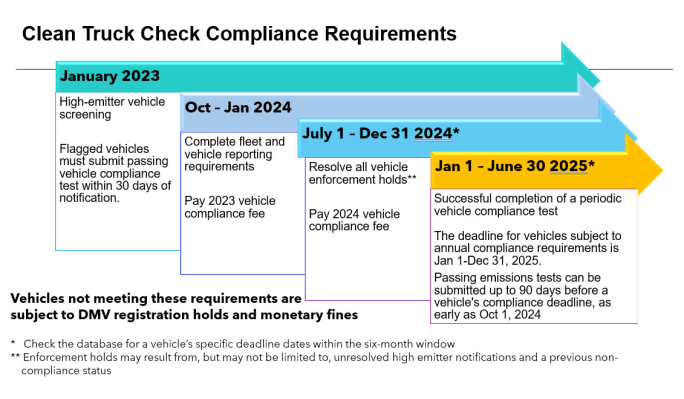
All trucks driving in California need proof of compliance that they've registered in the Clean Truck Program and paid the initial compiance fee to continue operating.
Source: CARB
Periodic testing requirements are effective Oct. 1, 2024. For example, a vehicle with a compliance deadline of Feb. 1, 2025, may submit a passing emissions test as early as November 3, 2024, according to CARB. Tests may be submitted no more than 90 days prior to the vehicle’s compliance deadlines.
Compliance testing must be performed by a CARB credentialed tester who has completed CARB’s free online Tester Training Course and scored at least 80% on the accompanying exam. The certification must be renewed every two years.
If you only operate for short periods of time in California, CARB offers a five consecutive day pass for each vehicle, once per calendar year. The 5-day pass must be submitted 7 business days before entering California.
For more information, see CARB’s guidance on how to comply with Clean Truck Check for vehicle owners subject to semi-annual testing.
More Maintenance
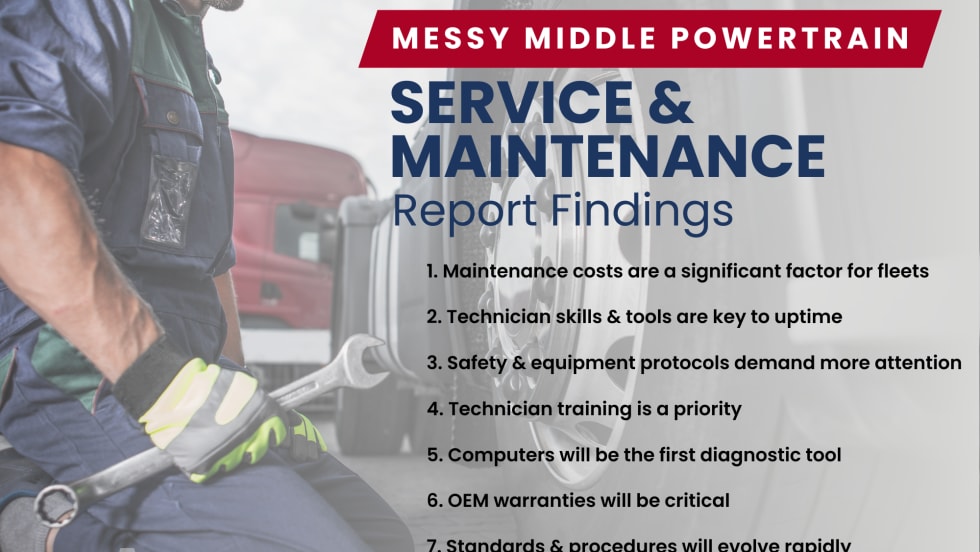
The Diesel Engine Enters NACFE’s ‘Messy Middle’
NACFE’s new Messy Middle Powertrain Service & Maintenance report says keeping modern diesel engines running now depends as much on software, diagnostics and data as traditional mechanical service.
Read More →
Wabash Trailers Recalled for Improperly Installed Underride Guards
More than 900 Wabash dry van trailers may not comply with the Federal Motor Vehicle Safety Standard for rear impact guards.
Read More →
DTNA Software Update Gives Truckers More Time Before DEF Derates Take Effect
The changes reflect EPA guidance aimed at reducing downtime caused by emissions-system faults while maintaining compliance requirements.
Read More →
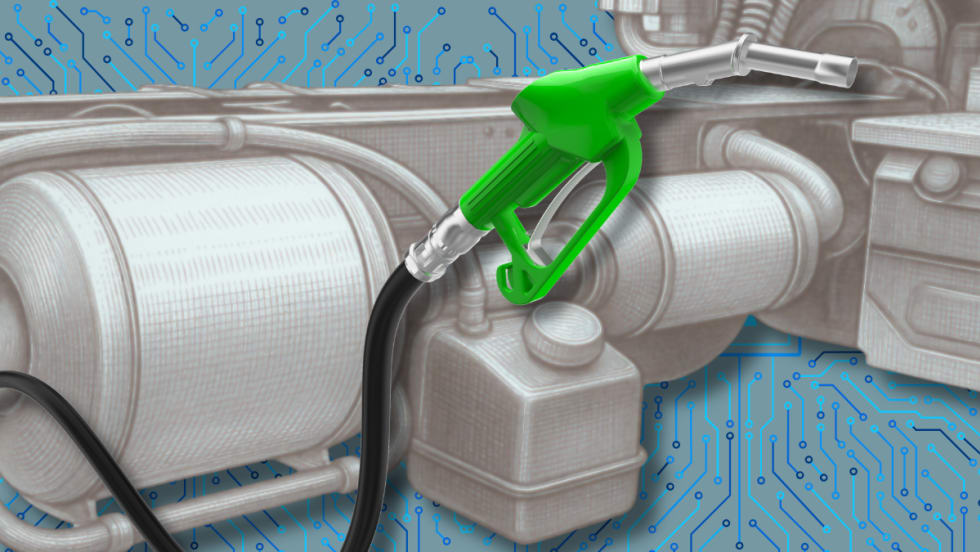
New Agentic Predictive Maintenance Report Demonstrates How Degraded Aftertreatment Systems Waste Fuel
Questar analyzed a large mixed-class fleet and discovered it was wasting as much as $30 in fuel per vehicle, per day, because of mechanically degraded aftertreatment systems.
Read More →Mack, Volvo Issue ‘Do Not Drive’ Recall on Possible Wheel-Offs
Owners will be sent advance notice not to operate their affected vehicles until the remedy is performed.
Read More →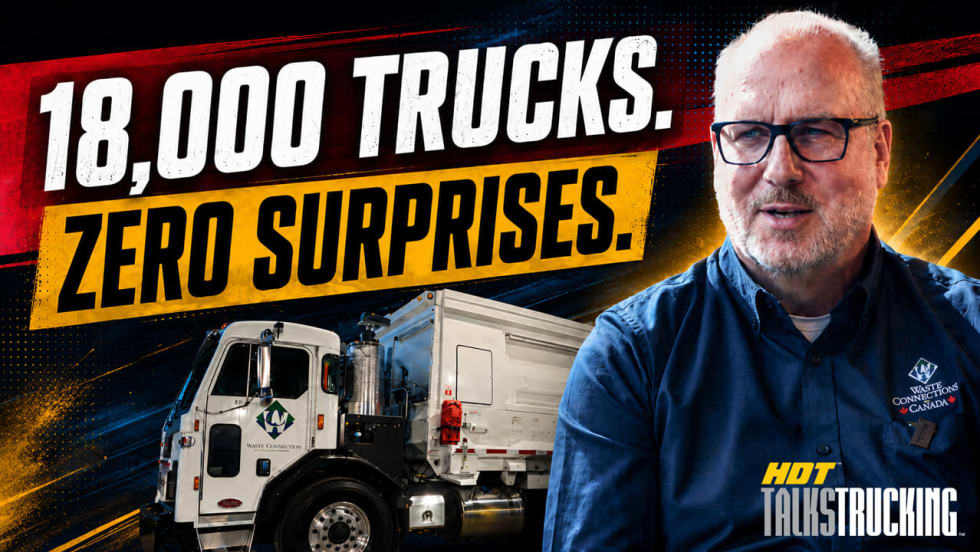
Why Fleet Data Matters More Than Ever at Waste Connections [Watch]
Waste Connections' Chuck Palmer explains how telematics, predictive maintenance, safety analytics, and AI help keep vehicles on the road and drivers safe in this episode of HDT Talks Trucking.
Read More →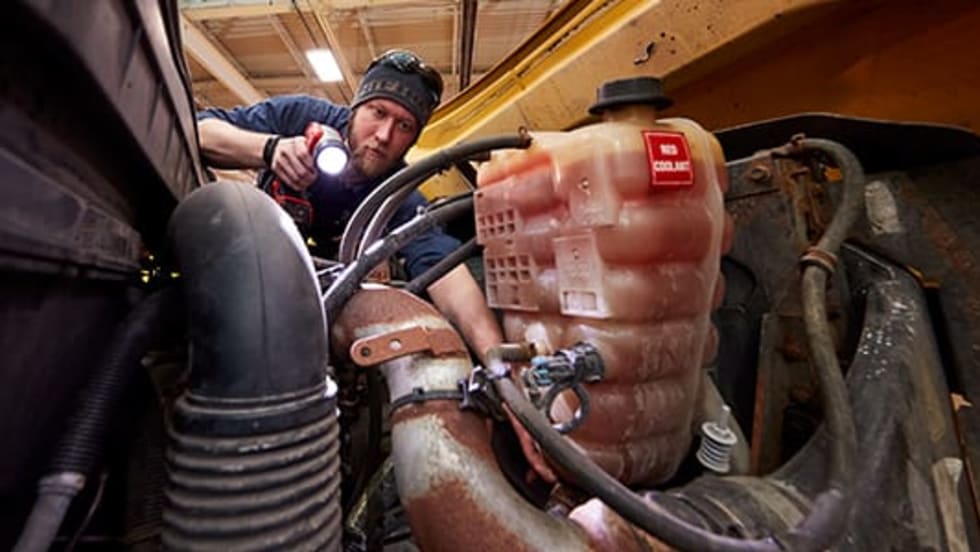
How to Prevent Summer Truck Cooling System Failures
Summer heat puts heavy-duty truck cooling systems under intense strain. Learn how preventive maintenance and accurate repair information can help reduce downtime.
Read More →
Deadline Extended for HDT Truck Fleet Innovators Nominations
Heavy Duty Trucking has extended the deadline for nominations for its Truck Fleet Innovators awards. The deadline has been extended to May 22.
Read More →
Why VMRS Is the Natural Link Between AI, Predictive Analytics, and Vehicle Repairs [Commentary]
Jon White was a leading figure in the development of VMRS. Now, after five decades of service, White says VMRS is becoming essential to the AI-driven future of truck maintenance.
Read More →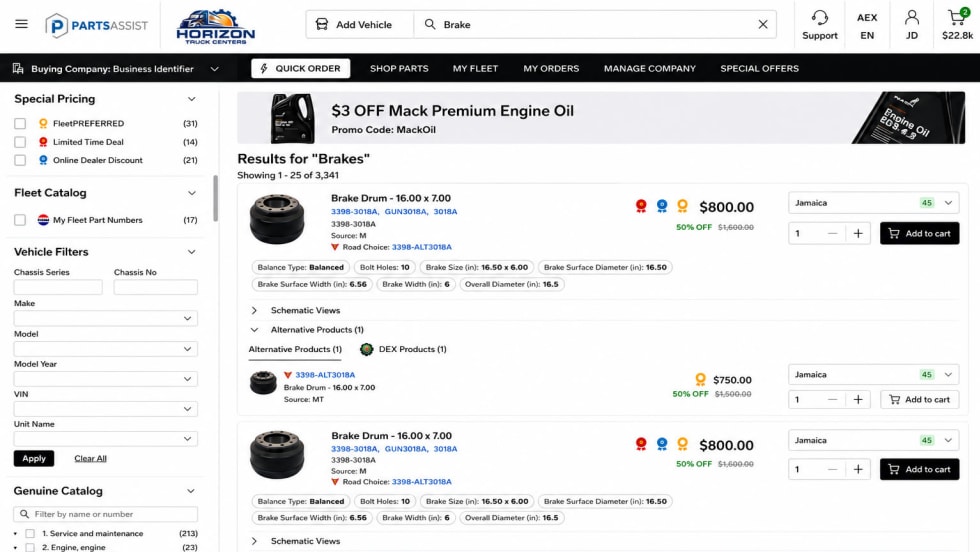
Mack Trucks Revamps PartsASIST Platform with Faster Performance, Improved Navigation
Mack Trucks has launched a redesigned version of its PartsASIST online ordering platform, adding faster search, real-time inventory visibility and enhanced order tracking.
Read More →