




I-10 Freeway in LA to Reopen Faster Than Expected
California Gov. Gavin Newsom said the fire-damaged I-10 freeway in Los Angeles will reopen Tuesday, Nov. 21, far faster than initially feared.

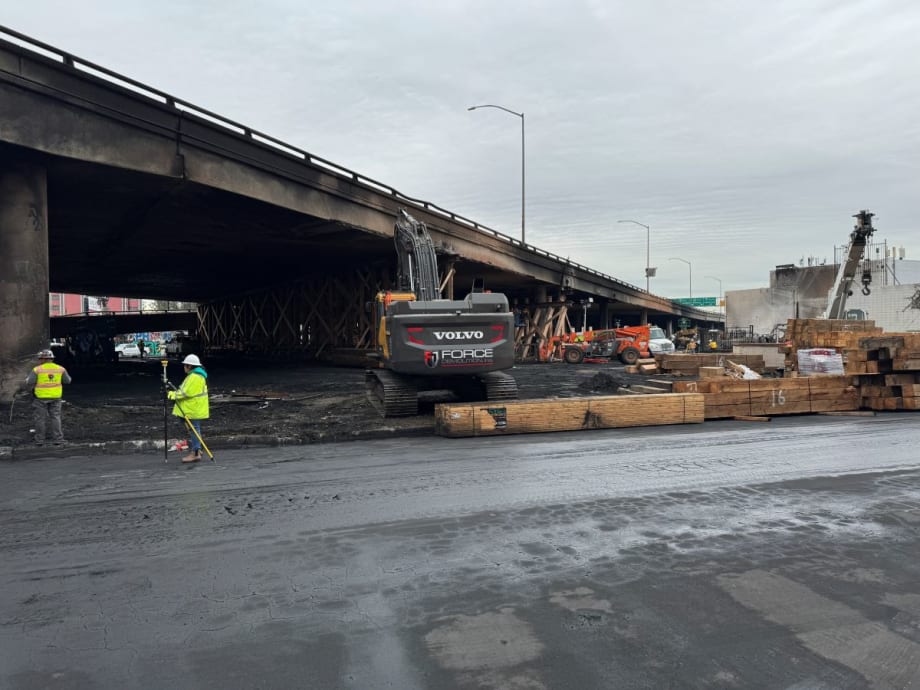
Thanks to emergency construction crews working around the clock, fire-damaged I-10 in Los Angeles is set to reopen weeks ahead of schedule, according to California Governor Gavin Newsom.
Photo: Montana Ruderman
The Interstate 10 freeway in Los Angeles, closed since a massive fire on Nov. 11, will reopen Nov. 21, far faster than initially feared.
California Gov. Gavin Newsom, in an announcement on Nov. 17, credited an “all-government” approach to the problem and emergency construction crews working around the clock for the speedy repair.
The crisis began on Saturday, Nov. 11. Early that morning, a fire broke out in a 200-by-200-foot storage yard beneath the I-10 freeway in Los Angeles.
Stacks of pallets, vehicles, and trailers fed the blaze, according to Los Angeles County Fire Chief Kristin Crowley, High winds then pushed the fire across the street and into another storage yard, where more materials caught fire. Eventually the fire spanned 8 acres and severely damaged the portion of I-10 serving the southern part of Los Angeles. It took 26 fire companies and more than 160 firefighters to extinguish the fire.
Ultimately, the fire damaged nearly 100 support columns supporting the freeway and approximately 400 feet of bridge structure.
In a press release on Nov. 16, Newsom said that additional repairs will continue for some months. However, Caltrans has determined all five lanes of traffic in both directions can safely reopen to passenger and commercial truck vehicles by Thanksgiving.
Before the fire, more than 300,000 vehicles a day traveled through the corridor.
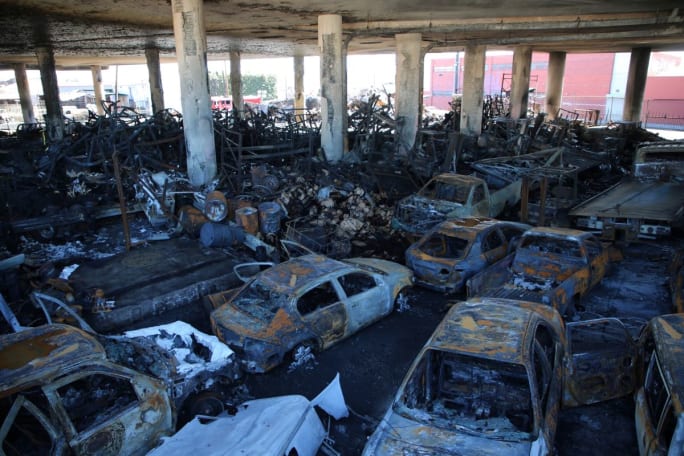
At a press conference on November 13, California Governor Gavin Newsom said the I-10 Los Angeles fire was intentionally set.
Photo: Montana Ruderman
Speeding the I-10 Repairs
At a Nov. 13 press conference, Newsom pledged to open the freeway as soon as possible. He said the priorities for the repair efforts would focus on safety first and speed second. He added, however, that providing a timeline for repairs was impossible at that time.
Initial estimates predicted it would take three to five weeks to reopen the Interstate.
Immediately following the fire, Newsom declared a state of emergency for Los Angeles County. He also directed the California State Transportation Agency (Caltrans) to request assistance from the Federal Highway Administration’s Emergency Relief Program.
Caltrans developed a plan to reroute traffic away and around the damaged portions of I-10. It also moved quickly to produce a repair plan to reopen the freeway as quickly and safely as possible.
The agency also began an investigation into the cause of the fire. The fire appeared to have been set intentionally, Newsom said during the press conference.
More Fleet Management

Color Match Smarter: Tools That Restore & Perform
For fleet managers and collision repair professionals keeping heavy-duty trucks on the road, getting the color right the first time isn't just about appearance — it's about efficiency, turnaround time, and bottom-line results. Discover how today's digital color tools are transforming the repair process from guesswork to precision.
Read More →
FMCSA Pauses Biennial-Update Enforcement Amid Motus Transition
Carriers whose updates were due on or after June 1 have more time, while FMCSA works to stabilize its new registration system and warns of phishing sites impersonating its new carrier registration system, Motus.
Read More →
2026 Blueprint for Countering Smarter Supply Chain Theft
Cargo theft is no longer just the cost of doing business. It's a multi-billion-dollar criminal enterprise exploiting vulnerabilities across your fleet, drivers, and supply chain.
Read More →


How Telematics Improves Visibility, Control, and Performance in Refrigerated Fleets
Explore how telematics help refrigerated fleets improve visibility, uptime, efficiency, compliance, and cargo protection across connected cold chain operations.
Read More →
What the U.S.-Canada Trade War Means for Trucking
Escalating U.S.-Canada tariffs could disrupt cross-border freight, reduce truck volumes, raise costs, and create new uncertainty for carriers on both sides of the border.
Read More →
What Are Trucking’s Top Concerns for 2026?
The American Transportation Research Institute wants to know what's worrying trucking fleet managers, drivers, and other stakeholders in its annual Industry Issues survey.
Read More →
American Trucking Associations Looks for a New Leader
ATA President and CEO Chris Spear abruptly left his job at the association on August 21, at a pivotal time for the trucking industry.
Read More →
Public Wi-Fi Cybersecurity Risks: How Truck Drivers and Fleets Can Protect Their Data
Public Wi-Fi can expose truck drivers and fleets to credential theft, malware, and other cyber threats. Here’s how to reduce the risk on the road.
Read More →
For Nicky Cupp, Fleet Innovation Starts With Frustration
HDT Truck Fleet Innovator Nicky Cupp turns everyday pain points at Fraley & Schilling into opportunities for better technology and smarter processes.
Read More →
Adam Buttgenbach’s Approach to Electric Trucks: Start With Where They Fit
HDT Truck Fleet Innovator Adam Buttgenbach helped PepsiCo build one of North America’s largest EV fleets by focusing on where electric trucks make operational sense.
Read More →