




NMFTA Developing API 'Roadmap' for LTL Shipment Data
The Digital LTL Council, a division of the National Motor Freight Traffic Association, is developing a complete application program interface (API) roadmap to cover the LTL shipment data stream.

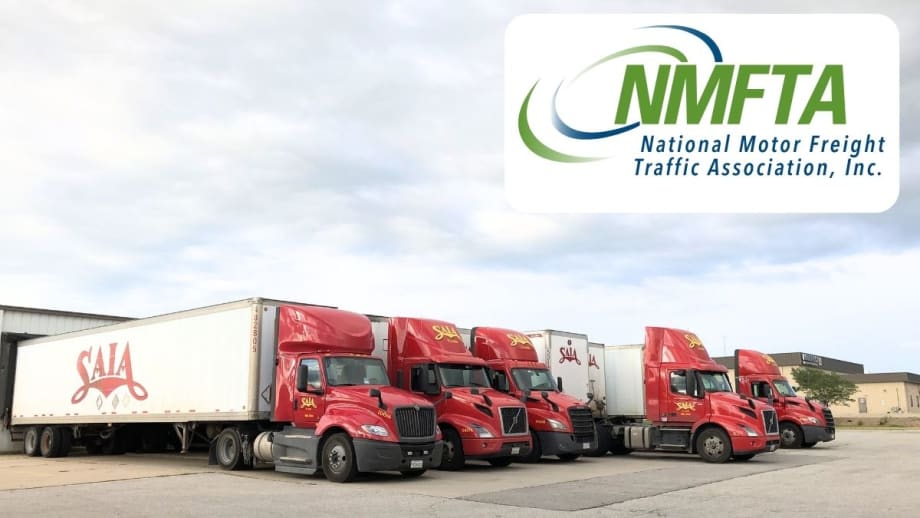
The NMFTA's Digital LTL Council is developing a complete API roadmap for LTL shipping.
Graphic: Canva/Jim Park/NMFTA
The Digital LTL Council, a division of the National Motor Freight Traffic Association, is developing a complete application program interface (API) roadmap to cover the full LTL shipment data stream — from quote to cash.
When complete, the resulting downloadable APIs will make it possible for shippers, carriers, and 3PLs to perform every function within the LTL shipment data stream digitally, according to the announcement.
APIs provide a digital method to allow multiple computer programs to communicate with each other. The standard API definitions being developed in this effort will smooth the way for various players in the LTL industry to interact in a variety of ways through their respective computer systems, NMFTA said in a press release.
Driving Efficiency in Less-Than-Truckload
Dolly Wagner-Wilkins, chief technology officer at Worldwide Express, chaired the Digital LTL Council committee that produced the new roadmap. She said the effort will reduce redundancy and work to make the entire LTL industry more effective.
“API standards are key, because they allow everyone in the industry to build APIs one time and use the same API for all their partners, versus taking the time and spending money to build to each partner’s specifications,” Wagner-Wilkins said. “This enables faster digitization, which in turn greatly reduces errors and improves visibility of pickups, shipments, and charges between carriers and shippers.”
The effort is an expansion on an initiative that is now nearing completion, in which the council established industry-wide standards for electronic bills of lading (eBOL) and led what it said was a successful effort to promote adoption of the standard.
Digital LTL Council Executive Director Paul Dugent said the eBOL effort showed APIs "almost eliminating the manual entry of information into the carriers’ billing system and thereby eliminating keying errors and reducing the overall number of mistakes.
The API roadmap "will greatly improve the efficiency of the industry,” he added.
The APIs
The new program will establish seven operational APIs and two administrative APIs.
The seven operational APIs will be:
Rate quotes
Electronic bills of lading
Pickup requests and pickup visibility
In-transit visibility
Preliminary rate charges
Financial rate disputes
Cargo loss and damage claims
The two administrative APIs will be:
Document retrieval
Carrier route guides
Once implemented on an industry-wide basis, the initiative will eliminate time-wasting phone calls and other inefficiencies, including communication mishaps that arise from problems in shipping.
Geoff Muessig, the Digital LTL Council’s chairman and Pitt Ohio's chief marketing officer and executive vice president, said LTL carriers do a very good job advising shippers and 3PLs by digital communication when shipment milestones have been successfully passed.
But where LTL carriers can improve is in using that same digital communication when a shipment exception arises.
"This includes a pickup that was missed, or a shipment misrouted, or additional charges such as a liftgate fee added to an invoice," Muessig explained. "These new real-time APIs will allow carriers to communicate shipment and invoice exceptions as they happen, thereby reducing costs and improving service for all parties."
Member Feedback
The process is in the early stages and NMFTA is gathering its members to seek their thoughts on how to prioritize the nine APIs, as well as how to get the details right.
“As we move forward, we will prioritize the APIs outlined on our roadmap and publish more standards until we have digitized the entire LTL shipment and billing flow,” Wagner-Wilkins said. “The faster we all adopt the APIs, the faster we will see benefits as an industry."
NMFTA Executive Director Debbie Ruane Sparks said the API roadmap project is a natural next step after the eBOL standard.
Carriers already implementing the eBOL standard include Dayton Freight Lines, Estes Express Lines, Old Dominion Freight Line, Pitt Ohio, R+L Carriers, Roadrunner Transportation, Southeastern Freight Lines, and TFI International which represent 37% of revenue in the LTL industry.
“These APIs will serve as a welcomed change to carriers who want to digitize but struggle with the time or the expertise to develop their own digital tools," Sparks said. "Now they won’t have to. They can download the ones we will offer, and that will mean the entire industry is harmonized and operating according to the same standard."
More Fleet Management

Geotab Links Fleet Card to Vehicle Data
The new card combines fuel discounts with telematics-based purchase controls. Geotab’s analysis also points to potential savings from choosing lower-priced fuel stops.
Read More →
How MFA Helps Protect Trucking Fleets
Multi-factor authentication adds protection when passwords are stolen. Here’s how it works and where fleets should start.
Read More →
How Better Freight Data Helps Trucking Teams Get Ahead of Disruption
Trucking and logistics teams have plenty of data. The problem is getting the right information in front of the right people soon enough to act. Better-connected data can help teams spot trouble earlier and make smarter decisions before small problems become big ones.
Read More →

Trimble: Taking Artificial Intelligence in Trucking Beyond Faster Tasks
At Insight 2026, Trimble executives argued that fleets may need to redesign workflows to get more from AI as it introduced new products and enhancements. AI’s value will depend on how fleets combine automation with their people's knowledge.
Read More →
Build a bulletproof fleet: Uniting ELDs and dash cams for total compliance
An ELD can prove compliance, but it cannot always prove what happened on the road. Discover how uniting accurate ELD data with AI-powered dash cam video can help your fleet strengthen compliance, defend against liability, protect drivers and reduce operational costs.
Read More →
Nominations Open for HDT Emerging Leaders
Heavy Duty Trucking is looking for accomplished trucking fleet professionals under 40 who are making an impact and helping lead the industry forward.
Read More →
Why Private Fleets Are Taking More Freight
Private fleets are putting their own trucks on demanding customers and high-cost lanes as companies seek greater control over service, costs, and capacity.
Read More →
Color Match Smarter: Tools That Restore & Perform
For fleet managers and collision repair professionals keeping heavy-duty trucks on the road, getting the color right the first time isn't just about appearance — it's about efficiency, turnaround time, and bottom-line results. Discover how today's digital color tools are transforming the repair process from guesswork to precision.
Read More →
FMCSA Pauses Biennial-Update Enforcement Amid Motus Transition
Carriers whose updates were due on or after June 1 have more time, while FMCSA works to stabilize its new registration system and warns of phishing sites impersonating its new carrier registration system, Motus.
Read More →
2026 Blueprint for Countering Smarter Supply Chain Theft
Cargo theft is no longer just the cost of doing business. It's a multi-billion-dollar criminal enterprise exploiting vulnerabilities across your fleet, drivers, and supply chain.
Read More →