





Dig Deeper: Benefits and Challenges in Electrifying Medium-Duty Box Trucks
Hino Debuts Electric Versions of M- and L-Series Medium-Duty Trucks
Hino rolled out the battery-electric Class 5 M5e cabover and Class 6 L6e conventional model during the Work Truck show in Indianapolis.
March 9, 2023
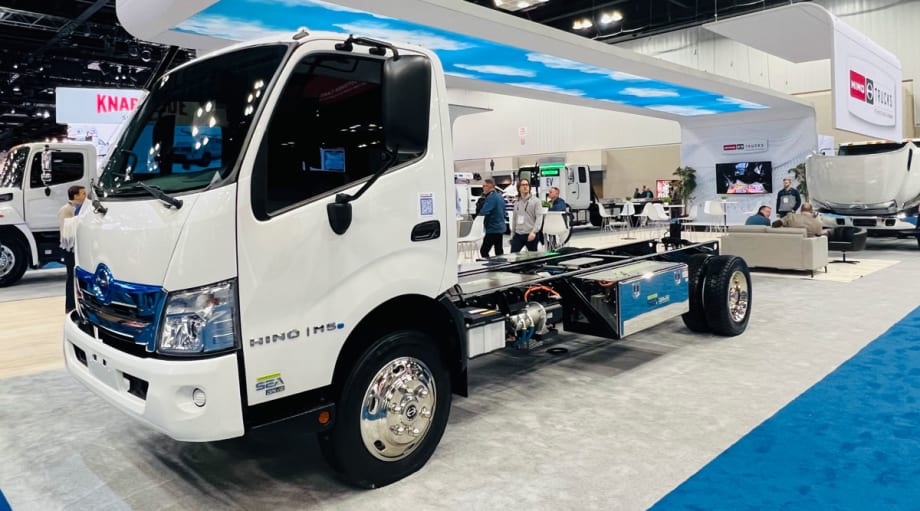
The new all-electric Hino Class 5 M5e cabover.
Photo: David Cullen
2 min to read
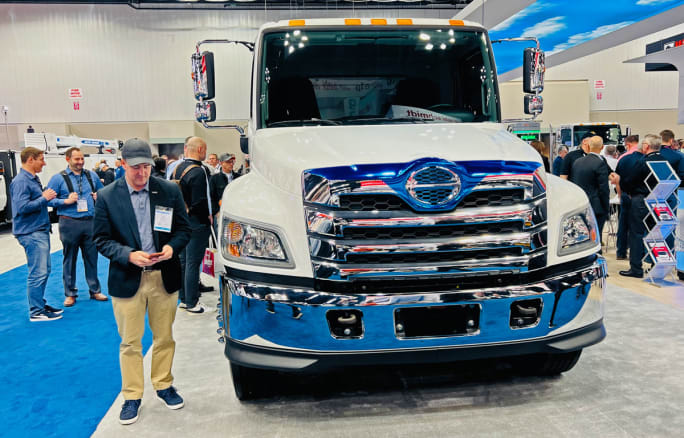
The new all-electric Hino Class 5 M5e cabover and Class 6 L6e conventional (pictured here) medium-duty truck models were rolled out March 8 at Work Truck show in Indianapolis.
Photo: David Cullen
Hino Trucks rolled out electric versions of its M- and L- Series medium-duty trucks, which will be branded as the Me Series and Le Series. To be available in 2024, production of the trucks will integrate SEA Electric’s SEA-Drive power system. The models will have battery capacities of 138kwH and 220kwH, respectively.
The new Hino Class 5 M5e cabover and Class 6 L6e conventional models were rolled out at a press conference on March 8 during the NTEA Work Truck show in Indianapolis.
Eye Out for 2024 Clean Truck Mandates
“Starting in 2024, Advanced Clean Truck mandates will start to kick off in California, growing the demand for electric vehicles, and many of our customers want to add EVs to evaluate operational capabilities,” said Hino Trucks President Glenn Ellis.
“Over the past several years, we have made significant strides in the push toward electrification,” he continued. “This strategic collaboration with SEA Electric is part of our plan to provide powertrain options to meet the needs for our customers and markets throughout the United States.”
Ellis pointed out that the development of these medium-duty EVs is “all part of our strategy to meet our customers’ demands for both clean diesel and battery-electric vehicles.”
EV Infrastructure and Support
Hino also announced it is building infrastructure to support these trucks with Hino InclusEV, a “premier portfolio of end-to-end electric vehicle enablement” that will be exclusively available through Hino's dealer network.
Hino InclusEV includes customer EV consulting, intelligent charging solutions, warrantied infrastructure, Hino electric trucks in production, 24/7 customer service, and what Hino described as the industry’s first complete bundled financing product.
This portfolio approach is supported by various partnerships, including with ChargePoint, EnTech Solutions, and Mitsubishi HC Capital America. The goal of Hino InclusEV is to “simplify and accelerate the transition to EVs by providing the best customer experience from first interest through ownership and maximizing ROI,” according to Hino.
"Hino Trucks is committed to delivering vehicles that provide our customers a sustainable option," said John Donato, senior vice president of sales and marketing. "With the support of Hino Edge telematics metrics and driver behaviors, we developed our strategy and best fit for our initial EV vocational offerings to include delivery and final-mile applications.
“We've got the vehicles. We've got the support. We've got all the tools needed to help our current and future customers move closer to a cleaner future."
Hino is also in talks with Hexagon Purus about heavy-duty Class 8 electric truck production.
More Equipment

How Volvo Updated Its D13 for EPA 2027 [Watch]
Volvo’s updated D13 promises lower emissions without sacrificing performance or fuel economy. Take a closer look at what changed inside the engine in this HDT Spotlight video.
Read More →
Michelin Tire Improves Efficiency and Durability for Regional Fleets
The Michelin X Multi Energy D2 is a regional haul drive tire engineered to help fleets improve fuel efficiency, durability and traction in demanding stop-and-go operations.
Read More →
ZF Expands Commercial Vehicle Push in North America
ZF is expanding its North American commercial-vehicle presence with new transmission applications, electrification, trailer technology and autonomous-driving systems.
Read More →
Tesla Wants a Self-Driving Semi. Are Cameras Enough?
Could Tesla’s camera-only autonomous driving technology work on an 80,000-pound Semi? In this commentary, HDT's Deborah Lockridge takes a look at Tesla, Cybercab, and how autonomous trucks see the road.
Read More →
Kodiak: Driverless Long-Haul Truck Launch on Track for 2026
Kodiak AI says its driverless long-haul safety case is 93% complete and it remains on track to begin commercial operations by year-end 2026.
Read More →
What DOT’s Automated Vehicle Strategy Means for Trucking
The U.S. Department of Transportation issued a new automated-vehicle strategy that outlines plans for driverless-truck regulations, cross-state freight corridors, and federal safety standards.
Read More →
East Coast Port Launches $45M Electric Truck Push
The Port Authority of New York and New Jersey announced millions in incentives for zero-emission drayage trucks, yard tractors, and new charging hubs near the port.
Read More →
PlusAI Going Public to Fund Autonomous Truck Launch
A SPAC deal could provide PlusAI with up to $300 million as it works toward a 2027 commercial launch of factory-built autonomous trucks.
Read More →
NHTSA Moves to Rewrite Truck Fuel-Economy Rules
The National Highway Traffic Safety Administration says it lacks authority to regulate medium- and heavy-duty truck engines separately from complete vehicles, but the existing standards have not yet been eliminated.
Read More →
Detroit Opens Orders for EPA 2027 Engines
Detroit isn’t starting from scratch to meet EPA 2027 diesel emissions standards. Its Gen 6 DD13 and DD15 engines keep much of today’s platform while updating the fuel and aftertreatment systems.
Read More →