





More RNG News: Clean Energy Opens Chicago Area Amazon RNG Station
Florida’s First Landfill Gas-to-RNG Facility Fully Operational
A collaboration between Opal Fuels and Florida’s largest natural gas distribution utility, is expected to produce approximately five million gasoline gallon equivalent of RNG annually.
January 11, 2023
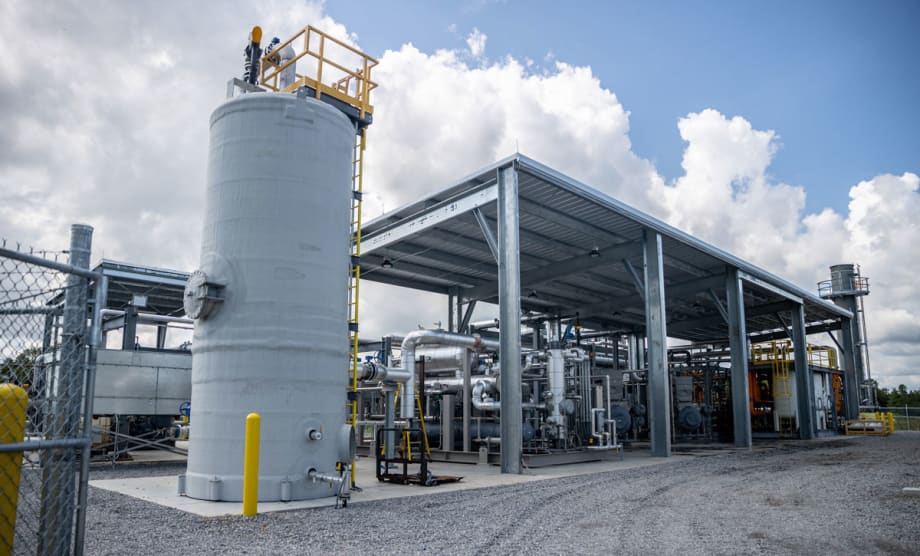
The RNG facility in Raiford, Florida has a nameplate capacity of 2,500 SCFM of landfill gas, which when processed would result in the production of approximately 5 million GGE per year of RNG.
Photo: Opal Fuels
2 min to read
Renewable natural gas (RNG) provider Opal Fuels announced that Florida’s first landfill gas to RNG facility at the New River Solid Waste Association municipal solid waste landfill has successfully completed its ramp-up period.
Located in Raiford, the facility captures naturally occurring biogas from the decomposition of organic material at the landfill and refines it into RNG, a usable low-carbon fuel.
The RNG will be used to feed Opal Fuels' transportation customers at the company’s fueling stations via the Peoples Gas distribution system, Florida’s largest natural gas distribution utility, serving about 445,000 homes and businesses.
“Through our vertical integration model, from production through distribution, Opal Fuels is committed to providing our customers with cost effective, reliable transportation fuel that results in zero Scope 1 and Scope 2 emissions,” said Adam Comora, co-CEO of Opal Fuels in the statement. “Working together with NRSWA, this facility produces new revenue streams, new jobs for the county, and provides cost savings for our customers — enabling companies to achieve net zero now at a discount.”
The RNG facility has a nameplate capacity of 2,500 SCFM of landfill gas, which when processed would result in the production of approximately 5 million gasoline gallon equivalent per year of RNG. This RNG, when used as transportation fuel to displace diesel, will avoid GHG emissions equivalent to achieving zero Scope 1 and Scope 2 emissions from about 380 heavy-duty trucks.
Additionally, the process of refining the biogas results in significant reductions in local emissions, including approximate decreases of 95% in carbon dioxide emissions, 90% in nitrogen oxide emissions, 90% in carbon monoxide emissions, and 98% in sulfur oxide emissions, according to the company.
The NRSWA municipal solid waste landfill is a publicly owned waste facility formed as an association of three member Florida counties: Baker, Bradford, and Union Counties. The association also accepts contracted waste from out-of-region locations.
“This is the first project in Florida to convert gas from a municipal solid waste landfill to RNG and we are happy we have been able to lead the way," added Perry Kent, executive director of NRSWA. "This project is one more step toward New River becoming a fully sustainable solid waste treatment facility.”
More Fuel Smarts

How GP Transco Builds Fuel Savings a Fraction at a Time
Aerodynamic specs, solar panels, and driver incentives help GP Transco turn small efficiency gains into savings it can reinvest in its people.
Read More →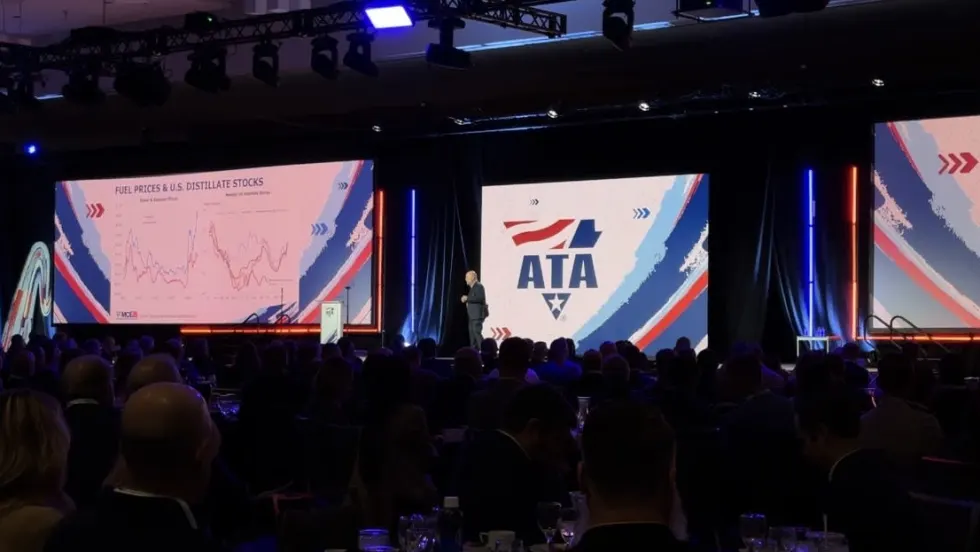
Trucking’s Diesel Squeeze Isn’t Letting Up
With diesel topping $6 a gallon nationally, ATA's Bob Costello explains why fleets should prepare for continued pressure at the pump.
Read More →
FlowBelow Redesigns Trailer AeroSlider to Cut Fuel Use
The lighter trailer aerodynamic system installs in less than 45 minutes, according to the company, with potential payback in under a year depending on fuel prices and trailer mileage.
Read More →
Why Diesel Price Relief Efforts May Fall Short
Diesel prices have eased from September’s record high, but doubts about additional Russian supply and limits on dyed-diesel tax relief mean trucking fleets still face expensive fuel. And prices could go higher.
Read More →
Why Small Fuel Savings Matter in Trucking
Can better fuel economy help pay for driver raises? In this podcast, GP Transco explains how small efficiency gains create room to reinvest in its people.
Read More →
How GP Transco Cuts Trucking Fuel Costs, a Tenth of a Gallon at a Time
What’s another tenth of a mile per gallon worth? GP Transco shares how equipment upgrades and driver coaching turn small gains into meaningful fuel savings.
Read More →
Electric Yard Tractors Move Beyond Pilots
Operating-cost savings have overtaken sustainability goals as the leading reason surveyed fleets are adopting battery-electric terminal tractors, according to new NACFE research.
Read More →
Geotab Links Fleet Card to Vehicle Data
The new card combines fuel discounts with telematics-based purchase controls. Geotab’s analysis also points to potential savings from choosing lower-priced fuel stops.
Read More →
Fleet Economics Shape Electric Truck Outlook
ACT Research expects costs, charging infrastructure, and technology improvements to drive zero-emission commercial vehicle adoption as federal regulations and incentives retreat.
Read More →
Wex Adds Cardless Fuel Payments for Over-the-Road Customers
A new fuel card feature for Wex customers offers convenience and security.
Read More →