




NHTSA Issues New Underride Guard Rules
The National Highway Traffic Safety Administration has completed a final rule upgrading requirements for rear underride guards and is turning its attention to side underride guards.

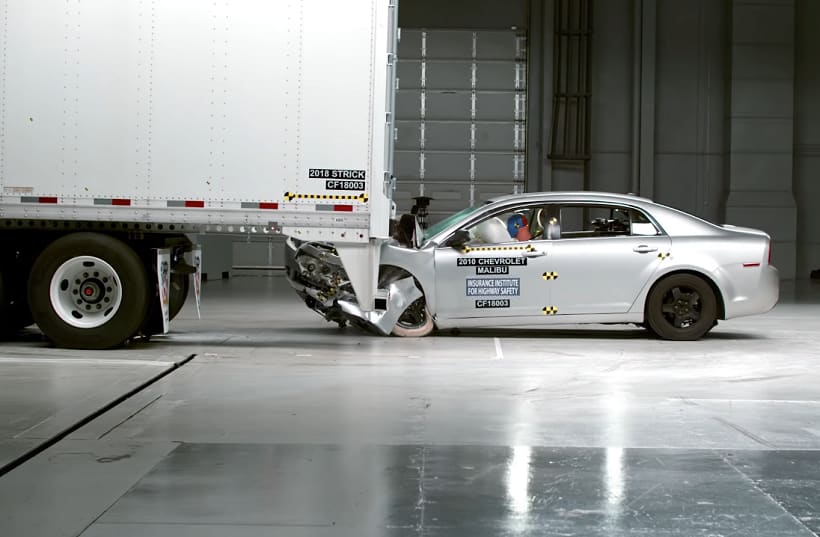
Most new trailers already boast improved underride guards.
Photo: Insurance Institute for Highway Safety
The National Highway Traffic Safety Administration has completed a final rule upgrading requirements for rear underride guards and is turning its attention to side underride guards.
The agency announced on June 30 that it’s updating two Federal Motor Vehicle Safety Standards “to improve protection for drivers and passengers in light vehicles in the event of a rear underride crash,” typically with a highway trailer.
The new rule is a requirement of the trillion-dollar Infrastructure Investment and Jobs Act passed late last year (known widely as the Bipartisan Infrastructure Law). So is increased research and creation of an advisory committee on underride protection. Looking more closely at the underride issue is also part of the Department of Transportation’s 2022 National Roadway Safety Strategy.
A NHTSA document lays out the new rear underride rule as an upgrade of the agency’s safety standards by adopting similar requirements to Transport Canada’s standards for rear impact guards. These standards address the impact on passenger vehicles all the way down to the subcompact range.
The rule amends FMVSS No. 223, “Rear Impact Guards,” and FMVSS No. 224, “Rear Impact Protection.”
“Adopting these standards will require rear impact guards to provide sufficient strength and energy absorption to protect occupants of compact and subcompact passenger cars impacting the rear of trailers at 56 2 kilometers per hour (35 mph),” the agency stated in its rulemaking document. (The previous rules were for 30 mph.) “Upgraded protection will be provided in crashes in which the passenger motor vehicle hits: (a) the center of the rear of the trailer or semitrailer; and, (b) in which 50% of the width of the passenger motor vehicle overlaps the rear of the trailer or semitrailer.”
This rule has not yet been published in the Federal Register. Once it is, NHTSA will set a period of 45 days after publication to accept petitions for reconsideration of this final rule. In addition, a compliance date will be set for two years after publication.
The underride rule has been in the works since 2015. Since then, many trailer makers have voluntarily improved their underride guards. In 2018, the Insurance Institute for Highway Safety awarded its top underride guard rating to eight major trailer manufacturers representing 80% of trailers on the road. To qualify for the IIHS ToughGuard award, trailers must have rear guards that prevent underride of a midsize car in three test modes: full-width, 50% overlap, and 30% overlap. In each test, a midsize car travels at 35 mph toward the back of a parked semitrailer.
IIHS: Underride Reg Doesn't Go Far Enough
The Insurance Institute for Highway Safety issued a statement saying the updated rule "does not go far enough to be meaningful.
In a statement, IIHS President David Harkey explained, "In its long-awaited rule on truck underride protection, the National Highway Traffic Safety Administration appears to be out of sync with the Safe System strategy adopted by the U.S. Department of Transportation earlier this year. We were pleased to see DOT adopt this strategy, but we also knew those were just words on paper. Success requires implementation of redundant safety interventions like better underride protection on trailers to ensure that a mistake on the roadway does not result in serious injury or death. NHTSA’s updated rule does not go far enough to be meaningful."
IIHS petitioned the federal government in 2011 to improve underride protection.
“The final rule issued by NHTSA on June 30 falls well short of addressing most of the concerns raised in our petition," Harkey said. "While the new standard is an improvement over the old one, nearly all newly manufactured guards on trailers already meet this new standard, which is similar to a longstanding Canadian requirement. Meanwhile, IIHS crash testing and the Toughguard award we inaugurated in 2017 have pushed the largest trailer manufacturers to strengthen their underride guards well beyond this level, demonstrating that further improvements are feasible.
“To truly reduce the number of lives lost in underride crashes, NHTSA needs to incorporate changes that would require crash testing of guards when mounted on trailers, allow fewer exemptions for other kinds of trucks and improve protection in offset crashes.”
More to Come on Improving Truck Trailer Underride Protection
NHTSA also stated in its June 30 announcement that it is implementing other underride provisions mandated by the enormous IIJA infrastructure bill:
Establishing a federal advisory committee on underride protection, which will complete research on side underride guards for trailers and semi-trailers to assess their effectiveness, feasibility, benefits, costs, and impact on intermodal operations.
Planning to publish an advance notice of proposed rulemaking on requirements for side underride guards for crashes into the sides of trailers and semi-trailers. This rulemaking also responds to a provision in the IIJA to report the findings of research on side underride guards in a Federal Register notice to seek public comment.
Improving data collection of underride crashes by recommending inclusion of underride data in State crash data systems and by providing educational materials to state and local police departments on identifying and recording underride crashes.
Conducting research on rear-impact guard designs that “better protect occupants of passenger vehicles in even more rear underride crash scenarios.”
“NHTSA’s priority is the safety of everyone on our roads,” said NHTSA Administrator Steven Cliff. “This new rule will improve protection for passengers and drivers of passenger vehicles while also meeting a critical mandate from Congress” under the bipartisan IIJA bill.
Underride Inspection Requirements
The federal government also last year started requiring underride guards to be checked as part of the required annual inspection. The Federal Motor Carrier Safety Administration amended the Federal Motor Carrier Safety Regulations to include rear impact guards on the list of items that must be examined as part of the required annual inspection for each commercial motor vehicle. In addition, FMCSA amended the labeling requirements for rear impact guards.
Updated 7/6/2022 10:30 a.m. EDT to add IIHS comments.
More Safety & Compliance
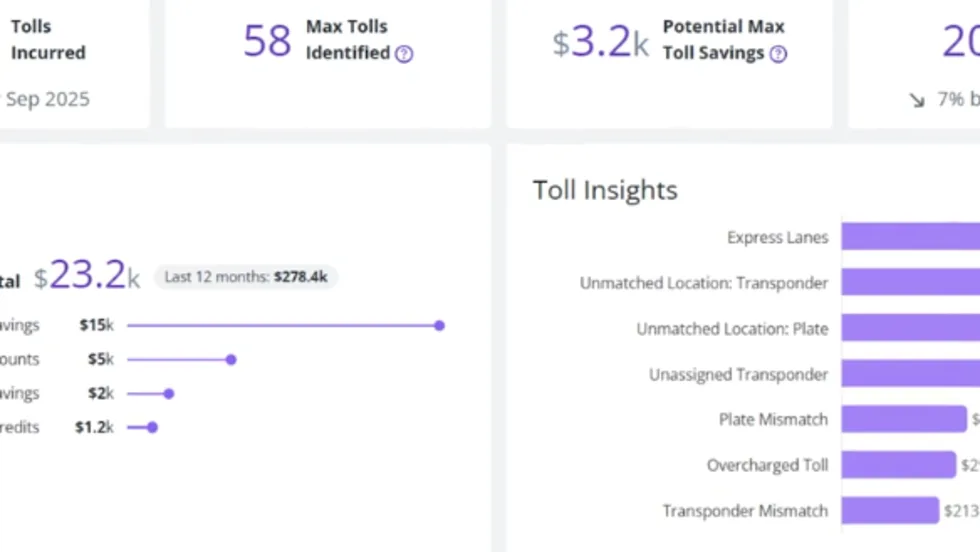
PrePass Intelligence Mines Fleet Bypass, Toll and Safety Data
PrePass Intelligence helps fleets measure bypass savings, flag potential toll overcharges, and spot suspicious transactions by combining data from separate systems.
Read More →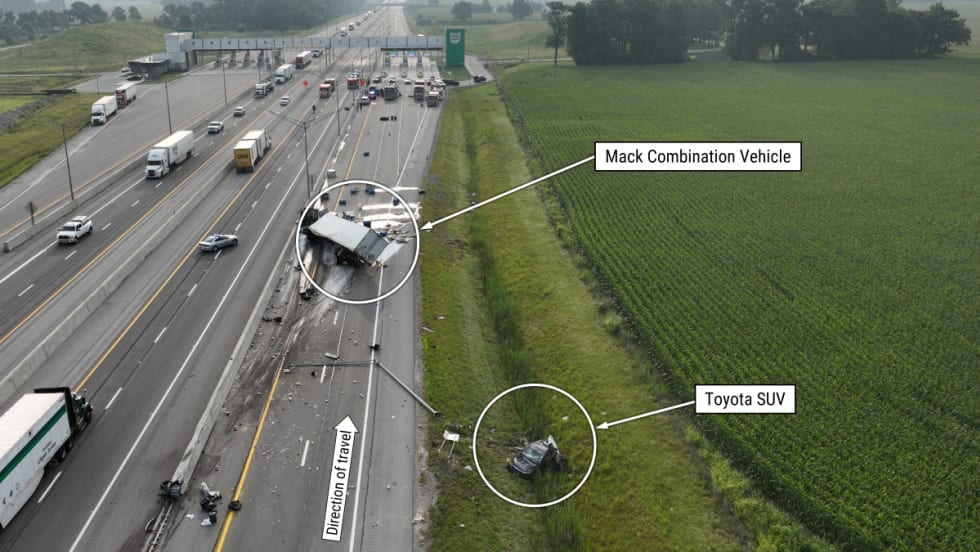
Fatal Crash Exposes Toll Plaza Risks
An NTSB investigation found that last-minute lane changes and large speed differences at an Ohio toll plaza created a hazard the truck driver couldn't avoid in time.
Read More →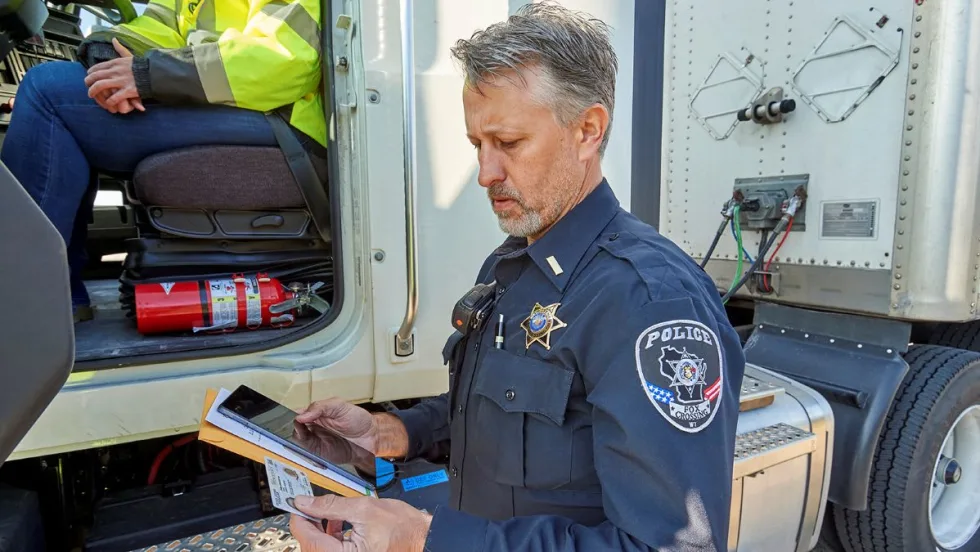
When Language Stops the Truck: The Return of ELP Out-of-Service Orders
English language proficiency rules for commercial drivers aren’t new, but renewed out-of-service enforcement has raised the stakes. Here’s what carriers need to know before a driver reaches a roadside inspection.
Read More →
A Camera Isn't a Safety Program. Here's What Brokers Are Screening for Now
Footage alone may not be enough to pass broker vetting processes. Here's what counts as a defensible safety program now.
Read More →
Marijuana and Trucking’s Drug-Testing Dilemma
Marijuana is getting stronger, laws are changing, and drug tests still can’t reliably establish impairment. What does that mean for truck drivers and the fleets that employ them?
Read More →
PrePass, Kodiak Connect Driverless Trucks to Roadside Enforcement
The system will allow enforcement agencies to verify Enhanced Inspection information and decide whether Kodiak’s autonomous trucks can bypass roadside screening sites.
Read More →
From One Generation to the Next: How Mentorship Builds Safer Truck Drivers
After three decades in trucking, Harold Perry shares what he's learned about driver safety, mentorship, and helping the next generation build confidence behind the wheel.
Read More →
FMCSA Pauses Biennial-Update Enforcement Amid Motus Transition
Carriers whose updates were due on or after June 1 have more time, while FMCSA works to stabilize its new registration system and warns of phishing sites impersonating its new carrier registration system, Motus.
Read More →
ZF Expands Commercial Vehicle Push in North America
ZF is expanding its North American commercial-vehicle presence with new transmission applications, electrification, trailer technology and autonomous-driving systems.
Read More →
Truck Drivers Need More Than Another Alert
Fleets have more visibility into truck health, safety events, and driver activity than ever. The next challenge is turning all that information into useful guidance for the person who has to decide what to do next.
Read More →