




Traton to Focus on Electric Trucks
The Traton Group (which is in the process of buying Navistar) announced it is investing $1.9 billion in research and development of e-mobility by 2025, and cutting its investment in traditional drivetrains.

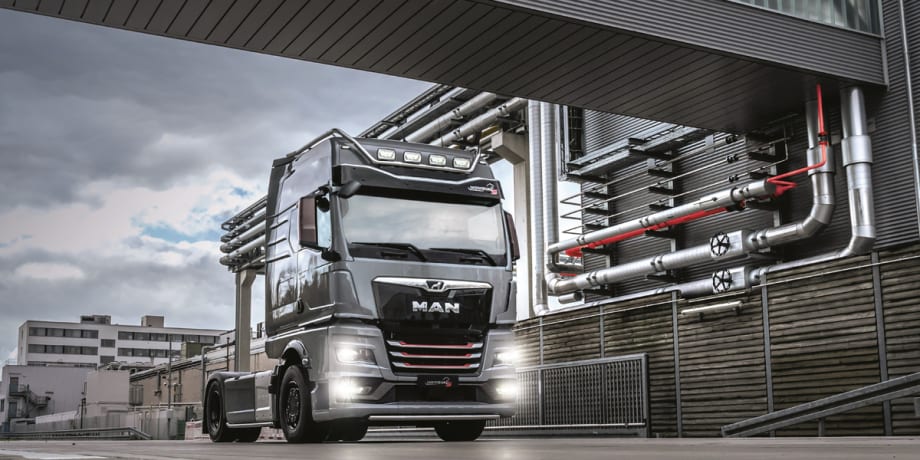
The Traton Group announced it is investing $1.9 billion in research and development of e-mobility by 2025.
Photo: Traton Group
The Traton Group announced it is preparing to transition to manufacturing electric trucks by investing $1.9 billion in research and development of e-mobility by 2025.
Traton, which is in the process of acquiring Navistar International, also is scaling back investments in conventional drives. By 2025, conventional drives will make up less than one-fifth of the company’s product development, and the share of product development dedicated to electric mobility will have doubled, company officials said in a press release.
“Traton is setting a clear focus on electric trucks,” said Matthias Gründler, chief executive officer of Traton SE. "This transition will not happen overnight. It will be gradual, sustainable, and in line with the required network expansion. If there is no charging infrastructure, it will not work."
The company’s main focus will be on battery-electric vehicles, seeing hydrogen as more of a niche technology. This is a different approach from some of its competitors that believe hydrogen will be necessary for long-haul applications.
Traton's belief is that most of the time, pure electric trucks will outperform their hydrogen counterparts as the more cost-efficient and eco-friendly solution for trucks, especially long-haul trucks.
“This is because compared to electric trucks powered by batteries alone, hydrogen trucks have one major drawback: Just one quarter of the energy output is ultimately used to power the vehicle, with the other three quarters lost along the way from the energy source to the road. This is the other way around for electric trucks,” explained Gründler.
He believes that the profitability of an electric truck and the amortization of its batteries come down to constant, heavy usage. And this is especially the case in long-haul heavy-duty transportation, company officials said.
"Niches" where hydrogen may take hold, he said, include coaches, for example, whose brief stops en route are not enough to charge them sufficiently. Hydrogen trucks may also play a role in regions where green hydrogen is particularly cheap, say near the North Sea wind farms or at ports.
Tranton brands have set concrete targets for 2025 and 2030: Electric vehicles will make up around 10% of Scania’s European unit sales in 2025, with half of MAN’s new buses also equipped with an electric drive system by the same year. By 2030, every second vehicle sold by Scania will be powered electrically and at least 60% of MAN’s delivery trucks and 40% of its long-haul trucks will be zero-emission.
More Fuel Smarts

How Volvo Updated Its D13 for EPA 2027 [Watch]
Volvo’s updated D13 promises lower emissions without sacrificing performance or fuel economy. Take a closer look at what changed inside the engine in this HDT Spotlight video.
Read More →
Diesel Price Spike Shortens Payback for Natural Gas Trucks, Report Says
Energy Vision estimates fleets could recover the higher purchase price of an RNG-fueled Class 8 tractor in 1.3 to 2.8 years under current fuel-price scenarios.
Read More →
Calstart Becomes Catalyst Mobility, Reflecting Broader Focus
Calstart is now Catalyst Mobility, reflecting the nonprofit’s growing national role in clean transportation, including zero-emission trucks, infrastructure and incentive programs.
Read More →

Record Diesel Prices Squeeze Trucking Fleets
Average U.S. diesel prices have climbed to nearly $6 a gallon, surpassing the 2022 record as tight refinery capacity and Middle East disruptions keep fuel costs elevated.
Read More →
How Fuel Delivery Shapes Engine Performance
Fuel delivery depends on more than what happens at the injector. For fleet, maintenance and technical professionals, looking at the full path from pump to injector can provide useful context for understanding engine performance.
Read More →
East Coast Port Launches $45M Electric Truck Push
The Port Authority of New York and New Jersey announced millions in incentives for zero-emission drayage trucks, yard tractors, and new charging hubs near the port.
Read More →
California Bill Could Shed Light on Electric Truck Prices
Why do battery-electric Class 8 trucks remain so expensive? A California bill headed to Gov. Gavin Newsom would give fleets and state agencies more visibility into what manufacturers charge.
Read More →
Detroit Opens Orders for EPA 2027 Engines
Detroit isn’t starting from scratch to meet EPA 2027 diesel emissions standards. Its Gen 6 DD13 and DD15 engines keep much of today’s platform while updating the fuel and aftertreatment systems.
Read More →
Zero-Emission Truck Corridor Planned for West Coast
California, Oregon, Washington, British Columbia and Baja California are coordinating plans for truck charging and hydrogen fueling from Canada to Mexico.
Read More →
A Closer Look at Kenworth’s Electric T880E Vocational Truck [Video]
Learn more about Kenworth's T880E battery-electric vocational truck at the Paccar Technical Center, including its range, applications, upfitting considerations, and PTO options, in this HDT Spotlight video.
Read More →