




Can We Trust Autonomous Driving Technology?
There is a huge amount of activity in the tech sector surrounding the development and deployment of self-driving vehicles. Are they ready for the road?
March 19, 2021

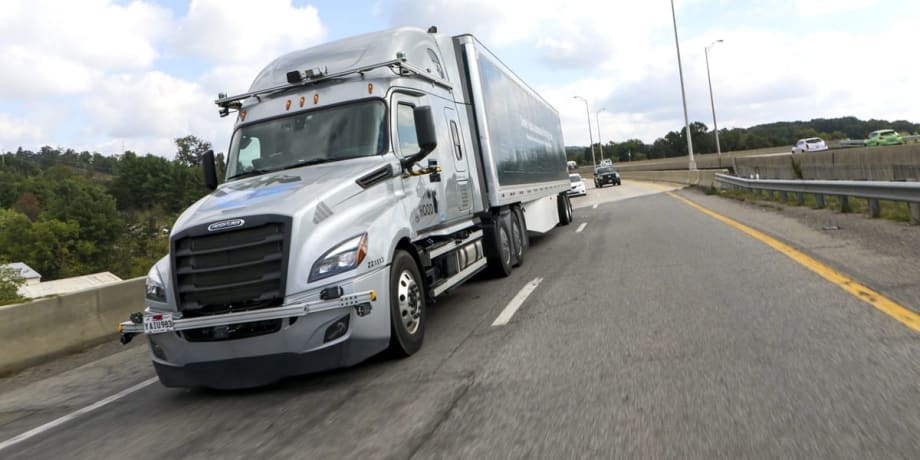
Torc Robotics is collaborating with Daimler Trucks on autonomous truck development.
Photo: Torc
3 min to read
There is a huge amount of activity in the tech sector surrounding the development and deployment of self-driving vehicles. New startups seem to appear on a nearly weekly basis that have to perform for investors. Traditional truck makers are putting money into autonomous R&D, as well, and partnering with some of the tech companies.
None of those companies is claiming it is ready today, but some have said they will have driverless trucks on the road by next year.
That worries some people.
“There’s no company that’s got this worked out,” says self-described techno-realist and Duke University Robotics and Artificial Intelligence professor Mary “Missy” Cummings. “Using machine learning, deep learning, to actually power intelligence that can operate in generalizable domains is just fantasy right now.”
Cummings, who works with this technology every day, says there are millions of situations with slightly different presentations that could confuse the driverless car or truck. For example, “A stop sign with a half-inch of snow on it does not look the same to an autonomous vehicle as a regular stop sign. A stop sign with three-quarters of an inch of snow is totally different than a stop sign and a half-inch of snow, or a stop sign with no snow,” she says. “Slight variations in the environment can really confuse the vision systems and cause the artificial intelligence to fail.”
We don’t hear about the failures the autonomous truck developers experience. To be fair, there have been only a few reportable crashes involving autonomous trucks to date (and they have all had safety drivers behind the wheel). Most have been fender-benders that the truck was involved in, not the cause of.
That said, we do not have a bar or a line in the sand that provides an indication of when these trucks could be deemed “safe enough” to operate on public highways without safety drivers.
“There are a lot of different [key performance indicators] and metrics that have been promoted in the self-driving space, but I will tell you that I’m not a big believer in number-of-miles-driven nor miles-driven-per-disengagement,” says Michael Fleming, CEO of Torc Robotics, which is collaborating with Daimler Trucks on autonomous truck development. “We’re taking the approach here of not making promises that self-driving trucks will be commercially available in one year. Because as someone who has been in the space for 15 years, I’ll tell you very frankly, that that will not happen or will not happen in a safe fashion.”
Cummings believes these companies will make progress toward safe driverless cars and trucks, but she worries that each of them will make more mistakes than they would if they pooled their resources.
“I have long called for the companies to collaborate, because I think the problem is still so big and so vast that each individual company cannot solve this problem on their own,” she says. “But if they work together, they could make a lot more progress.”
That, however, is not what drives shareholder value.
There is increasing collaboration between truck makers and AI-driven companies. For instance, Torc has a long-term position with its OEM partner, Daimler. Torc is developing its virtual driver with Daimler, not just bolting it on.
“In my opinion, that is not commercially viable,” says Fleming. “Daimler is in the process of reinventing the truck to be self-driving. You have to look at this as a complete [intellectual property] product stack. That includes the reinvented truck, the hardware, and the virtual driver. And by optimizing that entire IP product stack, you can bring to market a cost-effective, safe product that creates value for Daimler’s customers. We’re focused on the product as opposed to headlines.”
This article originally appeared in the March print edition of Heavy Duty Trucking as a sidebar to the cover story "Building an Autonomous Truck Driver.'
Subscribe to Our Newsletter
More Equipment

How Volvo Updated Its D13 for EPA 2027 [Watch]
Volvo’s updated D13 promises lower emissions without sacrificing performance or fuel economy. Take a closer look at what changed inside the engine in this HDT Spotlight video.
Read More →
Michelin Tire Improves Efficiency and Durability for Regional Fleets
The Michelin X Multi Energy D2 is a regional haul drive tire engineered to help fleets improve fuel efficiency, durability and traction in demanding stop-and-go operations.
Read More →
ZF Expands Commercial Vehicle Push in North America
ZF is expanding its North American commercial-vehicle presence with new transmission applications, electrification, trailer technology and autonomous-driving systems.
Read More →
Tesla Wants a Self-Driving Semi. Are Cameras Enough?
Could Tesla’s camera-only autonomous driving technology work on an 80,000-pound Semi? In this commentary, HDT's Deborah Lockridge takes a look at Tesla, Cybercab, and how autonomous trucks see the road.
Read More →
Kodiak: Driverless Long-Haul Truck Launch on Track for 2026
Kodiak AI says its driverless long-haul safety case is 93% complete and it remains on track to begin commercial operations by year-end 2026.
Read More →
What DOT’s Automated Vehicle Strategy Means for Trucking
The U.S. Department of Transportation issued a new automated-vehicle strategy that outlines plans for driverless-truck regulations, cross-state freight corridors, and federal safety standards.
Read More →
East Coast Port Launches $45M Electric Truck Push
The Port Authority of New York and New Jersey announced millions in incentives for zero-emission drayage trucks, yard tractors, and new charging hubs near the port.
Read More →
PlusAI Going Public to Fund Autonomous Truck Launch
A SPAC deal could provide PlusAI with up to $300 million as it works toward a 2027 commercial launch of factory-built autonomous trucks.
Read More →
NHTSA Moves to Rewrite Truck Fuel-Economy Rules
The National Highway Traffic Safety Administration says it lacks authority to regulate medium- and heavy-duty truck engines separately from complete vehicles, but the existing standards have not yet been eliminated.
Read More →
Detroit Opens Orders for EPA 2027 Engines
Detroit isn’t starting from scratch to meet EPA 2027 diesel emissions standards. Its Gen 6 DD13 and DD15 engines keep much of today’s platform while updating the fuel and aftertreatment systems.
Read More →