





Read HDT's in-depth series, Trucking Under the Influence
Hair Testing Could Take Nearly 300,000 Truck Drivers Off the Road
New research validates a study that almost 300,000 truck drivers would fail a hair test for drug use today, according to The Alliance for Driver Safety and Security, which did the original study and funded the validating research.
July 10, 2020

Maverick is one of a number of trucking fleets that use hair testing to screen drivers for drug use.
Photo: Maverick
4 min to read
New research validates a study that almost 300,000 truck drivers would fail a hair test for drug use today, according to The Alliance for Driver Safety and Security, which did the original study and funded the validating research.
Written by Doug Voss and Joe Cangelosi at the University of Central Arkansas, the peer-reviewed research article will appear in the upcoming issue of the Journal of Transportation Management (July 2020).
“Drug Testing in the U.S. Trucking Industry: Hair vs. Urine Samples and the Implications for Policy and the Industry” examined trucking industry data and found about 300,000 truck drivers would be removed from their positions if forced to pass a hair drug test.
Hair testing opponents argue that the test is biased against ethnic minority groups, the researchers note, but “comparing urine and hair pass/fail rates for various ethnic groups, our results indicate ethnic groups are significantly different irrespective of testing procedure.”
The report cites several studies and articles that “highlight the possibility that current federally accepted urinalysis is insufficient to deter and catch drivers who may abuse substances that degrade their driving performance.”
Because of problems with drivers being able to cheat urine testing, some motor carriers, including Schneider, Knight-Swift Transportation, J.B. Hunt Transport, Werner Enterprises and Maverick, use more stringent hair drug tests, the Trucking Alliance last year conducted a study comparing pass/fail rates for urine and hair drug screens. Using 151,662 paired pre-employment urine and hair drug test results from 15 different trucking companies, their results indicated that 949 (0.6%) applicants failed the urine test while 12,824 (8.5%) failed or refused the hair test
The Alliance extrapolated their results over a population of 3.5 million U.S . truck drivers and claimed that, if their results were generalized across the U.S. driver population, almost 300,000 current drivers would not be on the road if forced to pass a hair test. However, no evidence was presented to justify whether their sample was, in fact, generalizable.
In addition, opponents of hair tests have argued that they are biased against certain ethnic groups based on hair composition. Several authors, however, “have argued that the bias claim is spurious,” according to the Arkansas researchers.
About the Research
University of Central Arkansas researchers were given access to data independently provided by cooperating trucking companies that employ hair testing in addition to urinalysis. The goals were to determine if:
The Trucking Alliance sample is generalizable, which would support their claim that roughly 275,000 drivers would be unable to engage in safety sensitive functions if forced to pass a hair test and,
whether hair testing has a disparate impact on minority ethnic groups.
Based on its review, researchers concluded that:
The Trucking Alliance sample is large enough to generalize across the national driver population;
The Trucking Alliance sample is representative of the national driver population;
The Trucking Alliance urinalysis v. hair test results can be generalized across the national driver population. This supports the notion that roughly 275,000 current drivers would be unable to perform safety sensitive functions if forced to undergo hair testing.
Researchers also reported that they were unable to find disparate impacts of hair testing among the ethnic groups.
DOT Slow to Act on Hair Testing
Congress authorized the DOT to recognize hair testing of commercial drivers in 2015. Congress directed the Department of Health and Human Services (HHS) to write hair test guidelines. “Despite other internationally recognized lab standards for hair testing in existence now, HHS is now almost four years behind its deadline,” said Lane Kidd, managing direcotr of The Trucking Alliance.
In fact, in 2018, the bipartisan Opioid Crisis Response Act of 2018 directed the Substance Abuse and Mental Health Services Administration to report to Congress on its progress creating and issuing guidelines for hair testing.
The researchers also said their work shows that more research should be done on drug testing. “The supply chain literature is largely silent on the drug testing debate … Future investigations may wish to examine trucking company drug testing best practices, such as when drivers are most likely to test positive or the relationship between the number of positive random drug screens and safety performance.”
About the researchers: Douglas Voss is professor of Logistics and Supply Chain Management at the University of Central Arkansas. He holds a Ph.D. from Michigan State University. Joseph D. Cangelosi Jr is the Textbook Brokers Professor of Marketing at the University of Central Arkansas. His research focuses on statistical analysis and analytics across various topics, including logistics, He has a D.B.A. from Louisiana Tech University.
Hair Testing and the Clearinghouse
On a related note, in comments filed last month with the Federal Motor Carrier Safety Administration, the Trucking Alliance urged that the agency accept a truck driver’s previously failed hair test for drug use, to the newly established Drug and Alcohol Clearinghouse.
Current FMCSA policy states that if an employer becomes aware of a commercial motor vehicle driver’s drug or alcohol abuse, other than the DOT urinalysis test, this constitutes an employer’s ‘actual knowledge.’ This knowledge should be reported to FMCSA, specifically, to the clearinghouse, contends the Alliance.
The Trucking Alliance believes that, as long as the testing method meets generally accepted laboratory standards, FMCSA should recognize a failed hair test as an employer’s actual knowledge, and the test results should be reported to the clearinghouse.
More Safety & Compliance

More Trailer Data Through the Same Seven-Way [Video]
Can trucking’s standard seven-way connector handle more cameras and trailer data? Grote’s Adam Slade shows HDT how the company is using new technology with its 4See trailer system, not only to add a new backup camera but also to expand other capabilities — without adding another connection.
Read More →
PrePass Intelligence Mines Fleet Bypass, Toll and Safety Data
PrePass Intelligence helps fleets measure bypass savings, flag potential toll overcharges, and spot suspicious transactions by combining data from separate systems.
Read More →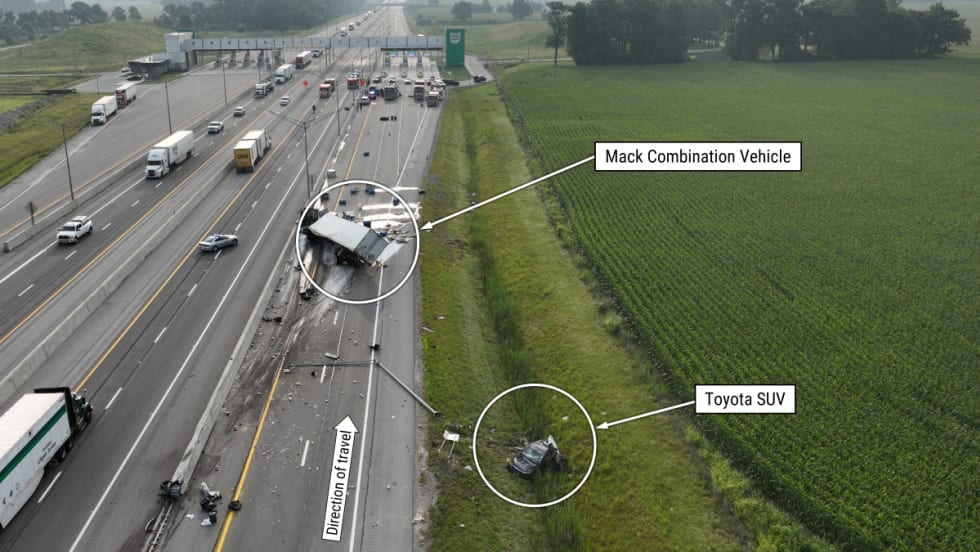
Fatal Crash Exposes Toll Plaza Risks
An NTSB investigation found that last-minute lane changes and large speed differences at an Ohio toll plaza created a hazard the truck driver couldn't avoid in time.
Read More →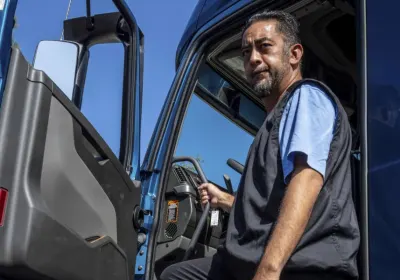
When Language Stops the Truck: The Return of ELP Out-of-Service Orders
English language proficiency rules for commercial drivers aren’t new, but renewed out-of-service enforcement has raised the stakes. Here’s what carriers need to know before a driver reaches a roadside inspection.
Read More →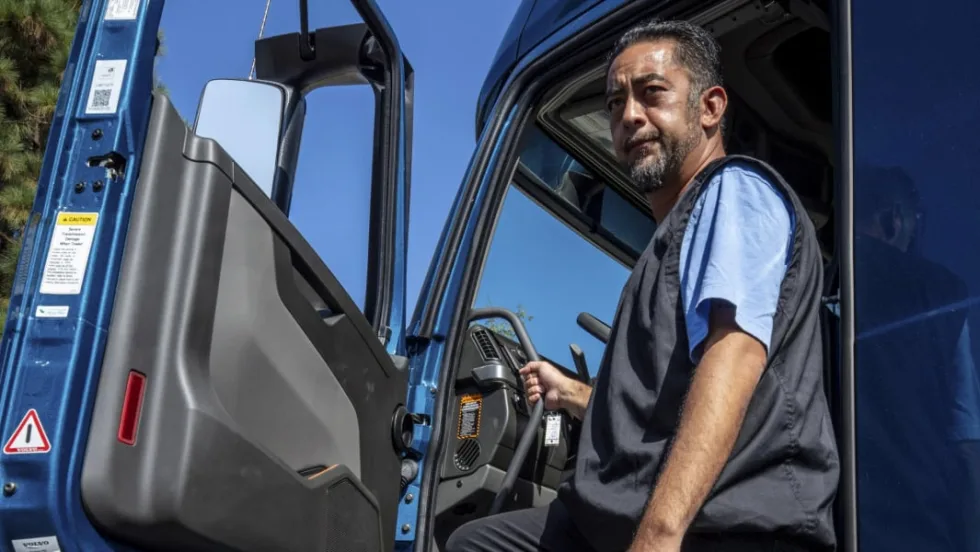
Sponsored•October 6, 2026
A Camera Isn't a Safety Program. Here's What Brokers Are Screening for Now
Footage alone may not be enough to pass broker vetting processes. Here's what counts as a defensible safety program now.
Read More →
Marijuana and Trucking’s Drug-Testing Dilemma
Marijuana is getting stronger, laws are changing, and drug tests still can’t reliably establish impairment. What does that mean for truck drivers and the fleets that employ them?
Read More →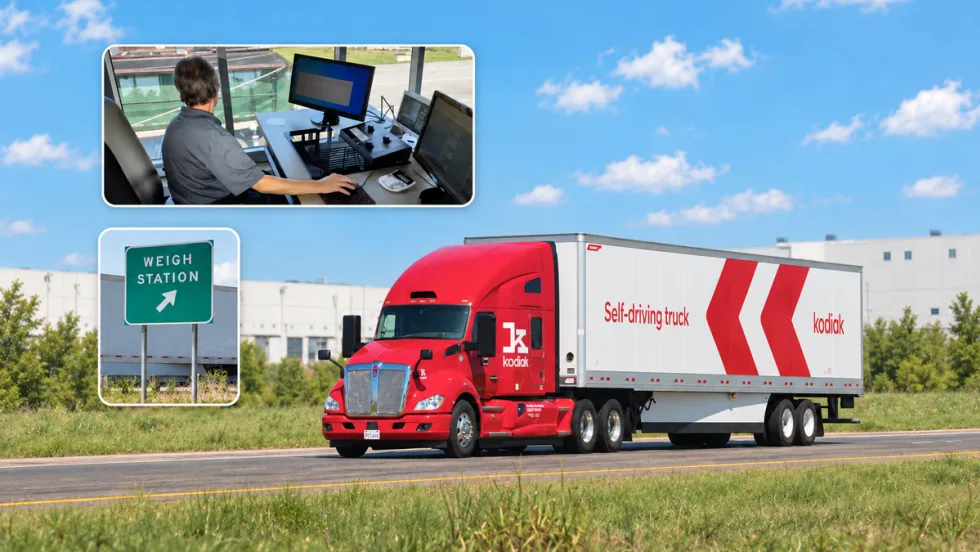
PrePass, Kodiak Connect Driverless Trucks to Roadside Enforcement
The system will allow enforcement agencies to verify Enhanced Inspection information and decide whether Kodiak’s autonomous trucks can bypass roadside screening sites.
Read More →
From One Generation to the Next: How Mentorship Builds Safer Truck Drivers
After three decades in trucking, Harold Perry shares what he's learned about driver safety, mentorship, and helping the next generation build confidence behind the wheel.
Read More →
FMCSA Pauses Biennial-Update Enforcement Amid Motus Transition
Carriers whose updates were due on or after June 1 have more time, while FMCSA works to stabilize its new registration system and warns of phishing sites impersonating its new carrier registration system, Motus.
Read More →
ZF Expands Commercial Vehicle Push in North America
ZF is expanding its North American commercial-vehicle presence with new transmission applications, electrification, trailer technology and autonomous-driving systems.
Read More →