




Related: 5 Things Trucking Fleets Need to Know About COVID-19 and Workers’ Comp
Pandemic No Time to Relax Safety Standards
An unprecedented global pandemic such as COVID-19 is no excuse to relax investments in safety technologies.
by James Menzies, Today's Trucking
June 23, 2020
Image: Enriquelopezgarre via Pixabay
5 min to read
An unprecedented global pandemic such as COVID-19 is no excuse to relax investments in safety technologies.
“I don’t believe any of us changed our approach to incorporating technology in our spec’s because of a relatively short-term phenomenon [such as COVID-19],” said Ed Nagle, president of Nagle Toledo. He was speaking as part of an executive panel during the Truckload Carriers Association’s Virtual Safety and Security Meeting on June 23.
Dennis Dellinger, president and CEO of Cargo Transporters agreed, noting the most recent additions to his fleet over the last few weeks include tractors with the new Detroit Assurance 5.0 active safety systems, and trailers equipped with disc brakes. Side cameras are being installed on the fleet’s existing trucks.
“We’ve stuck to our guns on safety,” Dellinger said.
Raising the Alarm
But that doesn’t mean the pandemic hasn’t raised other safety-related concerns. Dave Williams, executive vice president of Knight Transportation, said he finds drivers can be more accident-prone during uncertain times.
“My own theory on that is, when a driver has something to do, is getting a good paycheck and everything is flowing right, everything is good and he stays very focused. When they’re worried about their paycheck and not sure they’re going to get another load, and they have to wait around because there isn’t a load to be had, when they finally do get that load, they sometimes don’t make the best decisions,” Williams explained. “It’s important for us to understand when we are safe, why is that? And when we aren’t safe, why is that?”
Safety can also be compromised during a disruption such as a pandemic, because drivers are taken out of their routines, added Dan Doran, president of Doran Logistics Services.
“When things are busy, drivers tend to run the same routes more often and get in a groove. When things slow down and get scrambled, you wind up with drivers in different locations they wouldn’t normally go to, and they’re a little less familiar with their surroundings,” he reasoned.
Ensuring Driver Safety
Fleets took various steps to assure their drivers during the pandemic. Cargo Transporters equipped drivers with masks and hand sanitizers, and offered an online course on COVID-19. When it came time to furlough drivers, instead of resorting to seniority or taking a last-in/first-out approach, it parked those drivers who were most concerned about their safety and that of their families. It allowed those drivers who wanted to continue working to do so, while those with the greatest concerns were allowed to stay home with their families.
Nagle Toledo gave drivers hazard pay for six weeks.
“It was a sign, on our part, of the appreciation we had because of everything they were working through,” said Nagle.
It also chose to keep its home office fully staffed.
“We never quit coming to the office,” Nagle said. “We thought it was important for drivers, when they were here, to see someone who wasn’t afraid, and they were really assured being out there on the road.”
But for those companies that did allow office workers to work from home, there were some surprising successes, noted Williams.
“I think the video calls have really upped our game, in being able to effectively communicate with each other,” he said of platforms such as Zoom and Microsoft Teams.
“There are certain parts of this business that lend themselves to this type of video conferencing,” added Doran. “But in operations, there’s absolutely no substitute for being in close proximity when things are busy.”
Fleets represented on the panel acknowledged they weren’t prepared for a pandemic such as COVID-19, but they were able to draw on other disaster preparedness plans to cope.
“I don’t think any of us really had pandemic on our radar,” admitted Williams. “In our minds, the likelihood of having a pandemic was about the same as having a zombie apocalypse – it was something our generation had never seen before. Our planning was more hinged around things we were familiar with: natural disasters, tornados, hurricanes – things like that. Fortunately, a lot of the planning we did around those natural disaster plans was able to be incorporated into a pandemic [response plan].”
Moving Towards Recovery
In terms of the recovery, fleet executives said they’re already seeing volumes come back gradually, which is likely the best type of recovery from a safety perspective. Cargo Transporters suspended driver orientations for about 11 weeks, but they could see a labor crunch if business returned to pre-COVID levels overnight. Dellinger would prefer to see a “Nikey swish”-shaped recovery than a V.
“We have some trucks that are unseated at this time, and if we came roaring back to 100%, we would not be able to service those customers we have,” he said. However, he added some companies won’t survive, so there will be drivers available.
Doran Logistics Services has also seen volumes coming back gradually.
“It’s probably a good thing, rather than coming back to 100% right away,” he agreed.
If anything positive has come from the pandemic, it may be that trucking and truck drivers have finally enjoyed some long-elusive adoration from the general public. Panelists all hoped that will continue long after the pandemic has passed.
“There is no more honorable profession than truck driving,” said Nagle. “They do nothing for themselves, they are always doing something for somebody else.”
Nagle urged trucking companies to keep sending that message out into the communities they serve, since “it’s being much more easily received by the general public right now.”
James Menzies is the editor of Today's Trucking, where this article originally appeared, and was used with permission from Newcom Media as part of a cooperative editorial agreement.
More Safety & Compliance
How Lance Evans Turns Enforcement Experience Into Better Fleet Safety
HDT Truck Fleet Innovator Lance Evans brings lessons from law enforcement to K&B Transportation’s approach to safety technology, data, driver coaching, and compliance.
Read More →
New FMCSA Chief Safety Officer Has Trucking Industry and Law Enforcement Experience
Steve Dowling joins FMCSA after serving as senior director of safety at Covenant Logistics and in leadership roles in commercial motor vehicle industry organizations.
Read More →
Driver Trust Can Make or Break the Success of Fleet Safety Technology
New Teletrac Navman research suggests that onboarding, transparency about driver data, and positive feedback can play a significant role in how commercial drivers respond to safety and coaching technology.
Read More →
FMCSA: Stop Using These 15 Electronic Logging Devices
Fleets and drivers must replace the revoked ELDs with ones on the FMCSA's registered device list of electronic logging devices.
Read More →
How HDT’s 2026 Truck Fleet Innovators Are Rethinking Fleet Operations
Meet five trucking leaders who are challenging assumptions, solving operational problems, and putting innovative ideas to work.
Read More →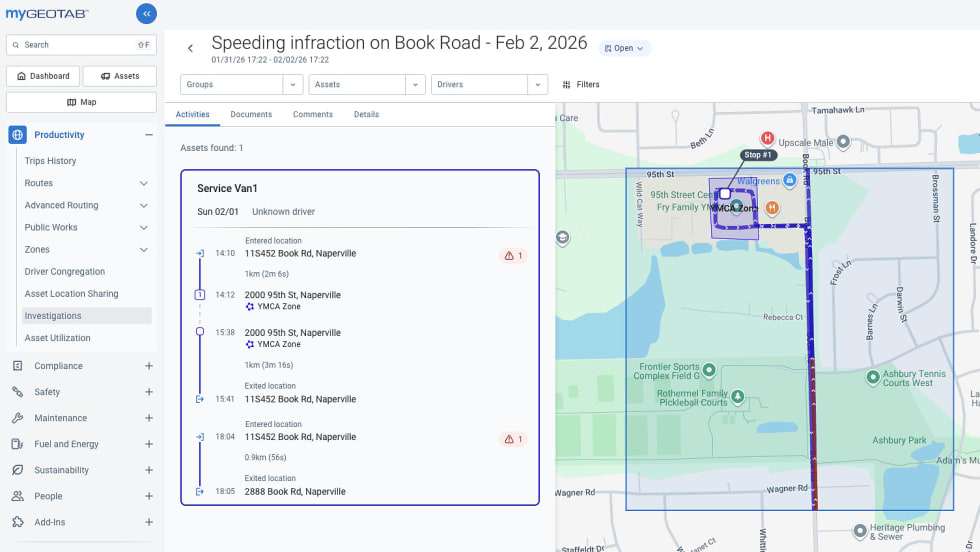
Geotab Launches Tool to Speed Fleet Incident Investigations
Geotab Investigations brings telematics data, video, photos, reports and other evidence into one case file to help fleets determine what happened and resolve incidents faster.
Read More →
FMCSA Moves to Codify English Language Requirements for Commercial Drivers
By changing regulations on English-language proficiency requirements for commercial drivers, rather than relying on a guidance memo, the FMCSA said future administrations won't be able to walk back the Trump administration's stricter enforcement with just a memo.
Read More →
Trump Administration Expands Homeland Security's Role in Trucking Enforcement
The administration's latest trucking crackdown goes beyond roadside inspections, expanding Homeland Security's role in commercial vehicle enforcement and investigations involving CDL training schools.
Read More →
Paccar Recalls 2027 Trucks Built This Summer for Possible Electrical Problem
The nearly 6,000 Kenworth and Peterbilt trucks in the recall could potentially lose engine power, among other things.
Read More →
Brake Safety Week to Focus on Drums and Rotors
Commercial vehicle inspectors will be focusing on brakes during CVSA's Brake Safety Week, August 23-29.
Read More →