





How Accountability, Coaching, and Technology Turned a Safety Record Around
Driver Trust Can Make or Break the Success of Fleet Safety Technology
New Teletrac Navman research suggests that onboarding, transparency about driver data, and positive feedback can play a significant role in how commercial drivers respond to safety and coaching technology.
August 17, 2026
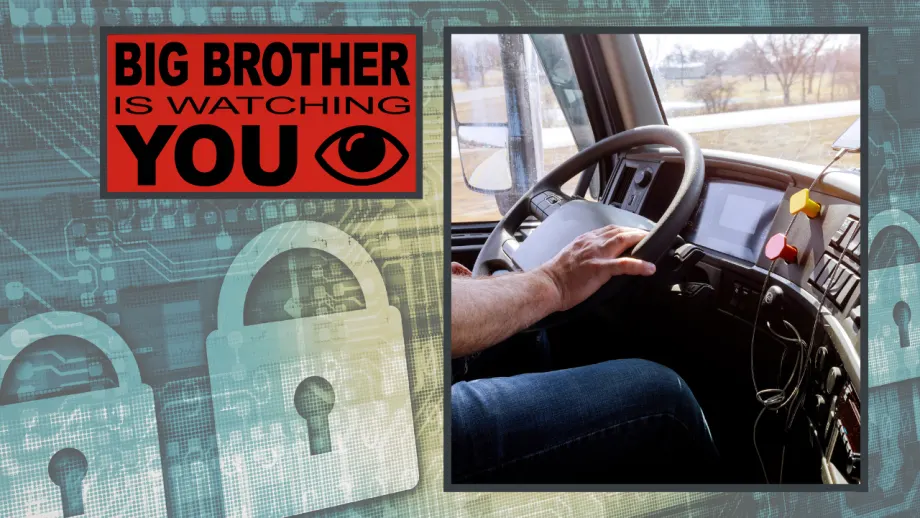
Transparency with truck drivers about how data captured by safety technology will be used goes a long way toward acceptance and effectiveness.
Credit:
HDT
5 min to read
Trucking fleets investing in driver safety and coaching technology may need to pay as much attention to how they introduce and use the technology as they do to the technology itself.
A new survey from fleet management technology provider Teletrac Navman found that 68% of drivers received some form of onboarding for safety technology. Among drivers who felt well-prepared to use their coaching solution, three-quarters rated the technology as highly effective.
The findings, part of Teletrac Navman’s "Mobilizing the Future of Fleets Report: Driver Coaching Edition," point to driver trust and transparency as important factors in getting drivers to embrace — rather than resist — safety technology.
“Technology alone doesn't drive safety outcomes; preparation does,” said Alain Samaha, CEO of Teletrac Navman, in a news release. “Monitoring technology is most successful when it balances fleet goals and driver needs, and that starts with strong onboarding.”
And with competition heating up for truck drivers, and litigation and insurance rates pushing more fleets to adopt safety technologies, effective onboarding is more important than ever.
The Importance of Effective Onboarding of Safety Tech
Drivers are three times more likely to view coaching and feedback as highly effective when they are onboarded properly (74%), compared to those who felt their initial preparation was lacking (19%), according to Teletrac Navman.
Yet 1 in 5 (20%) of all drivers surveyed said technology was installed in their vehicles with little or no communication from management.
"Multiple communication milestones are therefore vital," the report explains. "Fleets need to explain what is changing, why it is changing, where the technology will be used, when drivers will experience it, and how it will affect their day-to-day work.
"Silent installations create immediate barriers that can take months to remove, if they can be removed at all."
The report is the result of a survey of 600 commercial drivers across the United States, the United Kingdom, Australia, and New Zealand.
Poor Tech Rollouts Can Cause Mistrust and Confusion
Even after implementation of safety technology, driver mistrust often continues because the rules of data use remain unclear or they're confused about how the system is supposed to work, according to the report.
A big issue is uncertainty over whether the technology will be applied fairly. The survey showed monitoring as the top concern for drivers (45%), meaning that safety technology, particularly cameras, can be interpreted as unnecessary observation if fleets do not clearly define its purpose.
On top of that, nearly one-fourth of drivers said they were confused about how the system is meant to work. When drivers are already stressed or fatigued, unexplained alerts can feel like an additional distraction rather than a useful safeguard.
More than two-thirds of drivers reported they had immediate problems after a technology roll-out linked to ineffective onboarding.
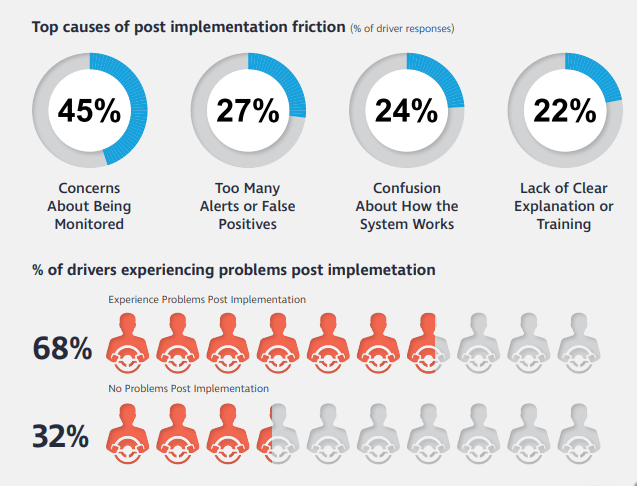
Even after safety technology onboarding, nearly one-fourth of drivers said they were confused about how the system is meant to work.
Credit:
Teletrac Navman
Drivers Want to Know How Their Data Is Used
Privacy and surveillance remain significant concerns for drivers.
The survey found 45% of drivers cited unclear data-use policies and surveillance as a top concern. At the same time, 30% said clear evidence that technology is being used to protect them, rather than simply monitor them, would encourage them to stay with their current employer.
Giving drivers access to their own performance data could help address some of those concerns. Nearly half of respondents, 47%, said being able to easily view their own data would increase their trust in the technology.
Another 43% pointed to the importance of fleets using driver data fairly and consistently across the workforce.
When it comes to accessing that information, 60% of drivers said they preferred a driver app.
For fleets, the findings suggest that simply telling drivers that a camera, telematics system, or coaching platform is intended to improve safety may not be enough. Drivers also want to understand what information is being collected, how it will be used, and how decisions based on that data will affect them.
Positive Driver Feedback Matters
The study also points to a gap between collecting driver performance data and using it to recognize good driving.
Although 99% of surveyed drivers said they receive some type of feedback, only 51% said they receive positive recognition. By comparison, 32% reported experiencing disciplinary action.
Recognition also appears to have implications for driver retention. Thirty-seven percent of respondents cited recognition as a factor that could influence them to stay with an employer.
And drivers may value useful performance feedback more than fleets expect.
More than half, 52%, said proactive feedback such as driver scorecards and performance breakdowns improved their driving quality and workplace pride. Only 21% said the same of financial bonuses.
The research also found a difference in reported near misses among drivers receiving real-time coaching. Fifty-six percent of drivers with real-time in-cab coaching said they rarely experienced a near miss, compared with 47% of drivers without real-time alerts.
That finding suggests there may be value in giving drivers feedback while they still have an opportunity to correct risky behavior, rather than relying exclusively on coaching sessions conducted after an event.
The survey also found that 60% of drivers felt feedback is fair and consistent when video and data are incorporated into coaching. Including video and data in driver coaching also increases the driver’s perception of the coaching as “very effective,” from 39% to 55%.
Safety Events Can Affect Driver Confidence
Safety events can have consequences beyond vehicle damage, insurance claims, and downtime.
Thirty-eight percent of surveyed drivers said they experienced increased stress or anxiety following a negative driving event, while 17% reported reduced confidence.
Drivers also worried about the potential professional consequences. One-quarter were concerned an incident could result in losing their license, while 20% feared formal disciplinary action and 17% worried about financial penalties.
For fleet managers, those findings reinforce the importance of how safety events are handled after they occur. Timely, constructive coaching can help drivers understand what happened and what they can do differently. Conversely, an approach perceived primarily as punitive could undermine confidence and trust in the safety program.
The larger lesson from the research is that deploying safety technology is only part of the job. Fleets also need to explain why they are using it, give drivers visibility into their own data, apply policies consistently, and recognize good performance along with addressing risky behavior.
More Safety & Compliance
PrePass, Kodiak Connect Driverless Trucks to Roadside Enforcement
The system will allow enforcement agencies to verify Enhanced Inspection information and decide whether Kodiak’s autonomous trucks can bypass roadside screening sites.
Read More →
From One Generation to the Next: How Mentorship Builds Safer Truck Drivers
After three decades in trucking, Harold Perry shares what he's learned about driver safety, mentorship, and helping the next generation build confidence behind the wheel.
Read More →
FMCSA Pauses Biennial-Update Enforcement Amid Motus Transition
Carriers whose updates were due on or after June 1 have more time, while FMCSA works to stabilize its new registration system and warns of phishing sites impersonating its new carrier registration system, Motus.
Read More →
ZF Expands Commercial Vehicle Push in North America
ZF is expanding its North American commercial-vehicle presence with new transmission applications, electrification, trailer technology and autonomous-driving systems.
Read More →
Truck Drivers Need More Than Another Alert
Fleets have more visibility into truck health, safety events, and driver activity than ever. The next challenge is turning all that information into useful guidance for the person who has to decide what to do next.
Read More →
Tesla Wants a Self-Driving Semi. Are Cameras Enough?
Could Tesla’s camera-only autonomous driving technology work on an 80,000-pound Semi? In this commentary, HDT's Deborah Lockridge takes a look at Tesla, Cybercab, and how autonomous trucks see the road.
Read More →
What DOT’s Automated Vehicle Strategy Means for Trucking
The U.S. Department of Transportation issued a new automated-vehicle strategy that outlines plans for driverless-truck regulations, cross-state freight corridors, and federal safety standards.
Read More →
NYC Expands Speed, Pedestrian Safety Tech Across Fleet
New York City is expanding intelligent speed assistance and pedestrian-alert systems across its municipal fleet, moving the technologies from pilot programs into vehicle procurement and retrofit requirements.
Read More →
FMCSA Removes 110 Truck Driver Training Schools from Certified ELDT List
Federal regulators also are targeting more than 160 additional training providers and launching a nationwide audit of third-party CDL skills testers as part of a broader crackdown on trucking fraud.
Read More →
Beyond DOT Compliance: What Makes a Trucking Fleet Truly Safe?
A trucking fleet can follow every rule and still make unsafe decisions. The real test comes when safety conflicts with freight, productivity, or cost.
Read More →