




XL Fleet, eNow Partner to Electrify Refrigerated Trailers
XL Fleet will supply battery and power electronics systems for the first 1,000 units of eNow’s new electrified refrigerated trailer solutions.
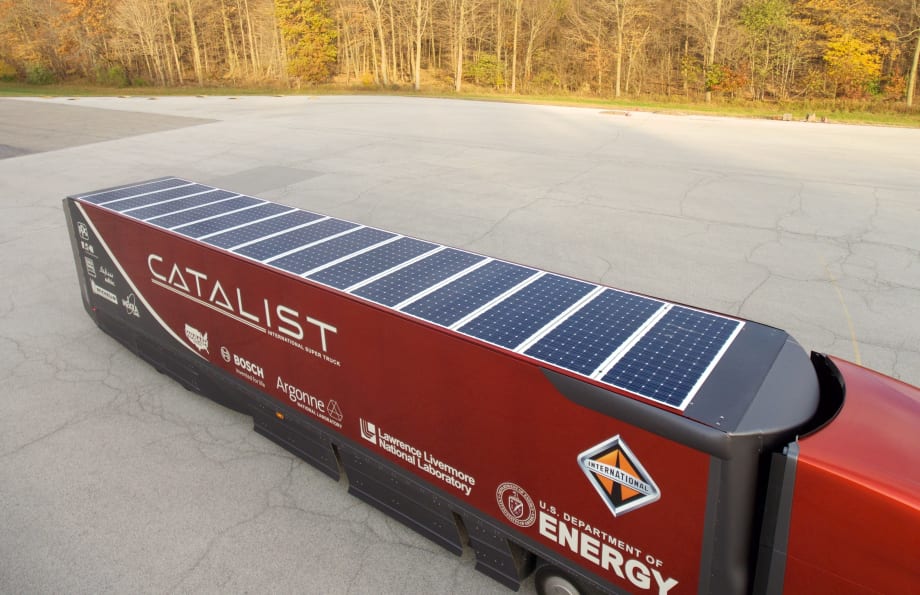
XL Fleet to provide battery and power electronics systems for eNow’s electrified refrigerated trailer solution.
Photo: Business Wire
XL Fleet, a provider of vehicle electrification solutions, has announced a development and supply agreement with eNow, a provider of solar- and battery-powered systems for fully electric transport refrigeration units (eTRUs) for Class 8 commercial trailers.
Under the agreement, XL Fleetwill supply battery and power electronics systems for the first 1,000 units of eNow’s new electrified refrigerated trailer solutions.
XL Fleet invested $3 million in convertible notes in eNow. Additionally, XL Fleet stated it has the right to acquire eNow at a pre-determined valuation.
Design and development
The two companies will be collaborating on the design and development of the system that will power eTRUs as a replacement for conventional diesel-powered generators. The company stated that eTRUs deliver a lower total cost of ownership and are more environmentally friendly than diesel-powered units. Both companies expect to deliver initial eTRUs beginning in the first half of 2022 to customers in industries including food, retail, manufacturing, and distribution.
Via the partnership, XL Fleet is developing the high-capacity integrated lithium-ion battery and power electronics technology that will be installed underfloor on a Class 8 trailer, providing approximately 12 hours or more of run time between charges. ENow will integrate this system into its architecture, including solar panels mounted on the roof of the trailer to maintain the battery charge and extend operation.
In addition, currently available 480V 3 phase shore power will be used for charging of the batteries and powering of the eTRU when idle or during loading and unloading of the trailer. The system will be equipped with a thermal management system to enable year-round operation across North America.
The company noted that its XL Grid division will support customers that require new charging or expanded charging infrastructure or energy solutions.
According to XL Fleet, it is investing in eNow to accelerate and build on XL Fleet’s goal of expanding into the Class 8 trailer market. This move will also help provide cross-selling opportunities across its electrified powertrain, XL Grid charging infrastructure, and energy storage solutions.
XL said the partnership “builds on XL Fleet’s promise of delivering electrification-as-a-service, by giving customers the opportunity to finance or lease the refrigerated trailers and related infrastructure.
“Our partnership and associated investment is consistent with our fleet electrification strategy, and provides us with efficient access to a large market with significant growth potential, while opening new doors for additional opportunities to provide our integrated fleet electrification and XL Grid solutions to Class 8 fleets,” said Tod Hynes, founder and president of XL Fleet.
“This partnership will change the way the transportation industry thinks about energy and refrigerated transportation, as together we will offer the most advanced renewable power systems for reefer trailers, coupled with charging infrastructure, to eliminate a major source of diesel fuel consumption and emissions for fleets,” said Jeff Flath, president and CEO of eNow.
More Fuel Smarts

How Volvo Updated Its D13 for EPA 2027 [Watch]
Volvo’s updated D13 promises lower emissions without sacrificing performance or fuel economy. Take a closer look at what changed inside the engine in this HDT Spotlight video.
Read More →
Diesel Price Spike Shortens Payback for Natural Gas Trucks, Report Says
Energy Vision estimates fleets could recover the higher purchase price of an RNG-fueled Class 8 tractor in 1.3 to 2.8 years under current fuel-price scenarios.
Read More →
Calstart Becomes Catalyst Mobility, Reflecting Broader Focus
Calstart is now Catalyst Mobility, reflecting the nonprofit’s growing national role in clean transportation, including zero-emission trucks, infrastructure and incentive programs.
Read More →

Record Diesel Prices Squeeze Trucking Fleets
Average U.S. diesel prices have climbed to nearly $6 a gallon, surpassing the 2022 record as tight refinery capacity and Middle East disruptions keep fuel costs elevated.
Read More →
How Fuel Delivery Shapes Engine Performance
Fuel delivery depends on more than what happens at the injector. For fleet, maintenance and technical professionals, looking at the full path from pump to injector can provide useful context for understanding engine performance.
Read More →
East Coast Port Launches $45M Electric Truck Push
The Port Authority of New York and New Jersey announced millions in incentives for zero-emission drayage trucks, yard tractors, and new charging hubs near the port.
Read More →
California Bill Could Shed Light on Electric Truck Prices
Why do battery-electric Class 8 trucks remain so expensive? A California bill headed to Gov. Gavin Newsom would give fleets and state agencies more visibility into what manufacturers charge.
Read More →
Detroit Opens Orders for EPA 2027 Engines
Detroit isn’t starting from scratch to meet EPA 2027 diesel emissions standards. Its Gen 6 DD13 and DD15 engines keep much of today’s platform while updating the fuel and aftertreatment systems.
Read More →
Zero-Emission Truck Corridor Planned for West Coast
California, Oregon, Washington, British Columbia and Baja California are coordinating plans for truck charging and hydrogen fueling from Canada to Mexico.
Read More →
A Closer Look at Kenworth’s Electric T880E Vocational Truck [Video]
Learn more about Kenworth's T880E battery-electric vocational truck at the Paccar Technical Center, including its range, applications, upfitting considerations, and PTO options, in this HDT Spotlight video.
Read More →