




What is CVSA Focusing on in 2024 Roadcheck Truck Inspection Blitz?
CVSA's annual Roadcheck commercial motor vehicle inspection safety blitz, May 14-16, will focus on tractor protection systems and on alcohol and controlled substance possession.

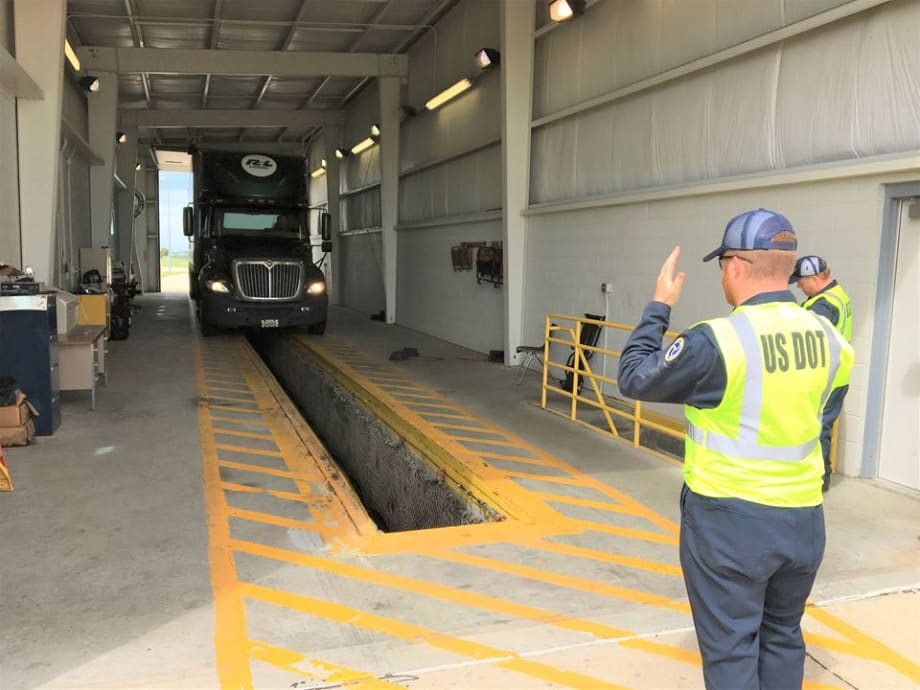
During Roadcheck, CVSA-certified law enforcement personnel will inspect commercial motor vehicles and drivers at weigh/inspection stations, temporary sites and mobile patrols.
Photo: FMCSA
This year’s annual Roadcheck inspection safety blitz, May 14-16, will focus on tractor protection systems and alcohol and controlled substance possession.
The Commercial Vehicle Safety Alliance’s International Roadcheck is a high-visibility, high-volume commercial motor vehicle inspection and regulatory compliance enforcement initiative that takes place over three days in Canada, Mexico and the United States.
CVSA-certified law enforcement personnel will inspect commercial motor vehicles and drivers at weigh/inspection stations, temporary sites and mobile patrols. Data from the 72 hours of International Roadcheck will be collected and the results will be released this summer.
Last year, brake problems were the top Roadcheck out-of-service violation.
CVSA is a nonprofit organization made up of local, state, provincial, territorial and federal commercial motor vehicle safety officials and industry representatives in Canada, Mexico and the US.
Each year, Roadcheck places special emphasis on a category of violations. This year, there will be two focus areas – tractor protection systems and alcohol and controlled substance possession. For inspections in the U.S., there will be an additional emphasis on prohibited drivers within the Drug and Alcohol Clearinghouse.
Tractor Protection System Often Overlooked
A commercial motor vehicle’s tractor protection system consists of a tractor protection valve, trailer supply valve and anti-bleed back valve. All valves should be properly tested during a driver’s trip inspection and an inspector’s roadside inspection.
During the inspection of tractor protection system components, the inspector will:
Direct the driver to release all brakes by pressing dash valves.
Have the driver carefully remove the gladhands and allow air to escape.
Ensure the air stops leaking from the supply line with at least 20 psi remaining.
Listen and/or feel for any leaking air at the gladhand couplers on the trailer.
Request a full service brake application by the driver.
Listen and/or feel for leaks from both air lines
CVSA said it’s focusing on these critical vehicle components because they may be overlooked during trip and roadside inspections. CVSA has an inspection bulletin outlining the steps on how to properly check tractor protection systems.
Commercial Driver Drug and Alcohol Use
CVSA said controlled substance and alcohol possession/use remains a significant concern for motor carriers, drivers and the general public. The number of prohibited drivers listed in the U.S. Drug and Alcohol Clearinghouse (DACH) has been increasing.
CVSA reminds motor carriers to establish and strictly enforce clear policies to prevent controlled substance and alcohol possession or use in the workplace.
In addition, U.S. motor carriers should regularly query the Drug and Alcohol Clearinghouse to ensure their drivers are not in prohibited status.
CVSA Decals
Over the three days of International Roadcheck, inspectors will conduct their routine North American Standard Level I Inspection, which is a thorough 37-step inspection procedure consisting of the examination of vehicle components and driver documentation and requirements.
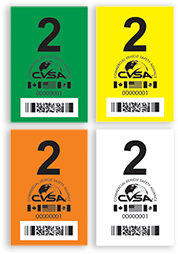
A vehicle that successfully passes a Level I or V Inspection without any critical vehicle inspection item violations may receive a CVSA decal, which is valid for three months.
Image: CVSA
A vehicle that successfully passes a Level I or V Inspection without any critical vehicle inspection item violations may receive a CVSA decal, which is valid for three months.
If out-of-service violations, as outlined in the North American Standard Out-of-Service Criteria, are found during an inspection, the vehicle will be restricted from operating until all out-of-service violations have been properly addressed.
During the driver portion of an inspection, inspectors will check the driver’s operating credentials, hours-of-service documentation, Clearinghous status (in the U.S.), seat belt usage, and for alcohol and/or drug impairment.
If an inspector identifies driver out-of-service violations, such as not possessing a valid or necessary operating license or exhibiting signs of impairment, the inspector will restrict that driver from operating their vehicle.
For International Roadcheck, in case of inclement weather or other limiting circumstances, instead of a Level I Inspection, a jurisdiction or an inspector may opt to conduct a Level II Walk-Around Driver/Vehicle Inspection or Level III Driver/Credential/Administrative Inspection, neither of which are eligible for a CVSA decal.
New Out-of-Service Criteria Published
CVSA also just announced that its 2024 North American Standard Out-of-Service Criteria spiral-bound handbook is now available for purchase.
The North American Standard Out-of-Service Criteria are used by certified commercial vehicle safety enforcement personnel to determine if a commercial motor vehicle or driver is considered an imminent hazard and should be placed out of service.
The 2024 handbook identifies driver, vehicle, hazardous materials/dangerous goods and administrative out-of-service conditions/violations and contains hundreds of photos of real-life violations.
The 2024 out-of-service criteria will take effect on April 1 with 11 changes from the previous year’s criteria, all of which are outlined in this document. The 2024 criteria supersede all other versions.
The handbooks are available for purchase by inspectors, motor carriers, drivers, mechanics, safety managers, jurisdictions, agencies, transportation safety organizations, etc.
Need More Information on CVSA Inspections?
CVSA offers resources to help educate drivers, motor carriers and others on compliance, enforcement and various elements of motor carrier, driver and vehicle safety.
North American Standard Roadside Inspection Vehicle Cheat Sheet – Download this flyer detailing the components of the commercial motor vehicle that the inspector will inspect when conducting a Level I Inspection.
North American Standard Roadside Inspection Driver Cheat Sheet – Download this flyer outlining the details, requirements and steps of the driver portion of an inspection.
More Safety & Compliance
PrePass Intelligence Mines Fleet Bypass, Toll and Safety Data
PrePass Intelligence helps fleets measure bypass savings, flag potential toll overcharges, and spot suspicious transactions by combining data from separate systems.
Read More →
Fatal Crash Exposes Toll Plaza Risks
An NTSB investigation found that last-minute lane changes and large speed differences at an Ohio toll plaza created a hazard the truck driver couldn't avoid in time.
Read More →
When Language Stops the Truck: The Return of ELP Out-of-Service Orders
English language proficiency rules for commercial drivers aren’t new, but renewed out-of-service enforcement has raised the stakes. Here’s what carriers need to know before a driver reaches a roadside inspection.
Read More →
A Camera Isn't a Safety Program. Here's What Brokers Are Screening for Now
Footage alone may not be enough to pass broker vetting processes. Here's what counts as a defensible safety program now.
Read More →
Marijuana and Trucking’s Drug-Testing Dilemma
Marijuana is getting stronger, laws are changing, and drug tests still can’t reliably establish impairment. What does that mean for truck drivers and the fleets that employ them?
Read More →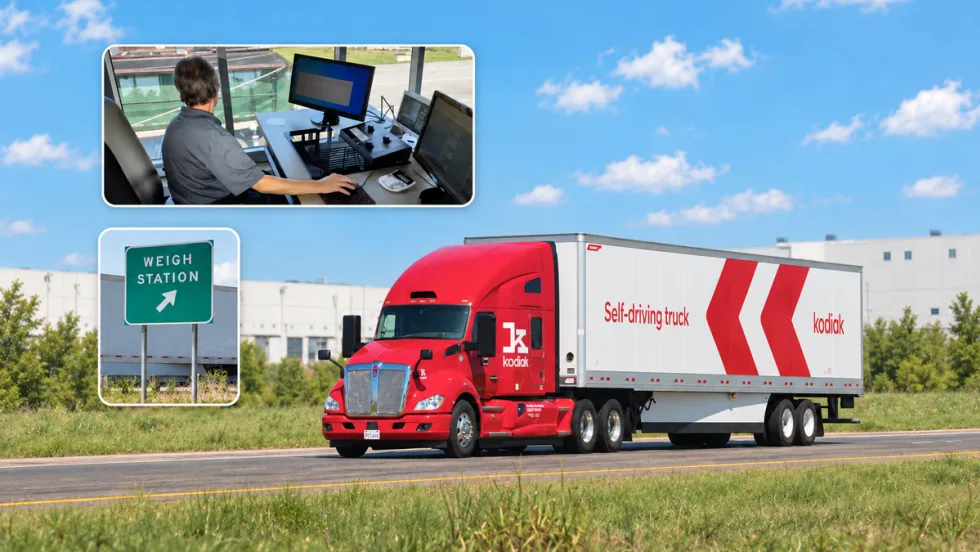
PrePass, Kodiak Connect Driverless Trucks to Roadside Enforcement
The system will allow enforcement agencies to verify Enhanced Inspection information and decide whether Kodiak’s autonomous trucks can bypass roadside screening sites.
Read More →
From One Generation to the Next: How Mentorship Builds Safer Truck Drivers
After three decades in trucking, Harold Perry shares what he's learned about driver safety, mentorship, and helping the next generation build confidence behind the wheel.
Read More →
FMCSA Pauses Biennial-Update Enforcement Amid Motus Transition
Carriers whose updates were due on or after June 1 have more time, while FMCSA works to stabilize its new registration system and warns of phishing sites impersonating its new carrier registration system, Motus.
Read More →
ZF Expands Commercial Vehicle Push in North America
ZF is expanding its North American commercial-vehicle presence with new transmission applications, electrification, trailer technology and autonomous-driving systems.
Read More →
Truck Drivers Need More Than Another Alert
Fleets have more visibility into truck health, safety events, and driver activity than ever. The next challenge is turning all that information into useful guidance for the person who has to decide what to do next.
Read More →