





Don't Count the Internal Combustion Engine Out in Trucking's Race to Net-Zero Emissions
Volvo, Westport Team up on Zero-Emissions Engines
Volvo Group and Westport announced a joint venture to reduce CO2 emissions for long-haul truck fleets by developing HDPI fuel system technology for internal combustion engines.
July 19, 2023
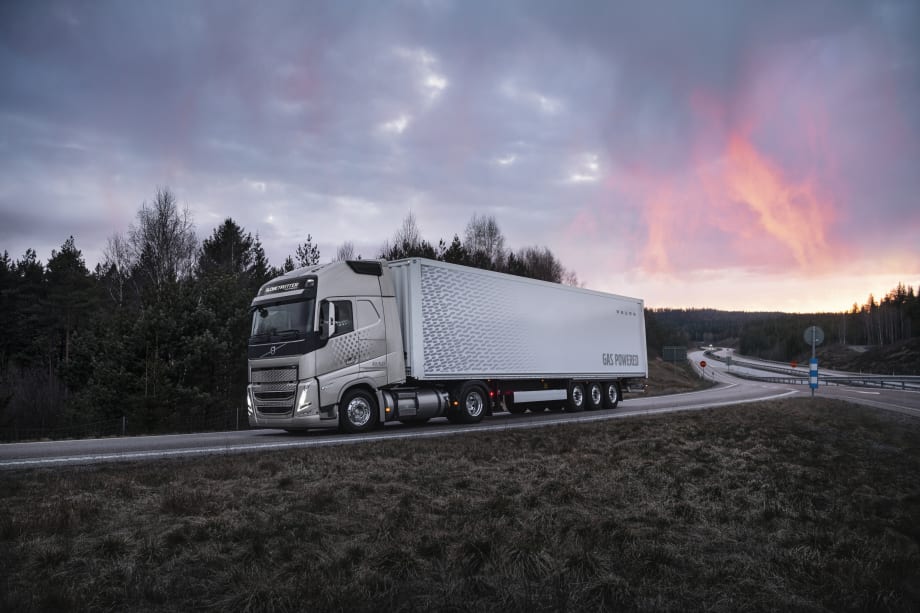
Volvo and Westport Fuel Systems have entered into a joint agreement to expedite the development and deployment of Westport's HDPI alternative fuel system for internal combustion engines.
Photo: Westport Fuel Systems
3 min to read
Volvo Group and Westport Fuel Systems plan to team up to drive adoption globally of Westport’s HPDI fuel system technology to help cut emissions using alternative fuels.
Westport’s HPDI fuel system offers truck OEMs the flexibility to differentiate their biogas, natural gas, hydrogen, and other fuel product lines easily while maintaining maximum commonality with their conventional diesel-fueled products.
With HDPI systems, greenhouse-gas-emitting fuels such as diesel can be replaced with carbon-neutral or zero-carbon fuels such as biogas or hydrogen. Westport said the fuel system maintains the durability, affordability, efficiency, and performance characteristics that have come to be associated with the diesel engine.
Westport’s HPDI fuel system can help makers of trucks and off-road equipment meet the regulatory requirements of Euro 7 and the U.S. Environmental Protection Agency while offering end users affordable, carbon-neutral options, the company said.
Diverse Powertrain Solutions
While Volvo will be a key customer of the joint venture, the joint venture’s mandate will be to enhance commercialization of HPDI through the addition of new trucking and equipment manufacturers as customers.
Under the nonbinding letter of intent signed by the two companies, Westport will contribute current HPDI assets and activities, including related fixed assets, intellectual property, and business, into the joint venture. Volvo will acquire a 45% interest in the joint venture for approximately $28 million plus up to an additional $45 million, depending on the performance of the joint venture.

The heart of the HDPI fuel system is a patented fuel injector with a dual concentric needle design which injects a small amount of pilot fuel into the cylinder to initiate ignition.
Photo: Westport Fuel Systems
More About Westport's HPDI Fuel System
According to Westport, the HPDI fuel system consists of a fully integrated “tank to tip” solution, based on diesel engine combustion technology.
At the heart of the engine is a patented fuel injector with a dual concentric needle design. A small amount of pilot fuel (which can be diesel fuel or a biodiesel renewable fuel) is injected into the cylinder prior to the gas to initiate the ignition.
Using HDPI, Westport says, internal combustion engines can achieve higher horsepower and torque by using direct injection and relying on high pressures in the combustion chamber for ignition. Thus, the characteristic of the engine using an HPDI fuel system is very similar to a diesel engine.
HDPI was designed for heavy long-haul and distribution operations as well as off-road applications such as mining, rail, and marine applications. Westport said that HPDI fuel systems offer an alternative with low climate impact while meeting high standards for performance, fuel efficiency, and operating range required for heavy-duty transport.
An Affordable Approach to CO2 Reduction
Volvo’s publicly stated climate goal is to offer only net-zero greenhouse gas emission products, solutions, and services by 2040. To meet this goal, Volvo believes diverse propulsion solutions for diverse applications will be required to meet customers’ needs and environmental demands.
Volvo advocates for a three-pronged approach to reach net-zero products by 2040:
“Decarbonization with internal combustion engines running on renewable fuels, especially with HPDI, plays an important part in sustainable solutions,” said Lars Stenqvist, chief technology officer of Volvo. “HPDI has been on the road in Volvo trucks for over five years and is a proven technology that allows customers to significantly reduce CO2 emissions in LBG (liquefied biogas) applications here and now and is a potential avenue for hydrogen,”
“Westport is advancing fuel system solutions to help our customers affordably address the most pressing challenge of carbon reduction, while continuing to utilize existing manufacturing infrastructure,” added David Johnson, chief executive officer, Westport.
“The joint venture with Volvo is a natural extension of both companies’ commitment to accelerating global carbon reduction and we are proud to partner with such a bold supporter of the future of the internal combustion engine."
Completion of the joint venture is conditional on the successful negotiations and execution of a definitive investment agreement, joint venture agreement, supply agreement, and development agreement.
The joint venture is expected to launch in the first half of 2024.
More Fuel Smarts

How Volvo Updated Its D13 for EPA 2027 [Watch]
Volvo’s updated D13 promises lower emissions without sacrificing performance or fuel economy. Take a closer look at what changed inside the engine in this HDT Spotlight video.
Read More →
Diesel Price Spike Shortens Payback for Natural Gas Trucks, Report Says
Energy Vision estimates fleets could recover the higher purchase price of an RNG-fueled Class 8 tractor in 1.3 to 2.8 years under current fuel-price scenarios.
Read More →
Calstart Becomes Catalyst Mobility, Reflecting Broader Focus
Calstart is now Catalyst Mobility, reflecting the nonprofit’s growing national role in clean transportation, including zero-emission trucks, infrastructure and incentive programs.
Read More →

Record Diesel Prices Squeeze Trucking Fleets
Average U.S. diesel prices have climbed to nearly $6 a gallon, surpassing the 2022 record as tight refinery capacity and Middle East disruptions keep fuel costs elevated.
Read More →
Sponsored•September 9, 2026
How Fuel Delivery Shapes Engine Performance
Fuel delivery depends on more than what happens at the injector. For fleet, maintenance and technical professionals, looking at the full path from pump to injector can provide useful context for understanding engine performance.
Read More →
East Coast Port Launches $45M Electric Truck Push
The Port Authority of New York and New Jersey announced millions in incentives for zero-emission drayage trucks, yard tractors, and new charging hubs near the port.
Read More →
California Bill Could Shed Light on Electric Truck Prices
Why do battery-electric Class 8 trucks remain so expensive? A California bill headed to Gov. Gavin Newsom would give fleets and state agencies more visibility into what manufacturers charge.
Read More →
Detroit Opens Orders for EPA 2027 Engines
Detroit isn’t starting from scratch to meet EPA 2027 diesel emissions standards. Its Gen 6 DD13 and DD15 engines keep much of today’s platform while updating the fuel and aftertreatment systems.
Read More →
Zero-Emission Truck Corridor Planned for West Coast
California, Oregon, Washington, British Columbia and Baja California are coordinating plans for truck charging and hydrogen fueling from Canada to Mexico.
Read More →
A Closer Look at Kenworth’s Electric T880E Vocational Truck [Video]
Learn more about Kenworth's T880E battery-electric vocational truck at the Paccar Technical Center, including its range, applications, upfitting considerations, and PTO options, in this HDT Spotlight video.
Read More →