




Truck/Car Speed Limit Differential to Drop in Some Parts of Illinois
The Illinois Trucking Association has been successful in getting the speed limit differential between cars and trucks reduced in some rural areas near Chicago, effective Jan. 1, 2015.


The Illinois Trucking Association has been successful in getting the speed limit differential between cars and trucks reduced in some rural areas near Chicago, effective Jan. 1, 2015.
On Tuesday, the Illinois House voted 103-12 to override Gov. Quinn's veto of Senate Bill 930, a bill initiated by the association to reduce the 70/55-mph speed limit differentials between cars/trucks. The Illinois Senate previously voted 54-0 to override the veto.
Now that both chambers have voted to override, speed limit differentials between cars and trucks can be restored to a 10-mph difference, 70/60, in a select few rural areas near the Chicago area.
Although the association initially sought to see the speed differential reduced by lowering automobile speed limits, the Illinois Department of Transportation declined that request. So the association sought a 5-mph increase in the truck speed limit in order to restore the 10-mph differential that was in place prior to 2014, explained ITA Executive Director Matt Hart.
Before 2014, speed limits on Illinois' rural interstates were 65 mph for all vehicles throughout the state. In Cook, DuPage, Kane, Lake, McHenry, and Will Counties, the maximum speed limit was 65 mph for cars and 55 mph for trucks. As you enter the urban, Chicago area, the speed limit for all vehicles is 55 mph.
On Jan. 1, Public Act 98-0511 raised the speed limit in Illinois to 70 mph for all vehicles; however, existing statutes kept truck speed limits on rural interstates for trucks in Cook, DuPage, Kane, Lake, McHenry and Will Counties at 55. The result was that IDOT created several areas where the speed limit for cars is 70 mph and the speed limit for trucks is 55: a 15-mph differential. (For example, I-55 from Arsenal Road to Braidwood has a car speed limit of 70 mph and a truck speed limit of 55 mph).
The association's request, sponsored by Senator Martin Sandoval (D-Chicago) and Representative Marty Moylan (D-Des Plaines) in SB 930, received unanimous support in both chambers. IDOT was neutral on SB 930, as was the Illinois State Police.
Nevertheless, Gov. Quinn vetoed SB 930 on August 11, setting up the override votes in the fall veto session.
More Safety & Compliance

FMCSA Pauses Biennial-Update Enforcement Amid Motus Transition
Carriers whose updates were due on or after June 1 have more time, while FMCSA works to stabilize its new registration system and warns of phishing sites impersonating its new carrier registration system, Motus.
Read More →
ZF Expands Commercial Vehicle Push in North America
ZF is expanding its North American commercial-vehicle presence with new transmission applications, electrification, trailer technology and autonomous-driving systems.
Read More →
Truck Drivers Need More Than Another Alert
Fleets have more visibility into truck health, safety events, and driver activity than ever. The next challenge is turning all that information into useful guidance for the person who has to decide what to do next.
Read More →
Tesla Wants a Self-Driving Semi. Are Cameras Enough?
Could Tesla’s camera-only autonomous driving technology work on an 80,000-pound Semi? In this commentary, HDT's Deborah Lockridge takes a look at Tesla, Cybercab, and how autonomous trucks see the road.
Read More →
What DOT’s Automated Vehicle Strategy Means for Trucking
The U.S. Department of Transportation issued a new automated-vehicle strategy that outlines plans for driverless-truck regulations, cross-state freight corridors, and federal safety standards.
Read More →
NYC Expands Speed, Pedestrian Safety Tech Across Fleet
New York City is expanding intelligent speed assistance and pedestrian-alert systems across its municipal fleet, moving the technologies from pilot programs into vehicle procurement and retrofit requirements.
Read More →
FMCSA Removes 110 Truck Driver Training Schools from Certified ELDT List
Federal regulators also are targeting more than 160 additional training providers and launching a nationwide audit of third-party CDL skills testers as part of a broader crackdown on trucking fraud.
Read More →
Beyond DOT Compliance: What Makes a Trucking Fleet Truly Safe?
A trucking fleet can follow every rule and still make unsafe decisions. The real test comes when safety conflicts with freight, productivity, or cost.
Read More →
Hours of Service Pilot Programs: FMCSA Readies for 2027 Rollout
Two pilot programs could eventually reshape hours-of-service rules, giving truck drivers options to pause their 14-hour clock or use longer split sleeper rest periods.
Read More →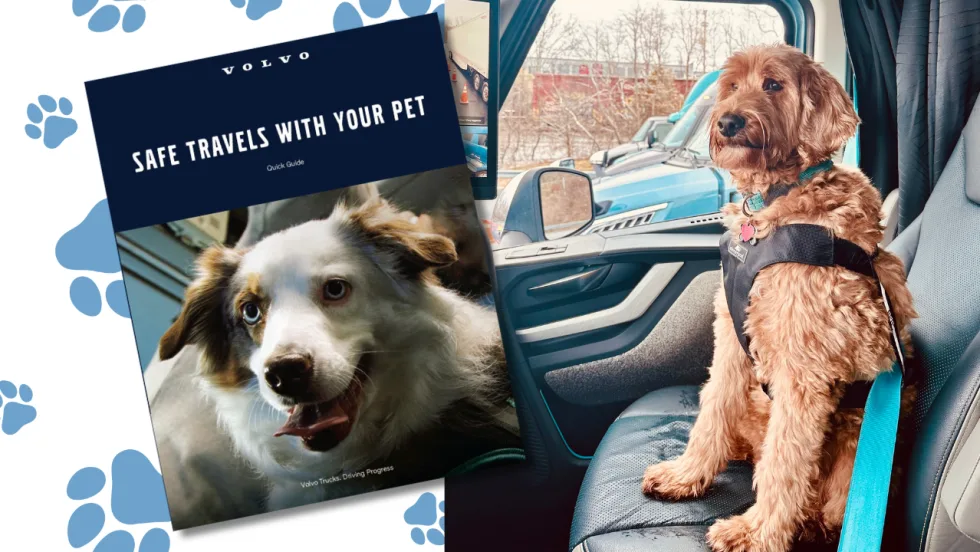
New Guide Offers Pet Safety Tips for Truck Drivers
Hundreds of thousands of pets travel in truck cabs. A new safety guide from Volvo Trucks and the Center for Pet Safety offers practical advice for truck drivers who bring dogs and cats along for the ride.
Read More →