




Torc Robotics Begins Autonomous Truck Validation Testing
Torc Robotics said it has begun advanced validation testing of its autonomous truck technology – a first step toward scale production by 2027.

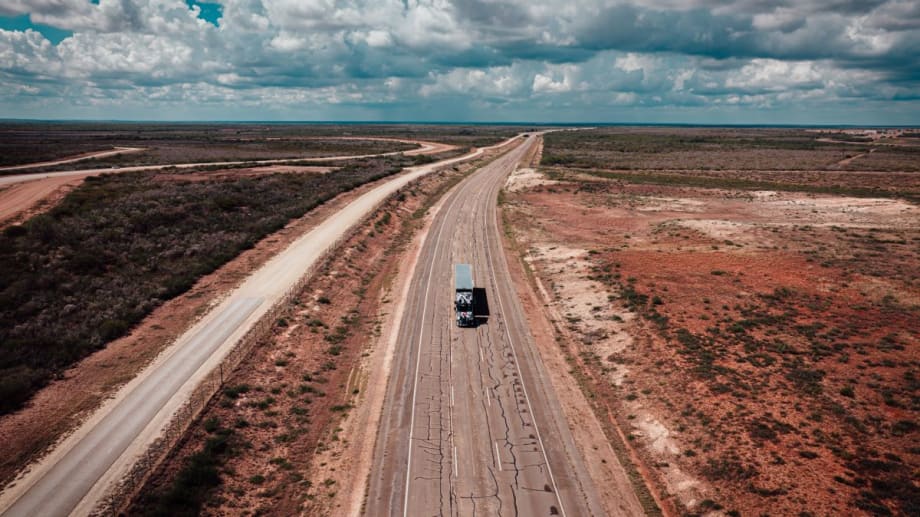
Torc Robotics announced it has begun advanced validation of the company's autonomous trucks without a driver in a multi-lane closed-course environment
Photo: Torc Robotics
Torc Robotics announced it began advanced validation of the company's autonomous trucks without a driver in a multi-lane closed-course environment. This technology validation occurred earlier this year.
Torc Robotics is an independent subsidiary of Daimler Truck AG and a developer specializing in commercializing self-driving vehicle technology.
A First Step Toward Scale Production
The validation tests were conducted at full operating speed of up to 65 mph to optimize fuel efficiency. Torc said its driverless product acceptance test underscores its evolution to productization, positioning the company to scale and commercialize safe, robust autonomous trucking solutions by 2027.
Unlike a demo, this milestone highlights Torc’s entry into scalable product release, with the company’s applied artificial intelligence (AI) technology, system architecture, production-intent embedded hardware and safety engineering converging to shape a product that prioritizes true software best practices and safer roadways for all.
“Artificial intelligence has undoubtedly been the biggest buzzword of the year, but real-world uses are few and far between,” said CJ King, chief technology officer, Torc Robotics. “Autonomous trucking is one of the most concrete applications for AI that can drive demonstrated revenue, business value and industry transformation – and Torc is at the forefront of creating an autonomous solution with safety, scalability and cost efficiency top of mind. “With our long-standing tenure in the autonomous space, this milestone reinforces Torc’s safety-focused commitment to driving the future of freight.”
A Rigorous Commitment to Safety
This product validation milestone exemplifies Torc’s commitment to rigorous safety and maturity standards, the company said. It also marks a critical step from advanced engineering and development to full productization on a unified, embedded platform.
“This is a key moment in our mission to build a profitable, scalable business as the world’s leading autonomous solution,” commented CEO Peter Vaughan Schmidt. “We observed impressive reliability in our repeated driverless runs, which leveraged Torc’s unparalleled embedded and integrated platform on Daimler Truck’s Freightliner Cascadia. We look forward to unlocking the full value of autonomous driving software for customers who prioritize safety, operations costs, ease of use and reliability.”
More Equipment

How Volvo Updated Its D13 for EPA 2027 [Watch]
Volvo’s updated D13 promises lower emissions without sacrificing performance or fuel economy. Take a closer look at what changed inside the engine in this HDT Spotlight video.
Read More →
Michelin Tire Improves Efficiency and Durability for Regional Fleets
The Michelin X Multi Energy D2 is a regional haul drive tire engineered to help fleets improve fuel efficiency, durability and traction in demanding stop-and-go operations.
Read More →
ZF Expands Commercial Vehicle Push in North America
ZF is expanding its North American commercial-vehicle presence with new transmission applications, electrification, trailer technology and autonomous-driving systems.
Read More →
Tesla Wants a Self-Driving Semi. Are Cameras Enough?
Could Tesla’s camera-only autonomous driving technology work on an 80,000-pound Semi? In this commentary, HDT's Deborah Lockridge takes a look at Tesla, Cybercab, and how autonomous trucks see the road.
Read More →
Kodiak: Driverless Long-Haul Truck Launch on Track for 2026
Kodiak AI says its driverless long-haul safety case is 93% complete and it remains on track to begin commercial operations by year-end 2026.
Read More →
What DOT’s Automated Vehicle Strategy Means for Trucking
The U.S. Department of Transportation issued a new automated-vehicle strategy that outlines plans for driverless-truck regulations, cross-state freight corridors, and federal safety standards.
Read More →
East Coast Port Launches $45M Electric Truck Push
The Port Authority of New York and New Jersey announced millions in incentives for zero-emission drayage trucks, yard tractors, and new charging hubs near the port.
Read More →
PlusAI Going Public to Fund Autonomous Truck Launch
A SPAC deal could provide PlusAI with up to $300 million as it works toward a 2027 commercial launch of factory-built autonomous trucks.
Read More →
NHTSA Moves to Rewrite Truck Fuel-Economy Rules
The National Highway Traffic Safety Administration says it lacks authority to regulate medium- and heavy-duty truck engines separately from complete vehicles, but the existing standards have not yet been eliminated.
Read More →
Detroit Opens Orders for EPA 2027 Engines
Detroit isn’t starting from scratch to meet EPA 2027 diesel emissions standards. Its Gen 6 DD13 and DD15 engines keep much of today’s platform while updating the fuel and aftertreatment systems.
Read More →