




Study Shows Industry Short 20,000 Drivers; Trends Point to More Severe Shortage
The American Trucking Assns. said Wednesday that the long-haul, heavy-duty truck transportation industry in the United States is experiencing a national shortage of 20,000 drivers

The American Trucking Assns. said Wednesday that the long-haul, heavy-duty truck transportation industry in the United States is experiencing a national shortage of 20,000 drivers.
According to an ATA press release, the finding is part of its newly released U.S. Truck Driver Shortage: Analysis and Forecasts.
The Forecast is a report on the present and future of the long-haul truck driver pool that predicts the shortage will increase to 111,000 by 2014 if current demographic trends hold and if the overall labor force continues to grow at a slower pace.
“The driver market is the tightest it has been in 20 years,” ATA President and CEO Bill Graves said. “It’s a major limitation to the amount of freight that motor carriers can haul. It’s critical that we find ways to tap a new labor pool, increase wages and recruit new people into the industry that keeps our national economy moving.”
Of the 3.4 million truck drivers on the road, 1.3 million are long-haul truckers, the segment most severely impacted by the shortage. Although the current driver shortage is set at 20,000 drivers, it seems larger to the industry because of a high degree of driver “churning,” or moving from carrier to carrier. Large truckload carriers reported an average annual turnover of 121% last year.
If current demographic trends continue, the supply of new long-haul heavy truck drivers will grow at an annual rate of just 1.6% in the next decade. But Global Insight, the economic consulting firm conducting the study for ATA, predicts over the next 10 years, economic growth will generate a need for a 2.2% average annual increase in long-haul heavy truck drivers, or 320,000 jobs overall.
Another 219,000 must be found to replace drivers 55 and older who will retire in the next decade, putting total expansion and replacement hiring needs at 539,000 or an average of 54,000 new drivers per year for the next decade.
Scores of drivers exited the long-haul trucking industry after average weekly earnings fell 9% below average construction earnings in the 2000 recession. Driver wages have since failed to regain pre-2000 levels when they averaged 6% to 7% higher than construction wages. Long-haul drivers also cited extended periods away from home and unpredictable schedules as reasons for moving to other occupations.
At the same time, the industry also is challenged with finding qualified drivers. Many trucking companies reject a high percentage of driver applicants because they lack qualifications. Those challenges escalated in recent years as the industry tightened its security and safety measures.
The driver shortage comes as the trucking industry is hauling more freight than ever. Total annual tonnage hauled by truck is expected to increase to 13 billion tons by 2016 from 9.8 billion tons in 2004.
“It’s a favorable supply-demand market for us,” Graves said. “But the ability to add truck capacity is based on the market’s ability to find drivers. A tight driver market will keep capacity tight.”
ATA said finding drivers will grow more difficult in coming years as adverse demographic trends limit the size of the pool of workers that traditionally fill truck driving jobs. For example, one-fifth of all heavy-duty truck drivers are aged 55 or older. Replacements must be found for nearly all of these because only a small fraction of heavy-duty truck drivers work past age 65. The ability to replace these drivers will be further constrained by insufficient growth of new entrants into the labor force, which is expected to decelerate after 2007 from a 1.4% annual pace to only 0.5% growth in 2014. More importantly, the number of men aged 35 to 54, which make up the primary driver demographic, will be flat or declining over the next 10 years.
To increase the nation’s driver pool, the industry increasingly will need to draw upon a larger percentage of women and minorities. Women currently represent 5% of truck drivers. African Americans represent 11.7% of long-haul drivers and Hispanics total 9.7% of the long-haul driving sector.
If the trucking industry is to attract enough drivers to meet growth projections, earnings will have to rise to the level that prevailed in the 1990s -- at a minimum. At present, weekly earnings in long-distance trucking are 1.5% below the average in construction. The industry also will have to address the quality of life issues, including driver home time and schedule flexibility.
More Fleet Management

Nomination Deadline Extended for HDT Emerging Leaders
Just a few more days to nominate accomplished trucking fleet professionals under 40 who are making an impact and helping lead the industry forward for the HDT Emerging Leaders award. Deadline extended to October 20!
Read More →
What Will ATA’s New Leader Bring to Trucking's Table?
Incoming President and CEO Mark Colson’s record in Alabama offers clues about his priorities and approach following Chris Spear’s abrupt departure as the head of the American Trucking Associations.
Read More →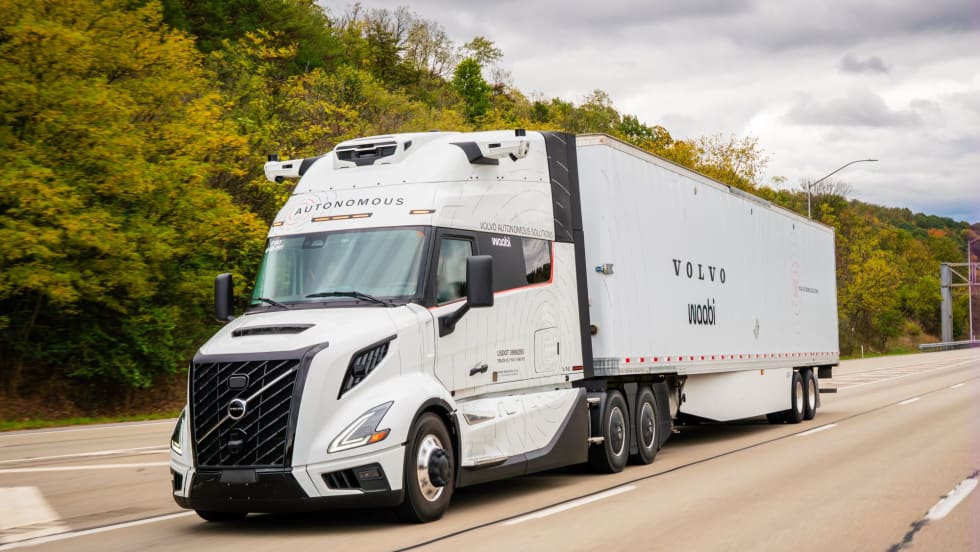
Volvo, Waabi Start Commercial Autonomous Operations in Texas
Volvo VNL Autonomous trucks, powered by the Waabi Driver, are hauling freight directly to third-party facilities for a customer in Texas.
Read More →
Samsara Launches Custom AI Agent Builder
Agent Studio lets fleets create AI tools for hours-of-service monitoring, reporting and driver support, including agents that communicate by phone.
Read More →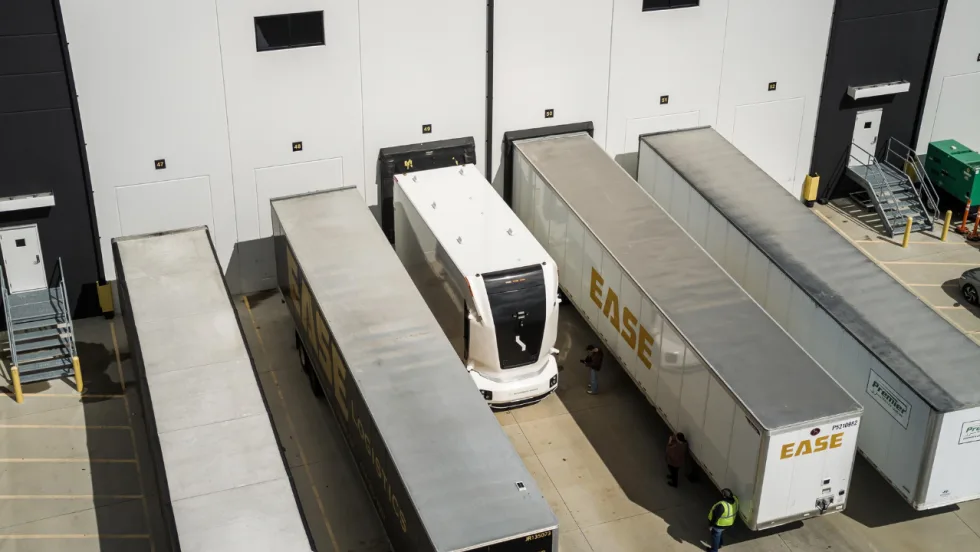
Einride Driverless Electric Trucks Begin Daily Freight Operations in Ohio
Two cabless electric trucks are hauling freight between EASE Logistics facilities in Marysville, Ohio, as part of a multi-state truck automation project.
Read More →
Geotab Links Fleet Card to Vehicle Data
The new card combines fuel discounts with telematics-based purchase controls. Geotab’s analysis also points to potential savings from choosing lower-priced fuel stops.
Read More →
How MFA Helps Protect Trucking Fleets
Multi-factor authentication adds protection when passwords are stolen. Here’s how it works and where fleets should start.
Read More →
How Better Freight Data Helps Trucking Teams Get Ahead of Disruption
Trucking and logistics teams have plenty of data. The problem is getting the right information in front of the right people soon enough to act. Better-connected data can help teams spot trouble earlier and make smarter decisions before small problems become big ones.
Read More →
Trimble: Taking Artificial Intelligence in Trucking Beyond Faster Tasks
At Insight 2026, Trimble executives argued that fleets may need to redesign workflows to get more from AI as it introduced new products and enhancements. AI’s value will depend on how fleets combine automation with their people's knowledge.
Read More →
Build a bulletproof fleet: Uniting ELDs and dash cams for total compliance
An ELD can prove compliance, but it cannot always prove what happened on the road. Discover how uniting accurate ELD data with AI-powered dash cam video can help your fleet strengthen compliance, defend against liability, protect drivers and reduce operational costs.
Read More →