




Spot Freight Index Hits Third Year of Year-Over-Year Increases
TransCore's North American Freight Index was up 11% in December compared to the same month in 2010. This is the third consecutive year of increases in same-month spot market freight volume, which has reached the highest level since 2005
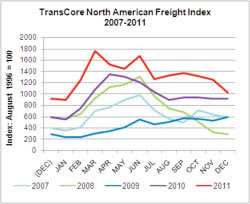
TransCore's North American Freight Index was up 11% in December compared to the same month in 2010. This is the third consecutive year of increases in same-month spot market freight volume, which has reached the highest level since 2005.
Compared to November, spot market freight volume slipped 18%. It is typical for spot market freight volume to decline in December. This year's dip was slightly above the 10-year average of 14%, partly because November's volume was stronger than seasonal norms.
Truckload freight rates likewise increased year-over-year on the spot market for all equipment types. When compared to November, rates declined for refrigerated and dry vans in December but flatbed rates remained stable, as a national average.
For dry vans, rates rose 5.5% compared to December 2010, and slipped 0.7% compared to November. Refrigerated van rates rose 4.1% year-over-year but fell 2.5% month-over-month. Flatbed rates increased 5.7% compared to the same month in 2010, but remained unchanged in the most recent 31 days.
These rates are derived from TransCore's Truckload Rate Index, and do not include fuel surcharges. Spot market rates are paid by brokers and 3PLs to the carrier.
Looking ahead to February, the best combination of relatively high freight volume and a favorable ratio of outbound loads are expected to emerge in Ohio, Illinois, Georgia, Indiana, Wisconsin and Tennessee.
Intermediaries and carriers across North America list more than 60 million loads and trucks per year across a variety of services feeding TransCore's DAT Network, including Link Logistics, the company's Canadian subsidiary. As a result of this high volume, TransCore's North American Freight Index is representative of the ups and downs in North American spot market freight movement.
More Fleet Management

Give Your Trucking Fleet a Cybersecurity Walkaround
Your fleet's cybersecurity policies may look good on paper. These seven checks can help you find out whether they’re working.
Read More →
Kodiak Lines Up Fleets for Driverless Trucking
An agreement for 75 trucks, a new Texas freight lane, and progress on safety validation move Kodiak closer to its planned driverless highway launch.
Read More →
ITS Logistics Settles Religious Harassment Case
The Nevada-based logistics firm agreed to pay more than $396,000 to settle a religious harassment charge involving an employee's Jewish identity.
Read More →
Your Trucks Are Busy. That Doesn’t Mean They’re Winning.
High utilization doesn’t always mean strong margins. Looking beyond the current load can help fleets make better dispatch decisions and get more value from each truck’s time.
Read More →
Why This Trucking Recovery Is Different
Freight demand remains sluggish, but rising costs and tougher enforcement have taken enough capacity out of the market to change the outlook for motor carriers.
Read More →
Platform Science Adds Dispatch and Safety Tools
Four additions to PS Fleet help fleets monitor loads, manage driver coaching, share truck locations and adjust video system settings.
Read More →
PrePass Intelligence Mines Fleet Bypass, Toll and Safety Data
PrePass Intelligence helps fleets measure bypass savings, flag potential toll overcharges, and spot suspicious transactions by combining data from separate systems.
Read More →
Motive Adds AI Agents for Fleet Operations
New tools automate follow-up on fleet data, from maintenance work orders to driver alerts, with two-way voice conversations planned for later this year.
Read More →
Can You Beat Our Trucking Trivia Challenge?
Test your truck knowledge with 19 trivia questions from Heavy Duty Trucking Exchange. Can you keep up with the fleet pros?
Read More →
BeyondTrucks Adds Rules Checks to Dispatch
New Compatibility Engine checks driver qualifications, equipment requirements and fleet policies before loads are dispatched.
Read More →