




How Telematics Improves Visibility, Control, and Performance in Refrigerated Fleets
Explore how telematics help refrigerated fleets improve visibility, uptime, efficiency, compliance, and cargo protection across connected cold chain operations.
Thermo King

- Telematics enhances visibility in refrigerated fleets by providing real-time data and monitoring of fleet operations.
- Integration of telematics increases uptime and efficiency by reducing unexpected downtimes and optimizing maintenance schedules.
- Telematics ensures compliance and cargo protection by tracking temperature and ensuring adherence to safety regulations.
*Summarized by AI
Refrigerated Fleet Telematics Is Expanding What Visibility Means
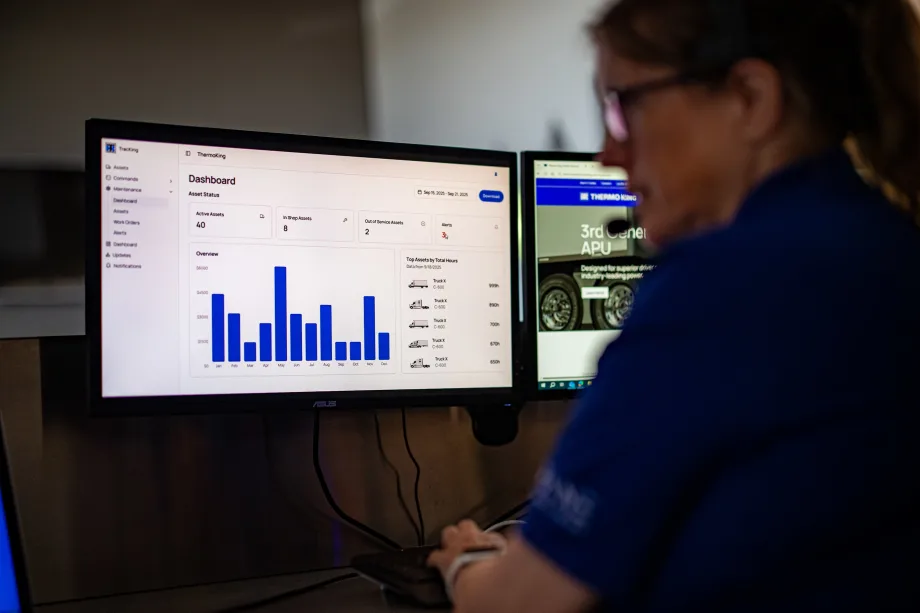
Telematics is reshaping refrigerated fleet management by giving fleets more than a map view of where equipment is located. For refrigerated operations, visibility now includes temperature conditions, reefer status, alarms, fuel use, door activity, and trailer performance. That broader view helps fleets identify issues sooner and respond before they affect the load.
At its core, telematics helps answer two essential questions: Is the refrigeration unit operating as expected, and is the load still protected? In temperature-controlled transport, those answers matter every mile of the trip.
What Telematics Does in Refrigerated Transport
A refrigerated fleet telematics system connects the unit or trailer to fleet teams through onboard hardware, sensors, software, and a communications network. It gathers operational data such as temperature, set point, alarm status, operating mode, and fuel usage, then sends that information to a dashboard where dispatchers, fleet managers, drivers, and service teams can review it.
Some systems also support two-way control, allowing certain settings or commands to be adjusted remotely. That can help fleets respond faster when conditions change in transit.
This is a major step beyond basic trailer GPS tracking. Location data shows where a trailer is, but not whether the cargo is at risk. A refrigerated load can be on schedule and still face a temperature excursion, alarm condition, incorrect set point, or unexpected shutdown. Telematics adds the operational context needed to spot those risks sooner.
Why It Matters
In refrigerated transport, temperature control is directly tied to product quality, compliance, customer confidence, and financial performance. Food, pharmaceutical, and other sensitive shipments can lose value quickly when conditions drift out of range.
Telematics helps fleets move from reactive management to earlier intervention. Instead of discovering problems after delivery or during a yard inspection, teams can identify developing issues while the load is still moving. That may include a door left open, a unit turned off, a missed set point, or a mechanical issue that is beginning to affect performance.
This visibility also supports uptime. Predictive alerts and equipment data can help maintenance teams detect patterns, prepare for service, and address problems before they lead to roadside failures. Over time, that more proactive approach can reduce disruption, improve scheduling, and keep more assets in service.
Operational Benefits Beyond Tracking
For refrigerated fleets, the value of telematics often shows up in five areas:
- Cargo protection: Near real-time temperature and alarm visibility helps teams respond before a minor issue becomes a rejected load.
- Faster exception management: Fleets can identify and investigate events such as temperature excursions, unit shutdowns, or unexpected door activity more quickly.
- Compliance and documentation: Automated trip records can capture temperature history, set points, alarms, and location data, reducing dependence on paper logs or manual reporting.
- Maintenance planning: Connected data can support earlier service decisions and reduce the risk of unexpected breakdowns.
- Operational efficiency: Better insight into fuel use, route conditions, asset utilization, and recurring exceptions can help fleets reduce waste and improve decision-making.
Just as important, telematics supports multiple roles across the business. Dispatch can monitor active loads, drivers can receive clearer direction, maintenance can prepare for service, and managers can use reporting to review broader operating trends.
Where Fleets See the Greatest Impact
Telematics is especially valuable in operations where time, distance, and cargo sensitivity increase the cost of uncertainty.
Long-haul fleets benefit because remote visibility makes it easier to manage loads that are far from the yard or service support. Urban delivery fleets can use telematics to monitor frequent stops, repeated door openings, and route conditions that may affect temperature stability. Food and beverage operations rely on it for temperature consistency and delivery confidence, while pharmaceutical and life sciences shipments may require even tighter monitoring, stronger traceability, and more detailed records. Mixed fleets can benefit from bringing reefer and asset data into one operating view.
What Fleets Should Ask Before Choosing a System
Before evaluating features, fleets should first define the problems they want to solve. Is the priority better temperature visibility, fewer roadside events, stronger documentation, faster alarm response, or a combination of these goals?
From there, practical questions matter most:
- How easy is the system to use each day?
- Can alerts be prioritized to highlight critical events?
- How well does the platform fit existing workflows?
- What data is captured, and how accessible is it?
- Can the system scale across asset types and fleet sizes?
- What training, onboarding, and support are available?
The most effective telematics strategies are not built around technology alone. They depend on clear workflows, defined responsibilities, and a shared understanding of how connected data should be used across operations, maintenance, and dispatch.
Telematics is not just changing how refrigerated fleets track assets. It is changing how they manage cold chain performance, respond to exceptions, and make decisions while loads are still in motion.
This article reflects the views of Thermo King and does not necessarily represent the views of Heavy Duty Trucking or Bobit Business Media.
Quick Answers
Telematics is a technology that combines telecommunications and informatics to track and manage vehicles remotely. In refrigerated fleets, it improves visibility, control, and performance by providing real-time data on vehicle location, cargo temperature, and system alerts, enabling better decision-making and operational efficiency.
*Summarized by AI
More Fleet Management

What the U.S.-Canada Trade War Means for Trucking
Escalating U.S.-Canada tariffs could disrupt cross-border freight, reduce truck volumes, raise costs, and create new uncertainty for carriers on both sides of the border.
Read More →
What Are Trucking’s Top Concerns for 2026?
The American Transportation Research Institute wants to know what's worrying trucking fleet managers, drivers, and other stakeholders in its annual Industry Issues survey.
Read More →
American Trucking Associations Looks for a New Leader
ATA President and CEO Chris Spear abruptly left his job at the association on August 21, at a pivotal time for the trucking industry.
Read More →

Public Wi-Fi Cybersecurity Risks: How Truck Drivers and Fleets Can Protect Their Data
Public Wi-Fi can expose truck drivers and fleets to credential theft, malware, and other cyber threats. Here’s how to reduce the risk on the road.
Read More →
For Nicky Cupp, Fleet Innovation Starts With Frustration
HDT Truck Fleet Innovator Nicky Cupp turns everyday pain points at Fraley & Schilling into opportunities for better technology and smarter processes.
Read More →
Adam Buttgenbach’s Approach to Electric Trucks: Start With Where They Fit
HDT Truck Fleet Innovator Adam Buttgenbach helped PepsiCo build one of North America’s largest EV fleets by focusing on where electric trucks make operational sense.
Read More →
Deen Albert: Let Automation Do the Math, People Make the Decisions
HDT Truck Fleet Innovator Deen Albert makes sure people are still at the heart of operations at Grand Island Express, even while adopting artificial intelligence tools. AI-assisted dispatch helped boost revenue 25% with the same number of trucks.
Read More →
Trimble’s New AI Agent Takes Aim at Fleet Back-Office Busywork
Arc Agent works across Trimble TMS products to automate repetitive tasks such as freight orders, maintenance, invoices, fuel costs and more.
Read More →
How HDT’s 2026 Truck Fleet Innovators Are Rethinking Fleet Operations
Meet five trucking leaders who are challenging assumptions, solving operational problems, and putting innovative ideas to work.
Read More →
Tight Trucking Capacity Pushes Rates Higher Even as Freight Volumes Fall
“Spot rates moving ahead of contract rates have historically signaled a tightening market, but we haven’t seen a capacity-driven market quite like this one,” said DAT's Dean Croke.
Read More →