





Related: Trucking Groups Take Their Priorities to House Transportation Committee
Senate Bill Touted as Largest Highway Legislation in History
New bill would authorize $287 billion over five years, with that total marking an increase of over 27% from levels of the FAST Act highway bill.
July 29, 2019
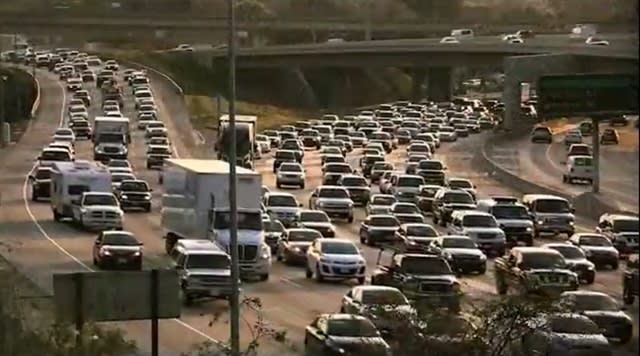
New bill would authorize $287 billion over five years, with that total marking an increase of over 27% from levels of the FAST Act highway bill.
Photo: U.S. DOT
6 min to read
UPDATED Rolled out on July 29 in the Senate, the bipartisan America’s Transportation Infrastructure Act of 2019 is being billed by its four influential sponsors as “the largest highway legislation in history.”
The next day, July 30, the bill was marked up, with minor amendments, and approved unanimously by the Senate Committee on Environment and Public Works so that it can advance to the Senate floor.
The bill would authorize $287 billion over five years, including $259 billion for “formula programs” to maintain and U.S. roads and bridges. The total represents an increase of over 27% from FAST Act levels, according to a press release, which also states the measure would include “provisions to improve road safety, streamline project delivery, protect the environment and grow the economy."
The sponsors of the bill are Senators John Barrasso (R-WY), Tom Carper (D-DE), Shelley Moore Capito (R-WV), and Ben Cardin (D-MD).
Barrasso and Carper are, respectively the Chairman and Ranking Member of the Senate Committee on Environment and Public Works (EPW). Capito and Cardin serve as Chairman and Ranking Member of the EPW Subcommittee on Transportation and Infrastructure.
Positive Reactions
The American Trucking Associations welcomed the effort. “We thank Chairman Barrasso and Ranking Member Carper for taking this important first step toward reauthorizing our nation's surface transportation systems,” ATA President and CEO Chris Spear said in a July 29 statement.
"The strength of our economy relies on sound roads and bridges, as more than 70% of our nation's goods travel by highway on the back of trucks,” he continued. “With the right investment, we can stem America's deepening infrastructure crisis and instead achieve a 21st century infrastructure worthy of the world's leading economy.”
Spear added that ATA “looks forward to “working closely with this committee and the other relevant committees on a legislative package that includes the long-term, sustainable funding that our highway programs critically need."
Also reacting on July 29 to word of the proposed highway bill was NATSO, the association for travel plaza and truckstop operators, which “urged” the EPW Committee to advance its proposal.
“We applaud Committee Chairman John Barrasso and Ranking Member Tom Carper for introducing a bipartisan effort to address the nation’s critical infrastructure needs through ‘America's Transportation Infrastructure Act of 2019’,” said NATSO President and CEO Lisa Mullings.
“This measure marks a step in the right direction when it comes to enhancing supply chain efficiencies, while also harnessing the private sector's ingenuity to take meaningful steps to improve the environment,” she added. NATSO noted that it is supportive of the Committee’s effort to establish a grant program that would stimulate private investment in both electric-vehicle charging and natural-gas refueling stations along designated highway corridors.
The association added that it hopes that “policymakers will steer grants toward projects where private capital is being placed at risk, rather than toward public utilities that inappropriately use their monopolistic stature to crowd out private investment in EV charging infrastructure.”
Longer Would Beat Shorter
The American Association of State Highway and Transportation Officials “lauded” the bill’s roll out. “Getting this important legislation enacted by next fall is something every state DOT strongly supports,” said AASHTO Executive Director Jim Tymon in a July 29 statement.
Tymon urged that the “next federal transportation bill done on time, without resorting to a series of short-term program extensions. When federal funds are predictable and stable, state DOTs are able to fully focus attention on delivering critical projects that improve safety, quality of life, and economic opportunities for everyone.”
He also noted that AASHTO likes that 90% the funding in EPW’s proposed bill is provided “directly to states by formula which ensures flexibility to best meet each state’s unique highway investment needs.”
More comments by stakeholders on the proposed bill came out on July 30. Norita Taylor, director of public relations for the Owner-Operator Independent Drivers Association, told HDT that, “We are cautiously optimistic, but watching closely for what ends up in the final version, especially when it comes to funding.”
The United States Chamber of Commerce cheered the bill in a July 30 statement. “This five-year, $287 billion legislation is a 25% increase over current funding levels and will also importantly create a new bridge program to address the structurally deficient bridges in America,” said Ed Mortimer, the chamber’s vice president of Transportation and Infrastructure.
A First Step on Capitol Hill
“This is a great first step to keep Americans safe by modernizing our nation’s crumbling roads and bridges, and we look forward to continuing to work with Congress to get a long-term infrastructure bill enacted into law,” he added.
The Coalition for America’s Gateways and Trade Corridors on July 30 also saluted the EPW committee for moving the bill forward. Paul Hubler, chairman of CAGTC and director of Government and Community Relations for the San Gabriel Valley [California] Council of Governments, especially lauded the “robust funding increases proposed for the national discretionary and formula grant programs for freight and highway projects, as well as significantly increasing amounts that can be awarded to port, rail and multimodal projects.”
CAGT pointed out what it sees as two key highlights of the bill:
Increases INFRA/ Nationally Significant Freight and Highway Projects Program funding to $5.5 billion over five years (the FAST Act authorized the program at $4.5 billion over five years). Funds available to multimodal projects through this program increases significantly – from a cap of $500 million over five years to a cap of 30% annually, or $1.65 billion. The proposal also calls for transparency measures in the grant decision making process
Increases freight formula program funding to $8.5 billion over five years (the FAST Act authorized the program at $6.3 billion over five years) and raises the amount that can be invested annually in multimodal freight infrastructure from a cap of 10% of project funds available to multimodal projects, to a cap of 30%, or $2.55 billion
“We’re very pleased by the EPW Committee’s surface transportation authorization proposal, in particular the Committee’s call for increased funding dedicated to freight through the INFRA program as well as the freight formula program,” added CAGTC Executive Director Elaine Nessle. “These funding levels are unprecedented, as is the Committee’s call for flexibility in allowing increased investment across all freight modes.”
The Associated General Contractors of America regards the Senate bill as a “critical first-step and should prompt action in the Senate and House of Representatives.” to pass a highway and transit bill “as soon as possible.”
“It is significant that the proposed measure includes a substantial, and much-needed, boost in funding to repair clogged highways and aging bridges,” said AGC CEO Stephen Sandherr in a July 30 statement. “But the measure also includes many thoughtful improvements to surface transportation policy that evolve a 20th century program into something more appropriate for today's transportation needs.”
Sandherr said the policy-change proposals include “measures to speed up federal reviews and permitting for needed new transportation projects. The proposal also includes needed new workforce development measures that will help attract a new generation of Americans into high-paying construction careers.
"While we continue to evaluate the broader proposal, this measure clearly deserves timely consideration within the Senate,” he continued. “Moreover, it should provoke similar action out of the House.”
The current federal highway bill is set to expire on September 30, 2020.
Updated on 07/30/2019 to reflect that the bill has been voted on favorably by the EPW committee and to include comments from stakeholders received on July 30.
More Fleet Management

Sponsored•September 16, 2026
Color Match Smarter: Tools That Restore & Perform
For fleet managers and collision repair professionals keeping heavy-duty trucks on the road, getting the color right the first time isn't just about appearance — it's about efficiency, turnaround time, and bottom-line results. Discover how today's digital color tools are transforming the repair process from guesswork to precision.
Read More →
FMCSA Pauses Biennial-Update Enforcement Amid Motus Transition
Carriers whose updates were due on or after June 1 have more time, while FMCSA works to stabilize its new registration system and warns of phishing sites impersonating its new carrier registration system, Motus.
Read More →
Sponsored•September 14, 2026
2026 Blueprint for Countering Smarter Supply Chain Theft
Cargo theft is no longer just the cost of doing business. It's a multi-billion-dollar criminal enterprise exploiting vulnerabilities across your fleet, drivers, and supply chain.
Read More →


Sponsored•September 1, 2026
How Telematics Improves Visibility, Control, and Performance in Refrigerated Fleets
Explore how telematics help refrigerated fleets improve visibility, uptime, efficiency, compliance, and cargo protection across connected cold chain operations.
Read More →
What the U.S.-Canada Trade War Means for Trucking
Escalating U.S.-Canada tariffs could disrupt cross-border freight, reduce truck volumes, raise costs, and create new uncertainty for carriers on both sides of the border.
Read More →
What Are Trucking’s Top Concerns for 2026?
The American Transportation Research Institute wants to know what's worrying trucking fleet managers, drivers, and other stakeholders in its annual Industry Issues survey.
Read More →
American Trucking Associations Looks for a New Leader
ATA President and CEO Chris Spear abruptly left his job at the association on August 21, at a pivotal time for the trucking industry.
Read More →
Public Wi-Fi Cybersecurity Risks: How Truck Drivers and Fleets Can Protect Their Data
Public Wi-Fi can expose truck drivers and fleets to credential theft, malware, and other cyber threats. Here’s how to reduce the risk on the road.
Read More →
For Nicky Cupp, Fleet Innovation Starts With Frustration
HDT Truck Fleet Innovator Nicky Cupp turns everyday pain points at Fraley & Schilling into opportunities for better technology and smarter processes.
Read More →
Adam Buttgenbach’s Approach to Electric Trucks: Start With Where They Fit
HDT Truck Fleet Innovator Adam Buttgenbach helped PepsiCo build one of North America’s largest EV fleets by focusing on where electric trucks make operational sense.
Read More →