




Rep. Shuster Drafts Massive Infrastructure Plan
The “discussion draft” of a wide-ranging infrastructure plan just released by House Transportation and Infrastructure Committee Chairman Bill Shuster is receiving a warm welcome from stakeholder groups, but there’s no guarantee it will be hammered into law.

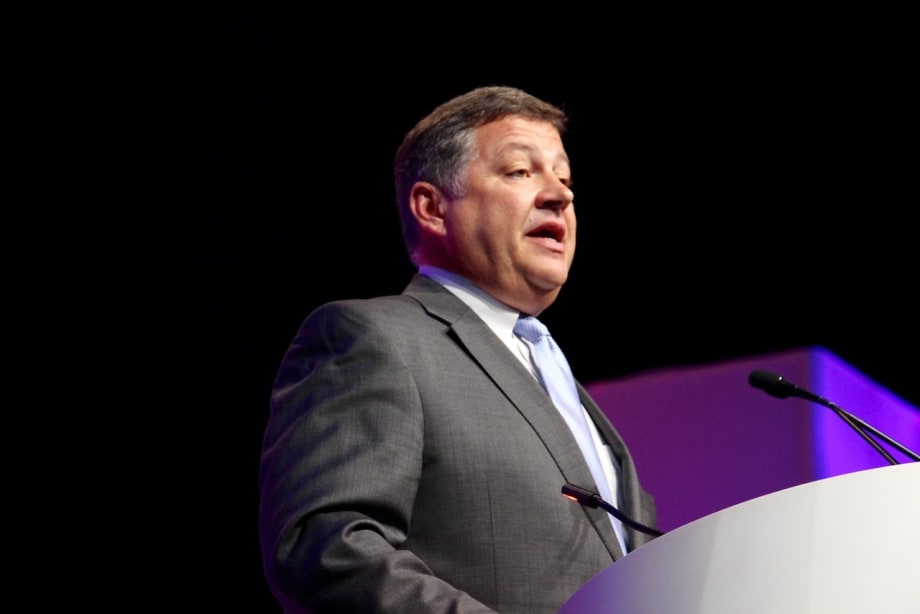
Rep. Bill Shuster (R-PA)
Evan Lockridge
Whether it’s seen as the last splash or not of a powerful lame-duck congressman, the“discussion draft” of a wide-ranging infrastructure plan just released by House Transportation and Infrastructure Committee Chairman Bill Shuster (R-PA) is receiving a warm welcome from stakeholder groups – but there’s no guarantee it will be hammered into law.
The expansive draft calls for massive federal investment in infrastructure projects through at least 2021, with funding coming from both grants and appropriations.
Here is where it gets interesting: At least some of that funding would come from increasing the federal tax on gasoline and diesel fuel by 15 cents per gallon and 20 cents per gallon, respectively. These hikes would be phased in over a period of three calendar years. Once the phase-in is complete, the new taxes would be indexed to inflation. And then – on Sept. 30, 2028 to be precise – these taxes would be eliminated.
However, nothing in the draft is meant to be set in stone. (Or concrete or asphalt, for that matter.) As Rep. Shuster himself pointed out in a statement, “This discussion draft does not represent a complete and final infrastructure bill. It is meant to reignite discussions amongst my colleagues, and I urge all members to be open-minded and willing to work together in considering real solutions that will give America the modern-day infrastructure it needs.
“Over the coming weeks and months,” he added, “I look forward to additional input from my Republican and Democratic colleagues in order to prepare a bill for congressional consideration.”
The draft also seeks establishment of a Highway Trust Fund Commission that would submit a report to Congress with “recommendations to achieve the long-term solvency of the HTF and the corresponding legislation required to enact those recommendations.”
Also being pushed by Shuster is a Per-mile User Fee Surface Transportation System Funding Pilot. This national, volunteer-based pilot program would demonstrate whether a per-mile user fee can replace the existing federal taxes on gasoline and diesel, which are the primary sources of revenue for the HTF. “Volunteers can be owners of both passenger vehicles and commercial motor vehicles, as well as an owner of a fleet of commercial motor vehicles,” the draft plan notes.
Early Reaction to Infrastructure Plan
So far, reaction to the Shuster plan from stakeholder lobbies has been positive. For example, the Associated General Contractors of America called it “a sensible approach to financing needed improvements to public infrastructure.”
"Chairman Shuster has demonstrated wisdom and courage by outlining a series of infrastructure recommendations that will support meaningful improvements to the nation's surface transportation systems for the next decade,” said AGC CEO Stephen Sandherr in a statement. “In what is becoming all too rare, the chairman has made a serious, substantive effort to identify fiscally responsible ways to pay for improvements to aging and over-burdened transportation, waterways and public buildings across the country.”
Sandherr did express concern that Shuster’s “call to replace the current funding system with a new approach in 10 years could be politically difficult.” He added that the congressman is “right to assume that we need a user-fee approach that is better suited to the way people use our infrastructure.
"His concept will lead to marked improvements in the quality, efficiency and safety of the nation's surface transportation systems and other public infrastructure,” he added. “It will make American employers more competitive and successful by reducing the costs of coping with the chronic congestion, detours and delays that effectively serve as a tax on business. And it will help prepare our transportation system to accommodate the kind of technological improvements – including self-driving vehicles – that are likely to radically transform personal and commercial transportation for the years to come.”
NATSO, the association for truckstops and travel plazas, indicated it welcomed the dialogue. Lisa Mullings, President and CEO of NATSO, said in a statement. "For too long, Congress has been unable to muster the political will necessary to invest in the nation's highways and bridges. We hope that Chairman Shuster's Discussion Draft, which takes into consideration both the immediate and long-term need to boost infrastructure revenues and shore up the Highway Trust Fund, rekindles the important discussion that began in earnest earlier this year but fizzled in recent months.”
Mullings noted that NATSO is “pleased that Congressman Shuster has proposed to raise the gasoline and diesel motor fuels taxes, which have stagnated for more than two decades while construction costs and motor vehicle fuel efficiency have continued to climb. NATSO, along with many in the transportation community, have long argued that increasing the gasoline and diesel motor fuels taxes are a key part of any infrastructure funding solution.
“We also applaud Chairman Shuster for recognizing that tolling existing interstates and commercial rest areas are not viable solutions to financing infrastructure and meeting revenue needs,” she added.
Where Do We Go from Here?
The uncertainty of the draft’s future rests on the cold hard facts of politics. For starters, Rep. Shuster announced back in January he will not be running for reelectionin November. That means he has until the beginning of January to shepherd an infrastructure package out of his committee and get it passed by the House and then push for the Senate to adopt it. No easy feat for any member of Congress, let alone one whose term and chairmanship is expiring. And this plan faces a long slog up Capitol Hill, where infrastructure funding has been unable to gain any traction, despite both parties in Congress and the Trump administration all calling for such action.
On the other hand, as a lame duck chairman, Shuster is unfettered politically for the remainder of his term, meaning he can more freely reach across the aisle to move legislation forward with Democratic support. It is very likely he will do so based on his past performance. He often speaks, as he did in a 2014 statement, of the need for infrastructure policies to receive “strong bipartisan and bicameral support.” Certainly, pushing through a major infrastructure package would be a fitting capstone to his congressional career.
As pointed out by Politico Morning Transportation blogger Tanya Snyder, Shuster’s draft “faces a steep uphill climb.” Snyder’s contention is that “Congress isn't interested in turning to infrastructure without a pay-for, and Shuster's draft probably won't get much traction until it's time to reauthorize highway and transit programs. Even then, there will be the old familiar struggles with the perceived political dangers of supporting a raise in the gas tax, which is Shuster's interim solution as a pilot program gets underway to get a per-mile fee system established.”
Still, Snyder allowed that “there will be some willingness on the part of Shuster's comrades in the House to honor his legacy” by at least considering the draft plan.
In any event, Shuster appears intent on fighting for a plan that will pass Congress. “The 2016 presidential campaign shined a spotlight on America’s crumbling infrastructure,” he stated. “Since election day, the American people have waited for action by their federal elected representatives, and I am just as frustrated as they are that we have yet to seriously consider a responsible, thoughtful proposal.
“That is why I have released a discussion draft that reflects input from members on both sides of the aisle, as well as a broad group of infrastructure stakeholders interested in building a 21st century infrastructure for our country,” he added.
Shuster’s discussion draft runs for 108 pages. In addition, a set of supporting documents that helps spell out the specifics of the plan have been posted online as well.
Related: House Transpo Chair Not Running in 2018
More Fleet Management

Color Match Smarter: Tools That Restore & Perform
For fleet managers and collision repair professionals keeping heavy-duty trucks on the road, getting the color right the first time isn't just about appearance — it's about efficiency, turnaround time, and bottom-line results. Discover how today's digital color tools are transforming the repair process from guesswork to precision.
Read More →
FMCSA Pauses Biennial-Update Enforcement Amid Motus Transition
Carriers whose updates were due on or after June 1 have more time, while FMCSA works to stabilize its new registration system and warns of phishing sites impersonating its new carrier registration system, Motus.
Read More →
2026 Blueprint for Countering Smarter Supply Chain Theft
Cargo theft is no longer just the cost of doing business. It's a multi-billion-dollar criminal enterprise exploiting vulnerabilities across your fleet, drivers, and supply chain.
Read More →


How Telematics Improves Visibility, Control, and Performance in Refrigerated Fleets
Explore how telematics help refrigerated fleets improve visibility, uptime, efficiency, compliance, and cargo protection across connected cold chain operations.
Read More →
What the U.S.-Canada Trade War Means for Trucking
Escalating U.S.-Canada tariffs could disrupt cross-border freight, reduce truck volumes, raise costs, and create new uncertainty for carriers on both sides of the border.
Read More →
What Are Trucking’s Top Concerns for 2026?
The American Transportation Research Institute wants to know what's worrying trucking fleet managers, drivers, and other stakeholders in its annual Industry Issues survey.
Read More →
American Trucking Associations Looks for a New Leader
ATA President and CEO Chris Spear abruptly left his job at the association on August 21, at a pivotal time for the trucking industry.
Read More →
Public Wi-Fi Cybersecurity Risks: How Truck Drivers and Fleets Can Protect Their Data
Public Wi-Fi can expose truck drivers and fleets to credential theft, malware, and other cyber threats. Here’s how to reduce the risk on the road.
Read More →
For Nicky Cupp, Fleet Innovation Starts With Frustration
HDT Truck Fleet Innovator Nicky Cupp turns everyday pain points at Fraley & Schilling into opportunities for better technology and smarter processes.
Read More →
Adam Buttgenbach’s Approach to Electric Trucks: Start With Where They Fit
HDT Truck Fleet Innovator Adam Buttgenbach helped PepsiCo build one of North America’s largest EV fleets by focusing on where electric trucks make operational sense.
Read More →