




Queclink Releases 'High-Performance' DashCam
Queclink’s CV5000 is an AI-enabled, dual-facing dashcam. It connects to an extensive range of auxiliary devices for side, rear and cargo views, making it a highly versatile dashcam solution.

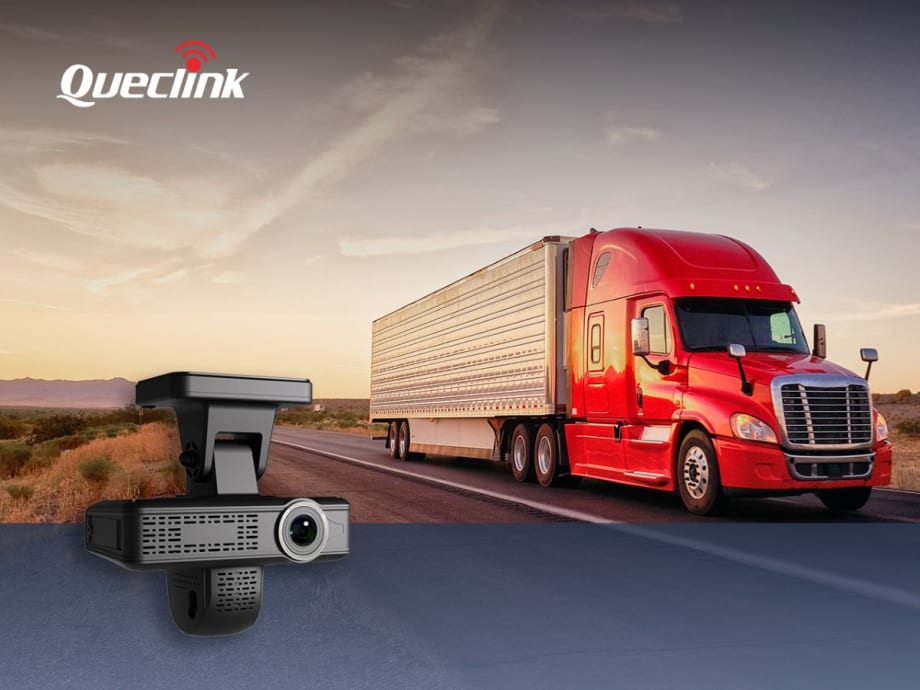
The CV5000 dashcam is dashcam is designed to boost fleet safety and compliance within the US transportation sector.
Photo: Queclink
Queclink Wireless Solutions, a global provider of IoT devices and hardware, launched what it calls its most powerful and flexible dashcam yet. The new dashcam is designed to boost fleet safety and compliance in the U.S. transportation sector.
The CV5000 is an AI-powered, dual-facing dashcam that supports up to two additional cameras for increased visibility around the vehicle or to handle complex video telematics applications.
An All-in-One In-Cab Camera Design
The CV5000 comes with a forward-and driver-facing camera as standard and then connects to an extensive range of auxiliary devices for side, rear and cargo views, making it a highly versatile dashcam solution.
As a result, commercial fleet operators can benefit from a multi-camera system all through the all-in-one device, taking advantage of true fleet and video telematics capabilities.
Like previous models, the CV5000 boasts optional CAN bus integration to gain greater understanding of vehicle performance and usage.
“The CV5000 is a high-performance, all-in-one dashcam that has been developed to cope with the diverse requirements of the commercial fleet sector,” explained Chris Diaz, director of business development at Queclink Wireless Solutions.
“It builds on the success of the CV200, launched at the beginning of last year, with significant enhancements in terms of camera options, AI functionality, positioning accuracy and system integration.”
AI detection enables real-time event recognition through advanced driver assistance systems, driver monitoring systems and blind spot detection functionality.
The CV5000 can be used to identify and alert on dangers such as lane departure, forward collision, and nearby vulnerable road users. Other features include identifying driver distraction, fatigue and seatbelt use.
Planned is a facial ID feature for automated driver identification.
It also incorporates a CMOS active pixel sensor with an independent image signal processor for superior low-light performance and traffic sign recognition support.
Advanced Vehicle Tracking
Enhanced GNSS (Global Navigation Satellite System) accuracy ensures the CV5000 delivers advanced tracking to less than one meter, while the large ceramic antenna ensures increased signal strength, according to the company.
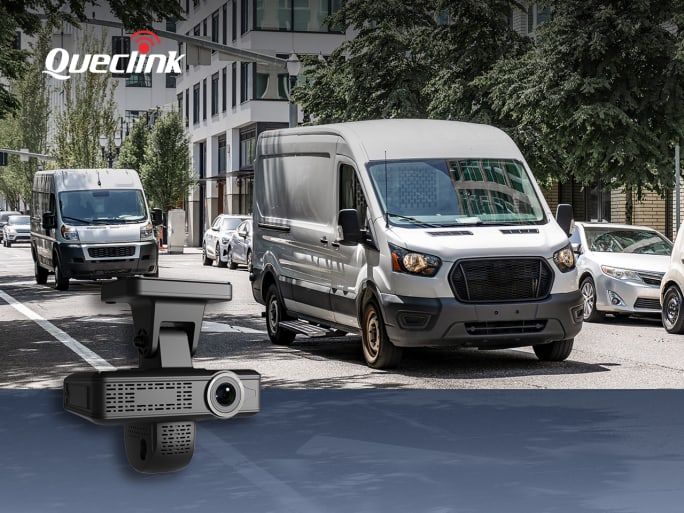
Other CV5000 features include driver distraction, fatigue and seatbelt use, with a facial ID feature for automated driver identification.
Photo: Queclink
Meanwhile, the dual MicroSD storage, supporting up to 1TB in total, enables long-duration, high-resolution recording to minimize the risk of data loss and for added peace of mind.
“The CV5000 represents a significant step forward in dashcam technology. It is designed to meet the growing demand from road transport sector for intelligent and adaptable multi-camera systems that support advanced fleet and video telematics applications,” Diaz added.
More Safety & Compliance

FMCSA Pauses Biennial-Update Enforcement Amid Motus Transition
Carriers whose updates were due on or after June 1 have more time, while FMCSA works to stabilize its new registration system and warns of phishing sites impersonating its new carrier registration system, Motus.
Read More →
ZF Expands Commercial Vehicle Push in North America
ZF is expanding its North American commercial-vehicle presence with new transmission applications, electrification, trailer technology and autonomous-driving systems.
Read More →
Truck Drivers Need More Than Another Alert
Fleets have more visibility into truck health, safety events, and driver activity than ever. The next challenge is turning all that information into useful guidance for the person who has to decide what to do next.
Read More →
Tesla Wants a Self-Driving Semi. Are Cameras Enough?
Could Tesla’s camera-only autonomous driving technology work on an 80,000-pound Semi? In this commentary, HDT's Deborah Lockridge takes a look at Tesla, Cybercab, and how autonomous trucks see the road.
Read More →
What DOT’s Automated Vehicle Strategy Means for Trucking
The U.S. Department of Transportation issued a new automated-vehicle strategy that outlines plans for driverless-truck regulations, cross-state freight corridors, and federal safety standards.
Read More →
NYC Expands Speed, Pedestrian Safety Tech Across Fleet
New York City is expanding intelligent speed assistance and pedestrian-alert systems across its municipal fleet, moving the technologies from pilot programs into vehicle procurement and retrofit requirements.
Read More →
FMCSA Removes 110 Truck Driver Training Schools from Certified ELDT List
Federal regulators also are targeting more than 160 additional training providers and launching a nationwide audit of third-party CDL skills testers as part of a broader crackdown on trucking fraud.
Read More →
Beyond DOT Compliance: What Makes a Trucking Fleet Truly Safe?
A trucking fleet can follow every rule and still make unsafe decisions. The real test comes when safety conflicts with freight, productivity, or cost.
Read More →
Hours of Service Pilot Programs: FMCSA Readies for 2027 Rollout
Two pilot programs could eventually reshape hours-of-service rules, giving truck drivers options to pause their 14-hour clock or use longer split sleeper rest periods.
Read More →
New Guide Offers Pet Safety Tips for Truck Drivers
Hundreds of thousands of pets travel in truck cabs. A new safety guide from Volvo Trucks and the Center for Pet Safety offers practical advice for truck drivers who bring dogs and cats along for the ride.
Read More →