




Progressive Insurance Pinpoints When Most Truck Crashes Occur
Progressive Commercial Auto, part of The Progressive Group of Insurance Companies, recently reviewed claims data from crashes involving commercial vehicles it insures. The study looked at

Progressive Commercial Auto, part of The Progressive Group of Insurance Companies, recently reviewed claims data from crashes involving commercial vehicles it insures. The study looked at
"light local" vehicles – vehicles with a gross vehicle weight rating (GVWR) of less than 16,000 pounds and trucks – and vehicles with a GVWR of more than 16,000 pounds. The study reviewed accidents that occurred between September 2005 and August 2006
Light local vehicles insured on a commercial policy would include passenger cars, pickup trucks, SUVs, vans and minivans, etc., and trucks would include tractor trailers, dump and tow trucks, flatbeds, etc.
Findings included:
Fridays Not Good — But It Depends on What You Drive:
• Most crashes involving light local vehicles happened on Fridays, while the least number of crashes happened on Tuesdays and Mondays (Saturdays and Sundays were excluded from the study), but…
• Crashes involving heavier trucks happened most often on Thursdays and least often on Mondays and Fridays.
January Winter Blues = Fewer Crashes:
• In the study period, December 2005 had the highest rate of accidents involving light local vehicles insured by Progressive Commercial Auto; the month with the second highest was November 2005. The months with the lowest rate of accidents were January and April 2006. The difference between highest and lowest? The likelihood of light local vehicles being involved in a crash was 17 percent greater in December 2005 than in January 2006.
• June 2006 had the highest rate of accidents involving trucks, which was 29 percent greater than the month with the lowest, January 2006.
Trucks Start Earlier, Finish Earlier:
• Not surprisingly, about 66 percent of all crashes involving light local and heavier trucks happened during traditional work hours, though most of the crashes involving heavier trucks happened between 6 a.m. and 5 p.m. and those involving light local vehicles started one hour later – 7 a.m. to 6 p.m.
• Light local vehicles were involved in most crashes between 12 p.m. and 6 p.m. while heavier trucks were involved in most of their crashes between 11 a.m. and 4 p.m.
"Our claims data simply show when crashes happen, not why,” said Bill Kampf, general manager, Progressive Commercial Auto.
The Progressive Group of Insurance Companies, in business since 1937, ranks third in the nation for commercial and personal auto insurance based on premiums written.
For more information, call 800-PROGRESSIVE or visit www.progressivedirect.com.
More Safety & Compliance
A Camera Isn't a Safety Program. Here's What Brokers Are Screening for Now
Footage alone may not be enough to pass broker vetting processes. Here's what counts as a defensible safety program now.
Read More →
Marijuana and Trucking’s Drug-Testing Dilemma
Marijuana is getting stronger, laws are changing, and drug tests still can’t reliably establish impairment. What does that mean for truck drivers and the fleets that employ them?
Read More →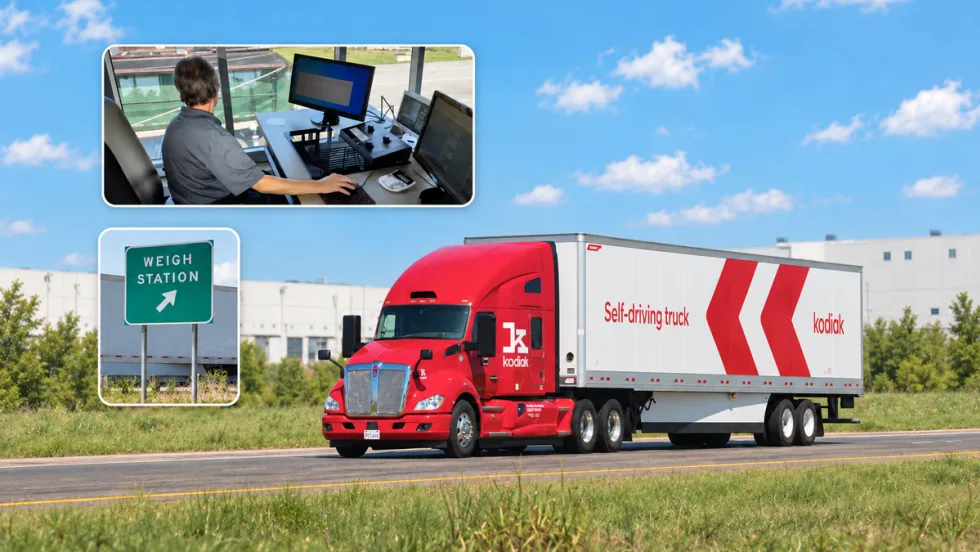
PrePass, Kodiak Connect Driverless Trucks to Roadside Enforcement
The system will allow enforcement agencies to verify Enhanced Inspection information and decide whether Kodiak’s autonomous trucks can bypass roadside screening sites.
Read More →

From One Generation to the Next: How Mentorship Builds Safer Truck Drivers
After three decades in trucking, Harold Perry shares what he's learned about driver safety, mentorship, and helping the next generation build confidence behind the wheel.
Read More →
FMCSA Pauses Biennial-Update Enforcement Amid Motus Transition
Carriers whose updates were due on or after June 1 have more time, while FMCSA works to stabilize its new registration system and warns of phishing sites impersonating its new carrier registration system, Motus.
Read More →
ZF Expands Commercial Vehicle Push in North America
ZF is expanding its North American commercial-vehicle presence with new transmission applications, electrification, trailer technology and autonomous-driving systems.
Read More →
Truck Drivers Need More Than Another Alert
Fleets have more visibility into truck health, safety events, and driver activity than ever. The next challenge is turning all that information into useful guidance for the person who has to decide what to do next.
Read More →
Tesla Wants a Self-Driving Semi. Are Cameras Enough?
Could Tesla’s camera-only autonomous driving technology work on an 80,000-pound Semi? In this commentary, HDT's Deborah Lockridge takes a look at Tesla, Cybercab, and how autonomous trucks see the road.
Read More →
What DOT’s Automated Vehicle Strategy Means for Trucking
The U.S. Department of Transportation issued a new automated-vehicle strategy that outlines plans for driverless-truck regulations, cross-state freight corridors, and federal safety standards.
Read More →
NYC Expands Speed, Pedestrian Safety Tech Across Fleet
New York City is expanding intelligent speed assistance and pedestrian-alert systems across its municipal fleet, moving the technologies from pilot programs into vehicle procurement and retrofit requirements.
Read More →