




Produce Imports to Increase at Savannah Port
Expect to see more South American produce coming directly into the southern U.S. at one facility due to the Georgia Ports Authority’s participation in a U.S. Department of Agriculture pilot program.
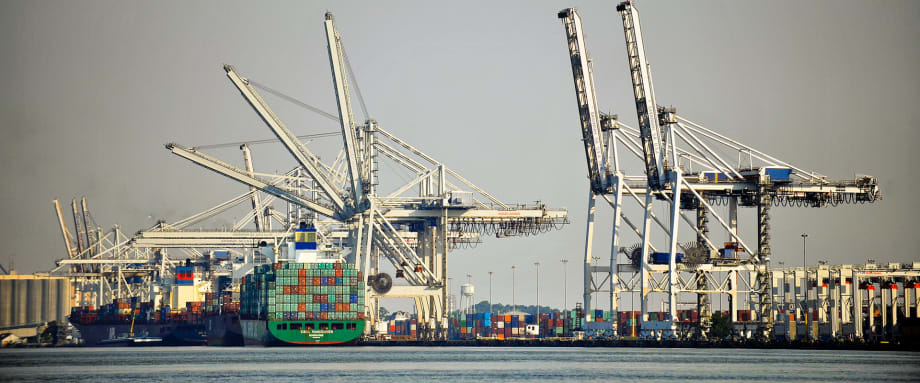
Credit: GPA
GPA
Expect to see more South American produce coming directly into the southern U.S. at one facility due to the Georgia Ports Authority’s participation in a U.S. Department of Agriculture pilot program.
Starting Sept. 1, the Port of Savannah will begin handling fruit from South America that has undergone cold treatment, a process that prevents the transmission of agricultural pests.
Through the USDA program, citrus fruits, grapes and blueberries will be chilled for at least 17 days prior to entry into the U.S. to protect against fruit flies. The process will be done in producing countries, including Peru, Chile and Brazil, or at transshipment points such as Panama.
The fruit will move in refrigerated containers held just over freezing during transit aboard cargo vessels, effectively cutting the time the fruit must remain stationary for treatment.
“South American fresh fruit destined to the southeast market has traditionally been shipped to northern U.S. ports,” said GPA executive director Curtis Foltz. “Delivery to Savannah means fruits won’t have to be trucked as far to reach Southeastern markets, allowing fresher offerings for stores and longer shelf life for consumers.”
Besides faster delivery, the program also cuts logistics-related emissions by reducing truck miles and allowing more efficient shipments, according to GPA. Trucks carrying refrigerated cargo containers may be loaded up to a gross weight of 100,000 pounds on Georgia highways, where domestic interstate trucks may be loaded only to 80,000 pounds.
Cliff Pyron, GPA chief commercial officer, said port customers have been requesting the delivery of fruit closer to the fast-growing market of the southeastern U.S.
“Because the South American growing season is opposite that of the U.S., these shipments are vital for keeping fresh produce on shelves year-round,” he said.
The Garden City Terminal in Savannah has a refrigerated container capacity of more than 2,600 containers. The refrigerated boxes are powered by 600 chassis plug-ins and 2,016 container rack slots.
More Fleet Management

Color Match Smarter: Tools That Restore & Perform
For fleet managers and collision repair professionals keeping heavy-duty trucks on the road, getting the color right the first time isn't just about appearance — it's about efficiency, turnaround time, and bottom-line results. Discover how today's digital color tools are transforming the repair process from guesswork to precision.
Read More →
FMCSA Pauses Biennial-Update Enforcement Amid Motus Transition
Carriers whose updates were due on or after June 1 have more time, while FMCSA works to stabilize its new registration system and warns of phishing sites impersonating its new carrier registration system, Motus.
Read More →
2026 Blueprint for Countering Smarter Supply Chain Theft
Cargo theft is no longer just the cost of doing business. It's a multi-billion-dollar criminal enterprise exploiting vulnerabilities across your fleet, drivers, and supply chain.
Read More →


How Telematics Improves Visibility, Control, and Performance in Refrigerated Fleets
Explore how telematics help refrigerated fleets improve visibility, uptime, efficiency, compliance, and cargo protection across connected cold chain operations.
Read More →
What the U.S.-Canada Trade War Means for Trucking
Escalating U.S.-Canada tariffs could disrupt cross-border freight, reduce truck volumes, raise costs, and create new uncertainty for carriers on both sides of the border.
Read More →
What Are Trucking’s Top Concerns for 2026?
The American Transportation Research Institute wants to know what's worrying trucking fleet managers, drivers, and other stakeholders in its annual Industry Issues survey.
Read More →
American Trucking Associations Looks for a New Leader
ATA President and CEO Chris Spear abruptly left his job at the association on August 21, at a pivotal time for the trucking industry.
Read More →
Public Wi-Fi Cybersecurity Risks: How Truck Drivers and Fleets Can Protect Their Data
Public Wi-Fi can expose truck drivers and fleets to credential theft, malware, and other cyber threats. Here’s how to reduce the risk on the road.
Read More →
For Nicky Cupp, Fleet Innovation Starts With Frustration
HDT Truck Fleet Innovator Nicky Cupp turns everyday pain points at Fraley & Schilling into opportunities for better technology and smarter processes.
Read More →
Adam Buttgenbach’s Approach to Electric Trucks: Start With Where They Fit
HDT Truck Fleet Innovator Adam Buttgenbach helped PepsiCo build one of North America’s largest EV fleets by focusing on where electric trucks make operational sense.
Read More →