




Related: How Two Fleets Set and Achieved Sustainability Goals
Number of Zero-Emissions Commercial Vehicle Models Expected to Double by 2023
The number of models of zero-emission trucks, buses, and off-road equipment is expected to double between the end of 2019 and 2023, according to a new analysis by Calstart.
by Deborah Lockridge and John G. Smith
June 2, 2020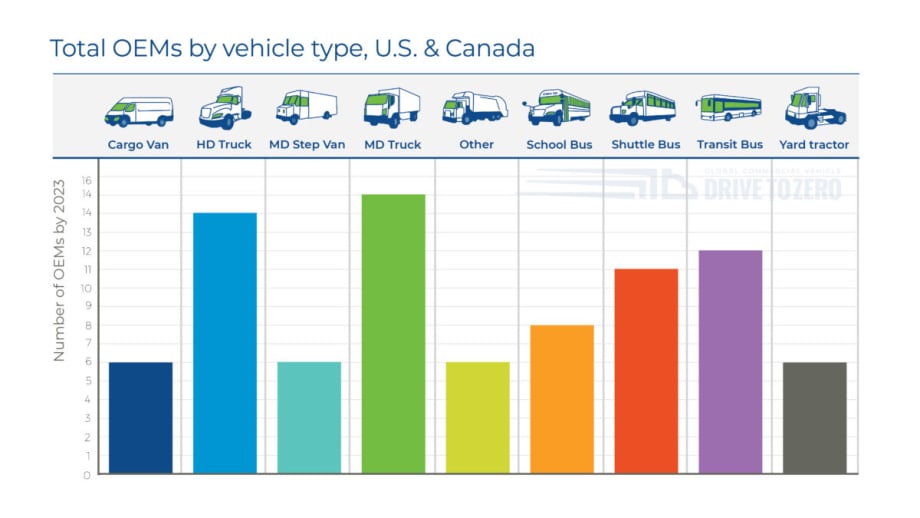
Diverse offerings in zero-emissions electric and fuel cell vehicles are coming from a broad range of original equipment manufacturers.
Graphic: Calstart
6 min to read
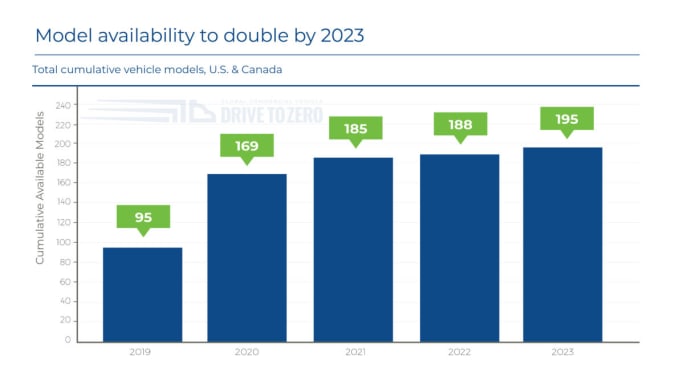
The number of available and announced models of zero-emission commercial vehicles in the U.S. and Canada is on track to rise nearly 78% by the end of 2020 compared to the end of last year.
Graphic: Calstart
The number of models of zero-emission trucks, buses, and off-road equipment is expected to double between the end of 2019 and 2023, according to a new analysis by Calstart. “Zero-emission trucks and buses are on the verge of a major surge in the U.S. and Canada,” said Calstart Northeast Regional Director Ben Mandel during a June 2 media briefing. “The growth we’re seeing is happening really across the board.”
Earlier this year, Calstart’s Commercial Vehicle Drive to Zero program launched an online tool cataloging models of current and upcoming zero-emission commercial trucks, buses, and off-road equipment.
The resulting Zero-Emission Technology Inventory shows that the number of zero-emission trucks, buses and off-road equipment models will rise 78% this year, and double by 2023. By the end of 2020 there will be 169 medium- and heavy-duty models in production, compared to 95 offerings in 2019. Within three years, there are expected to be 195 such vehicles.
“What we’re seeing is a wide diversity of offerings from a broad range of OEMs,” Mandel said. “This already competitive landscape will grow increasingly so over the next three to four years.”
In fact, he explained, Calstart is expecting a number of high-profile announcements in the next few years, "and many of those really follow on the heels of successful deployments in bus technology. Companies like BYD, Volvo, Daimler, and Lion have been able to leverage bus technology" in development of truck drivetrains.
Calstart, a nonprofit clean transportation “accelerator,” counts among its members vehicle makers, suppliers, fleets, and fuel providers.
Medium-Duty Key Market for Electric Trucks
A key market is clearly in the form of medium-duty vehicles like box trucks and other straight trucks, thanks in large part to up-fitters that provide battery-electric conversion kits that can be offered with different body types and vehicle chassis, Mandel said.
Companies such as UPS, FedEx, Amazon and Ikea are actively investing in the technologies.
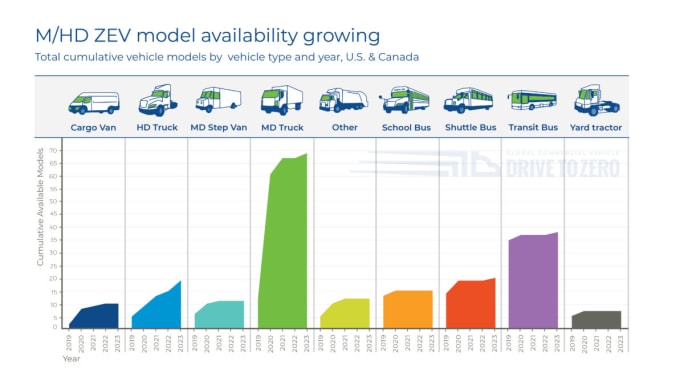
By the end of 2020, there will be a total of 169 zero-emission medium- and heavy-duty vehicle models in production, compared to 95 last year.
Graphic: CalstartGraphic: Calstart
UPS, for instance, has invested in Arrival, and has ordered about 10,000 battery-electric delivery vans for North America and Europe. About 1,000 electric and hybrid-electric vehicles are already in the field. FedEx, meanwhile, has ordered 1,000 electric vans from Chanje. Amazon has ordered 100,000 electric delivery vans from upstart Rivian.
Ikea is committed to offering zero-emission deliveries around the world by 2025, said Steven Moelk, the retailer’s project implementation manager for zero-emission home delivery, starting in New York and Los Angeles in the U.S.
He noted that home delivery, last mile in particular, lends itself well to electrification because the routes are shorter and operating in urban densely populated areas.
“There are a number of medium-duty Class 4 and 5 box trucks that are kind of our sweet spot for home delivery,” Moelk explained “We believe that the technology, both on the vehicle side and the infrastructure side and the software, all that technology exists today to meet our goal. So we’re pressing forward with electrification, hopefully this year,” he said. “The distance of the routes tends to be smaller and the dwell times tend to be longer. And they’re taking place, quite frankly, in urban areas, in densely populated areas.”
The investments in zero-emission final-mile deliveries also offer a tangible way to showcase the company’s commitment to sustainable mobility, he said.
The challenges that remain are more financial in nature, and how favorable lease and rental options can be offered to independent contractor drivers, he added.
Heavy-Duty On the Way
Compared to the medium-duty market, “it might take a few more years for this market in heavy-duty trucks – especially on the longer-range end of the spectrum – to present themselves and make themselves a fully developed market,” Mandel said.
Even here gains are being realized, with the promise of models offering ranges of as much as 650-700 miles by 2023. Cited examples of those include the Nikola Two and Tre, and Hyundai HDC-6 Neptune, all of which are to run on hydrogen fuel cells.
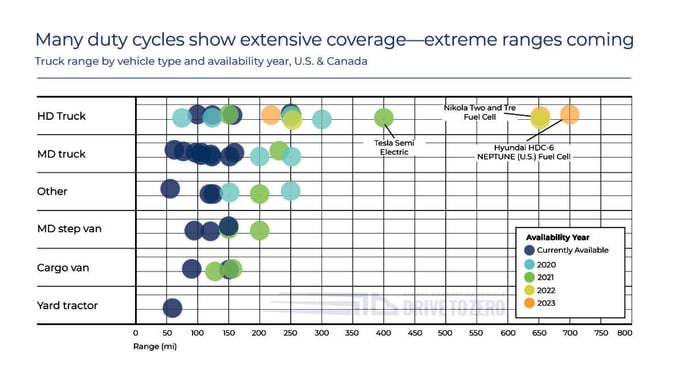
Zero-emission commercial models have varying range capabilities that fit different applications.
Graphic: Calstart
Currently, the most promising applications for heavy-duty trucks are in service such as port drayage or regional operations, where heavy-duty trucks with ranges up to 250-300 miles are already available or are scheduled to be by the end of this year.
Aaron Gillmore, vice president BYD Electric Trucks – North America, said the rest of the world is outpacing North America when it comes to deploying zero-emission vehicles. But he described the market as being “on the cusp of change.”
His company is focused on opportunities in three areas:
1. Ports and rail hubs, which use Class 8 yard tractors to move containers and regional drayage shuttles to take those containers to nearby warehouses, both low-mileage operations where trucks can easily get back to a central location for charging.
2. Warehouse logistics and distribution, where again yard tractors and short- to regional-haul Class 8 tractors are used, as well as Class 6 box trucks.
3. The refuse industry, where BYD has both Class 6 and Class 8 trucks in operation.
“Another great opportunity is last mile delivery,” he noted; we’re looking at developing vehicles in the step van and Sprinter categories.”
Why Electric Trucks are Growing
Factors behind the growth in zero-emission vehicles include corporate commitments, policy drivers, and increasingly attractive business cases alike.
BYD, for instance, is “confident that the U.S. market is now moving forward, and we’re making investments to correspond to expand the models we offer and the applications we can serve.” Thus far, Gillmore said, the company has mostly had small numbers of trucks deployed as test units with fleets, but it believes it will soon have more, larger orders.
“Moving fleets over is not an easy task,” he admitted. “It obviously involves a lot of infrastructure upgrades. We’re on the cusp and talking to a lot of customers about much more significant fleet deployments. With that comes other challenges. I think utilities have been moving to meet those challenges -- a lot of concentrated electrical power is going to be needed in locations to make sure charging can happen.”
Government policies offer support in the form of initiatives like California’s advanced clean truck rule, along with incentives like the state’s Hybrid and Zero-Emission Truck and Bus Voucher Incentive Project (HVIP) program. Low-carbon fuel standards offer accelerated payback periods, while utility companies are have programs to support charging infrastructure.
“The will is there,” said BYD’s Gillmore. “The technology is there. Some of the challenges are making sure that the economic models work, that there’s policy support. You’re always trying to balance range and payload and cost when you’re trying to put these things together.”
Mandel says the interest in zero-emission vehicles is also holding strong in the face of other plunging vehicle orders, Mandel said.
Recovery and stimulus plans in the wake of Covid-19 could view zero-emission vehicles as an economic growth strategy, he added. China, for example, has extended incentives beyond when they were to be retired. Europe’s Green Deal will also offer support.
“When you look at particularly final mile, there are more deliveries than ever before as everybody shops online. And the e-commerce boom that’s been happening for a decade seems to have accelerated even more during the crisis,” said Moelk, referring to growth in a business segment that will rely on urban delivery vehicles. “As people get used to it, they’ll probably continue to shop online.”
“As we see commitments from governments in the U.S., particularly in California, in Europe, in China, investing in urban delivery electrification can really result in less air pollution, noise and climate impacts, and at the same time create new clean technology jobs,” said Cristiano Façanha, global director of Calstart’s Drive to Zero program.
“Despite everything that is happening, the commitments from manufacturers, from governments, they’re still holding true.”
John G. Smith is the editorial director of Newcom Media's trucking and supply chain publications; content used with permission as part of a cooperative editorial agreement.
More Fuel Smarts
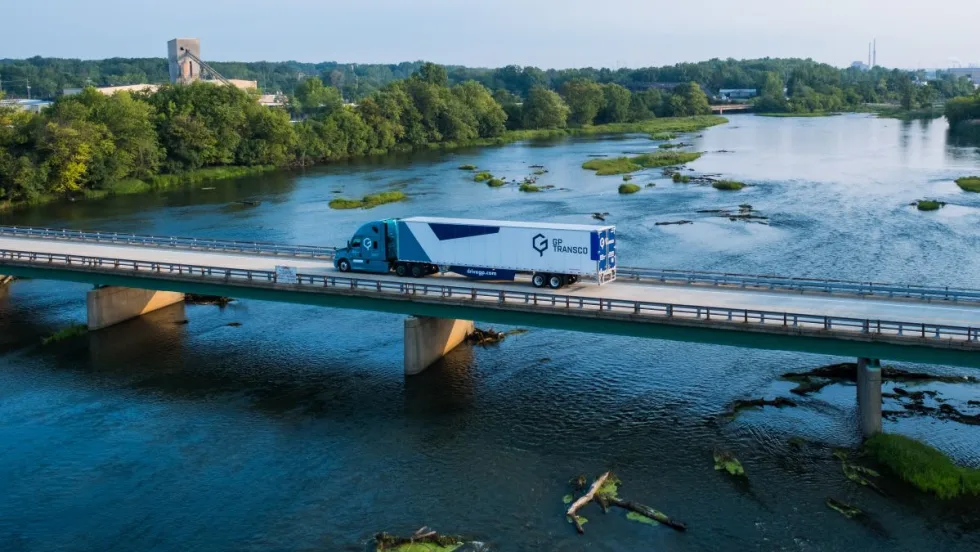
How GP Transco Builds Fuel Savings a Fraction at a Time
Aerodynamic specs, solar panels, and driver incentives help GP Transco turn small efficiency gains into savings it can reinvest in its people.
Read More →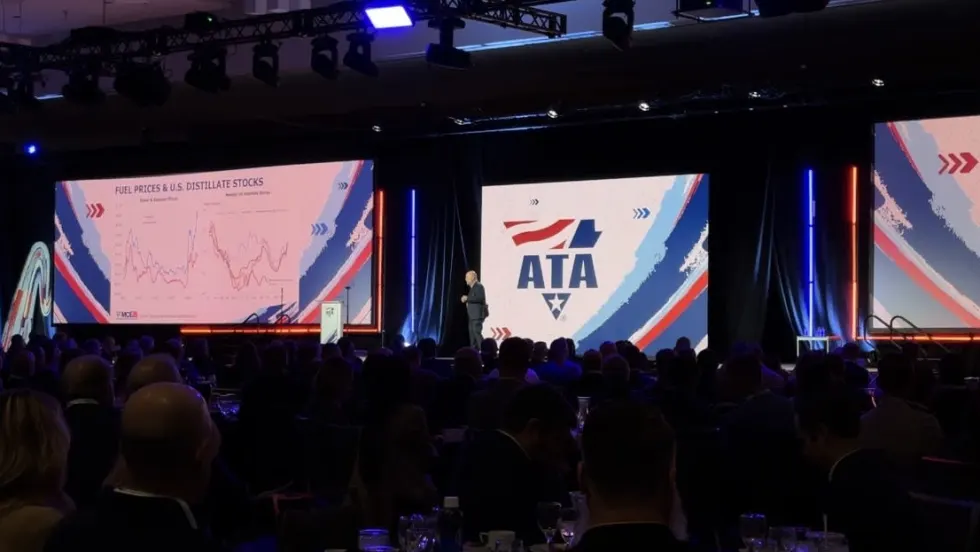
Trucking’s Diesel Squeeze Isn’t Letting Up
With diesel topping $6 a gallon nationally, ATA's Bob Costello explains why fleets should prepare for continued pressure at the pump.
Read More →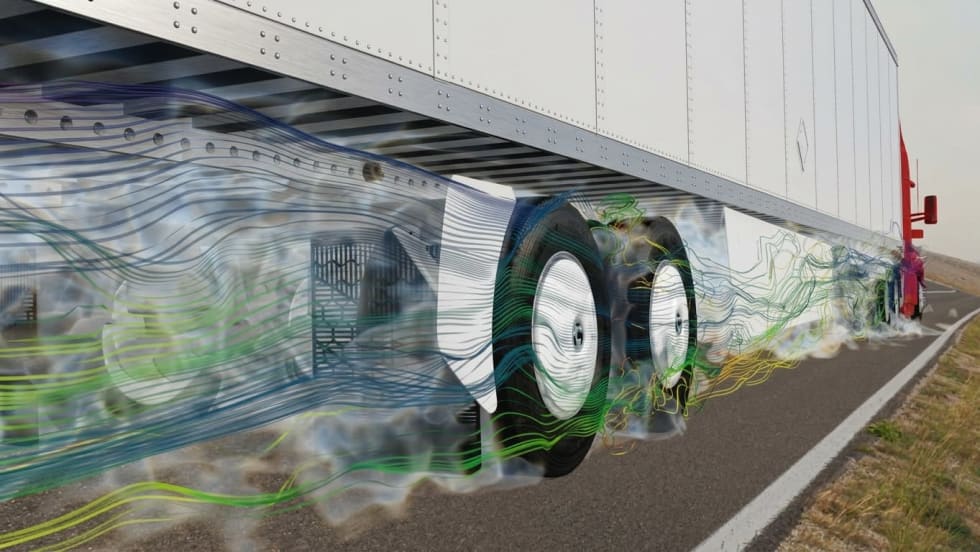
FlowBelow Redesigns Trailer AeroSlider to Cut Fuel Use
The lighter trailer aerodynamic system installs in less than 45 minutes, according to the company, with potential payback in under a year depending on fuel prices and trailer mileage.
Read More →
Why Diesel Price Relief Efforts May Fall Short
Diesel prices have eased from September’s record high, but doubts about additional Russian supply and limits on dyed-diesel tax relief mean trucking fleets still face expensive fuel. And prices could go higher.
Read More →
Why Small Fuel Savings Matter in Trucking
Can better fuel economy help pay for driver raises? In this podcast, GP Transco explains how small efficiency gains create room to reinvest in its people.
Read More →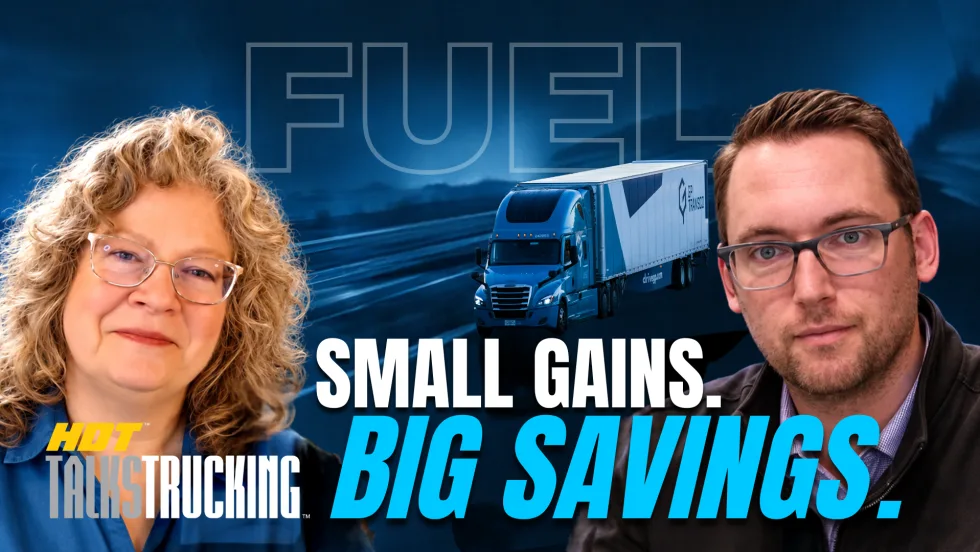
How GP Transco Cuts Trucking Fuel Costs, a Tenth of a Gallon at a Time
What’s another tenth of a mile per gallon worth? GP Transco shares how equipment upgrades and driver coaching turn small gains into meaningful fuel savings.
Read More →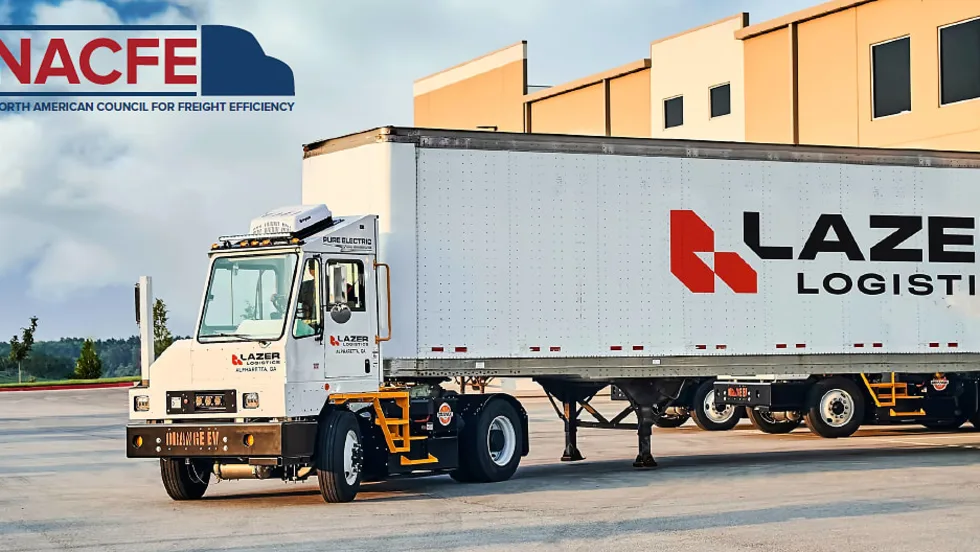
Electric Yard Tractors Move Beyond Pilots
Operating-cost savings have overtaken sustainability goals as the leading reason surveyed fleets are adopting battery-electric terminal tractors, according to new NACFE research.
Read More →
Geotab Links Fleet Card to Vehicle Data
The new card combines fuel discounts with telematics-based purchase controls. Geotab’s analysis also points to potential savings from choosing lower-priced fuel stops.
Read More →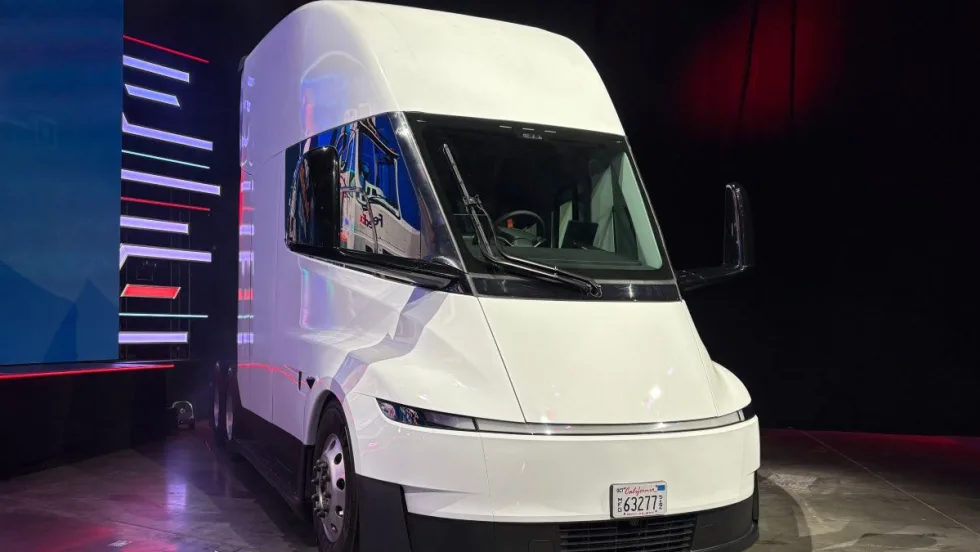
Fleet Economics Shape Electric Truck Outlook
ACT Research expects costs, charging infrastructure, and technology improvements to drive zero-emission commercial vehicle adoption as federal regulations and incentives retreat.
Read More →
Wex Adds Cardless Fuel Payments for Over-the-Road Customers
A new fuel card feature for Wex customers offers convenience and security.
Read More →