





Related: Navistar Appoints Senior VP for Truck Sales and Marketing
Navistar Q2 Results Reveal Narrower Loss, Big Gain in Sales
Navistar International has reported a second-quarter 2015 net loss of $64 million, which compares favorably to the net loss of $297 million that it incurred for the same period a year ago, and showed a 38% increase in sales of Class 6-8 trucks and buses.
June 4, 2015
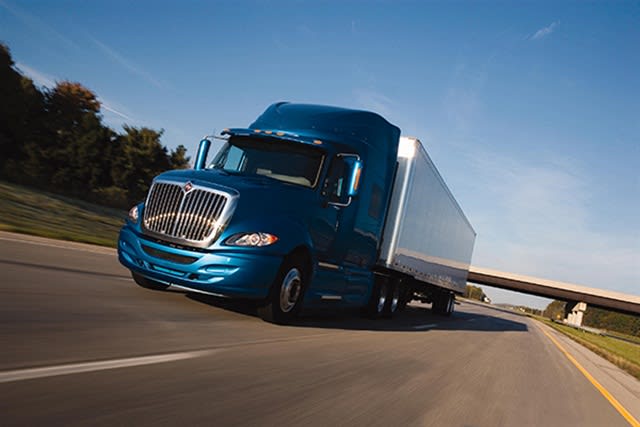
International ProStar Class 8 on-highway tractor. Photo: Navistar
4 min to read
Navistar International Corp. narrowed its loss in the second quarter but missed analyst expectations as its revenue dropped by nearly 2%. Company officials emphasized the truck and engine maker's "continued progress in improving enterprise-wide business operations."
The second-quarter net loss of $64 million (or $0.78 per diluted share) is significantly better than the net loss of $297 million (or $0.78 per diluted share) that it incurred for the same period a year ago. It also reflects a 38% increase in sales of Class 6-8 trucks and buses in the U.S. over the first quarter of the year.
Revenue dropped from $2.75 billion to to $2.69 billion. Analysts had expected a loss of 18 cents a share and revenue of $2.82 billion.
The OEM also stated that in Q2 it was cash flow positive and that it finished the quarter with $784 million in manufacturing cash, cash equivalents and marketable securities.
In addition, the company advised that its Q2 2015 EBITDA was $85 million vs. an EBITDA loss of $119 million in the same period last year. In a June 4 conference call with investors, Navistar President and CEO Troy Clarke attributed this $204 million year-over-year improvement to an increase in truck segment sales, having a “favorable product mix” and the continuation of lower warranty expense and cost reductions.
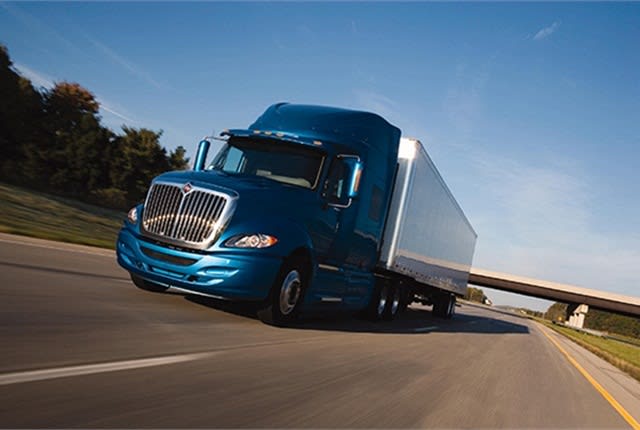
International ProStar Class 8 on-highway tractor.Photo: Navistar
"Our results reflect continued progress in improving enterprise-wide business operations and positive momentum in the North American industry," said Clarke.
"We continue to make solid improvements in our North American truck and parts businesses and are especially encouraged by the progress in our bus business as well as increased market share in our medium-duty business, where we saw significant improvement in sales to major rental and leasing fleets and strong results in dealer-led sales," he continued.
Clarke noted that the 38% quarterly gain in North American truck sales also translated to a 10% year-over-year increase, which he said included a 24% increase in Class 6 and 7 medium trucks and a 9% increase in combined Class 8 trucks.
"We continue to take the right actions to improve the business and expect to achieve in excess of an 8 percent EBITDA margin run rate as we exit the year," he added. "We think 2016 will be another strong year for the North American industry and we believe we're well positioned to take advantage of favorable market conditions for our core businesses."
Navistar is “projecting a continued strong North American industry for FY2016 with retail deliveries of Class 6-8 trucks and buses in the U.S. and Canada to be in the same range as FY2015."
Indeed, Navistar said it is “projecting a continued strong North American industry for FY2016 with retail deliveries of Class 6-8 trucks and buses in the U.S. and Canada to be in the same range as FY2015 — 350,000 to 380,000 units — with a stronger mix of school buses and medium-duty trucks.”
The company pointed out that it expects to attain more than $13 million in annual savings on fixed costs by “completing its exit from the foundry business as operations in Indianapolis wind down by the end of the summer.”
It described the acquisition of a test track and proving grounds in New Carlisle, Ind., as a “key strategic addition to the company's product development operations, allowing for comprehensive testing and validation of new vehicles and innovative technologies.” Navistar also noted that it had announced during Q2 that it would be the first OEM to go to market with the Bendix Wingman Fusion advanced safety system, which it offers on International Class 8 on-highway tractors.
Navistar also listed these Q2 segment-specific highlights:
Truck. Recorded a loss of $51 million, compared with a year-ago Q2 loss of $129 million. Navistar said the segment's year-over-year improvement was driven by increased sales, improved product costs and lower charges for adjustments to pre-existing warranties— “reflecting quality improvements in recent model years and continued efforts to reduce overall cost per repair.”
Parts. Recorded a profit of $133 million, flat compared to Q2 2014. Navistar noted that “sales and margin improvements in North American commercial markets were offset by a decrease in export and Blue Diamond Parts sales.”
Global Operations. Recorded a profit of $1 million compared to a year-ago Q2 loss of $162 million. Navistar said the year-over-year gain was primarily due to one-time non-cash asset impairment charges in Q2 2014, noting that “the remaining improvements in segment loss were primarily due to lower manufacturing and structural costs as a result of restructuring and cost-reduction efforts.”
Financial Services. Segment. Recorded a profit of $22 million compared to Q2 profit of $24 million. Navistar said this “reflected an increase in revenue that was more than offset by a higher provision for loan losses in Mexico and lower income from intercompany loans.”
More Equipment

Detroit Opens Orders for EPA 2027 Engines
Detroit isn’t starting from scratch to meet EPA 2027 diesel emissions standards. Its Gen 6 DD13 and DD15 engines keep much of today’s platform while updating the fuel and aftertreatment systems.
Read More →
Carrier Transicold Adds All-Electric TRU for Stationary Cold Storage
Carrier Transicold’s new Vector 8200 all-electric transport refrigeration unit gives fleets a diesel-free option for temporary refrigerated and frozen trailer storage.
Read More →
A Closer Look at Kenworth’s Electric T880E Vocational Truck [Video]
Learn more about Kenworth's T880E battery-electric vocational truck at the Paccar Technical Center, including its range, applications, upfitting considerations, and PTO options, in this HDT Spotlight video.
Read More →
Kenworth T880E Brings EV Power to Vocational Trucks
A closer look at the Kenworth T880E’s range, charging, powertrain and upfit options — and where fleets are showing the most interest.
Read More →
What the U.S.-Canada Trade War Means for Trucking
Escalating U.S.-Canada tariffs could disrupt cross-border freight, reduce truck volumes, raise costs, and create new uncertainty for carriers on both sides of the border.
Read More →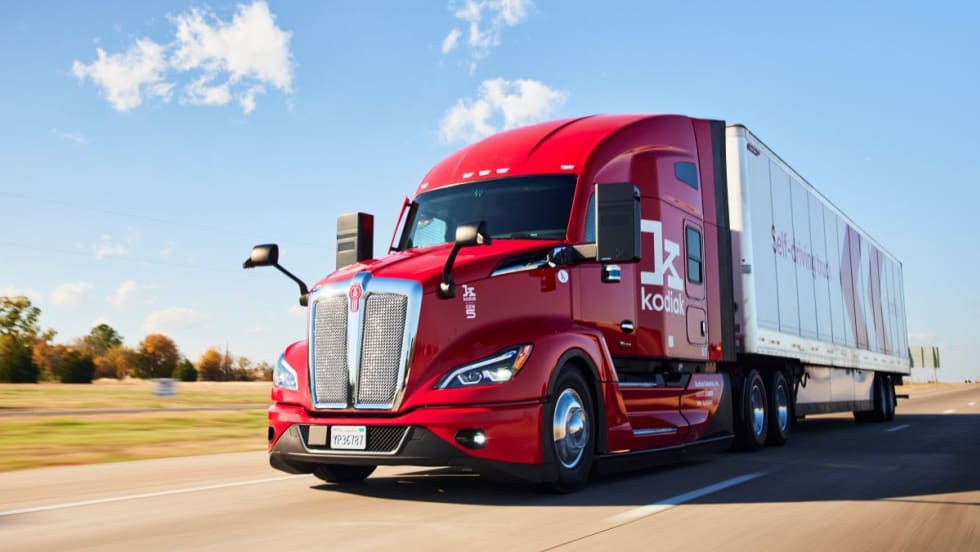
Autonomous Truck Testing Moves Ahead in California as Teamsters Challenge Rules
California has begun permitting heavy-duty autonomous truck testing, with Aurora and Kodiak among the first to receive approval, as the Teamsters sue the DMV over the new regulations.
Read More →
Behind the Wheel of the New Mack Anthem [Video]
HDT takes the new Mack Anthem around Mack’s Pennsylvania test track to see how its driver-focused design, technology, visibility and handling perform from behind the wheel.
Read More →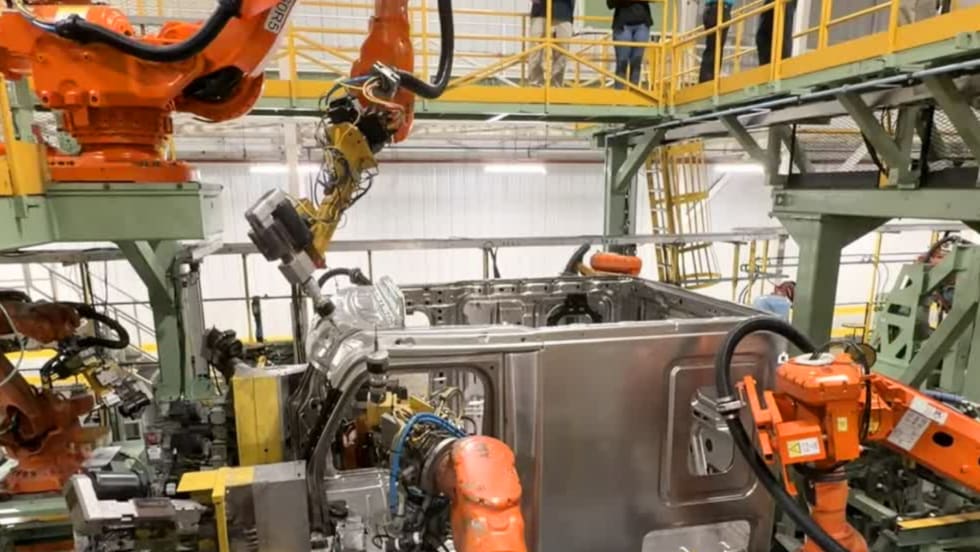
DTNA Plans New U.S. Truck Plant as Manufacturing Footprint Shifts
Daimler Truck North America is evaluating sites for a new assembly plant expected to open in 2029 while winding down operations at its longtime Portland manufacturing facility.
Read More →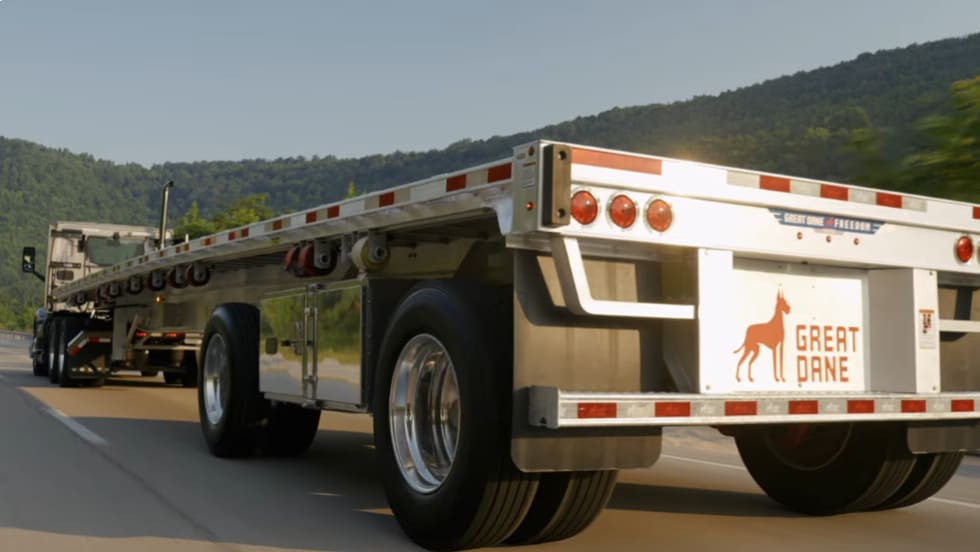
Great Dane Flatbed Trailer Offers Light Weight and Strength
Freedom Ultra is designed for a wide range of open-deck applications, including building materials, lumber, machinery, steel products, industrial freight, and coil hauling.
Read More →
What It's Like Inside this Custom 2025 Peterbilt 589?
Take a driver's-eye tour of this customized 2025 Peterbilt 589 in this video, as longtime driver Ingrid Brown explains its features, compares it to previous models, and shares plenty of personality along the way.
Read More →