




Manufacturing and Housing Slide in April, Total Production Unchanged
The latest gauge on the manufacturing sector showed that production contracted 0.5 percent in April, the first month-to-month decline since June 2009. However, total industrial production, which includes mining and utilities in addition to manufacturing, was unchanged during the month
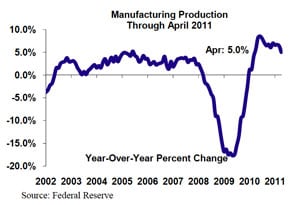
The latest gauge on the manufacturing sector showed that production contracted 0.5 percent in April, the first month-to-month decline since June 2009. However, total industrial production, which includes mining and utilities in addition to manufacturing, was unchanged during the month.
Eric Green, chief market economist at TD Securities Inc. in New York, told Bloomberg that "Job demand is real, and we're going to emerge past this soft patch." Another report that came out Friday showed fewer Americans than forecast filed first-time claims for unemployment benefits last week.
ATA's Economic Group notes that most of April's weakness in the manufacturing sector was due to an 8.9 percent plunge in auto production. The large drop in auto production was attributable to a shortage of parts from Japan in the wake of the earthquake there. Total durable goods production, which includes products with a useable life of at least three years, was down 1 percent in April, while nondurable goods output was up 0.1 percent.
In the bigger picture, compared with April 2010, total manufacturing was up 5 percent. Nearly all sectors saw year-over-year increases with only paper production (-1 percent) and petroleum and coal products (-2.7 percent) down from a year ago. Conversely, machinery output jumped more than 13 percent from April 2010.
Some economists point to "normalization," now that manufacturers have rebuilt much of the inventories they let draw down significantly during the recession, as another reason for the softening in manufacturing.
The Bureau of Transportation Statistics suggested that disruptions related to the disaster in Japan may last for quite some time. Damaged equipment, loss of power and disrupted intermodal infrastructure in Japan reduced shipping capacity and interfered with international trade links.
On March 21, General Motors announced that a shortage of electronic parts arriving from Japan forced the temporary closing of pickup truck manufacturing and assembly plants in New York and Louisiana. Other North America based automobile manufacturers, including Toyota, Nissan, and Honda, also suffered supply disruptions and shortages of essential automotive parts, such as electronics and paint pigments, from Japan.
On the other hand, earlier this month, GM announced it will invest $2 billion in plants in eight U.S. states as it works to boost production and market share. Bloomberg reports that GM's investment during the next year will support more than 28,000 U.S. jobs when including indirect employment at suppliers and work created from those employees spending their earnings, according to the Center for Automotive Research.
The earthquake also will affect worldwide demand for oil. The loss of Fukushima Dai-ichi nuclear plants, Japanese oil consumption is expected to increase by 238,000 million barrels per day as a substitution for power.
U.S. fuel demand climbed in April as the economy continued to grow. According to the American Petroleum Instritute, total deliveries of petroleum products, a measure of demand, climbed 5.2 percent to 19.9 million barrels a day last month from a year earlier. Diesel consumption alone climbed 26 percent to average 3.42 million barrels a day.
Housing was also down significantly in April. The Census Bureau reported that new housing starts plunged 10.6 percent in April to 523,000 units. While the housing market remains in the doldrums, the April data was particularly weak due to bad spring weather that delayed some starts. Single-family housing starts decreased 5.1 percent in April to the lowest level since February 2011. Compared with April 2010, starts were off nearly 24 percent. Single-family starts contracted 30.4 percent during the same period.
More broadly, the index of leading economic indicators, which is designed to forecast U.S. economic activity three to six months in the future, fell for the first time since June 2010. Specifically, the LEI decreased 0.3 percent in April. From June of last year through March of this year, the LEI had increased over 5 percent. Compared with April 2010, the LEI was up 4.1 percent.
More Fleet Management
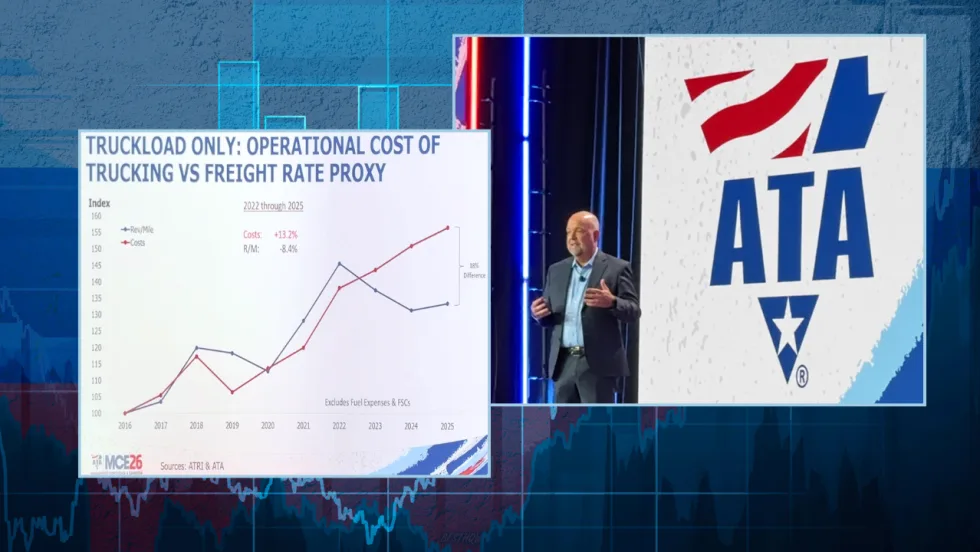
Why This Trucking Recovery Is Different
Freight demand remains sluggish, but rising costs and tougher enforcement have taken enough capacity out of the market to change the outlook for motor carriers.
Read More →
Platform Science Adds Dispatch and Safety Tools
Four additions to PS Fleet help fleets monitor loads, manage driver coaching, share truck locations and adjust video system settings.
Read More →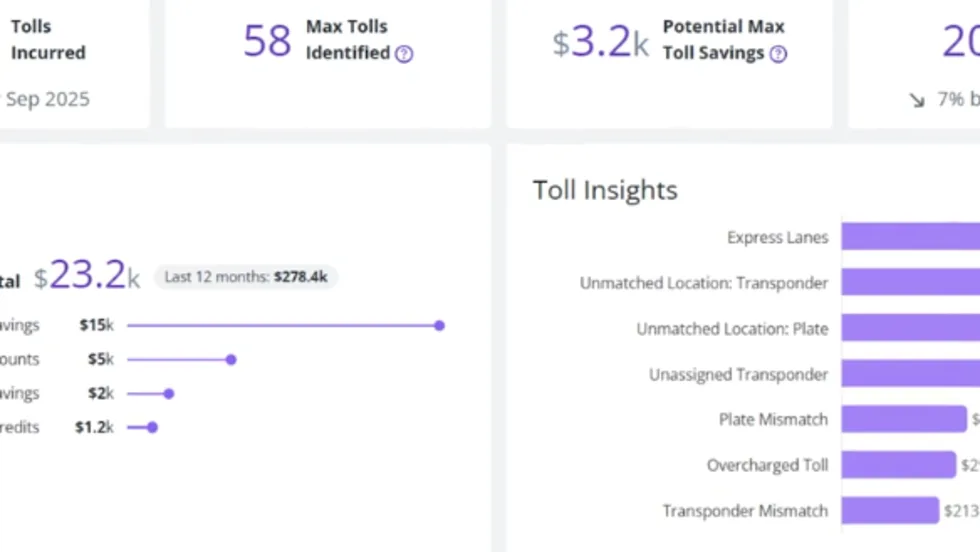
PrePass Intelligence Mines Fleet Bypass, Toll and Safety Data
PrePass Intelligence helps fleets measure bypass savings, flag potential toll overcharges, and spot suspicious transactions by combining data from separate systems.
Read More →
Motive Adds AI Agents for Fleet Operations
New tools automate follow-up on fleet data, from maintenance work orders to driver alerts, with two-way voice conversations planned for later this year.
Read More →
Can You Beat Our Trucking Trivia Challenge?
Test your truck knowledge with 19 trivia questions from Heavy Duty Trucking Exchange. Can you keep up with the fleet pros?
Read More →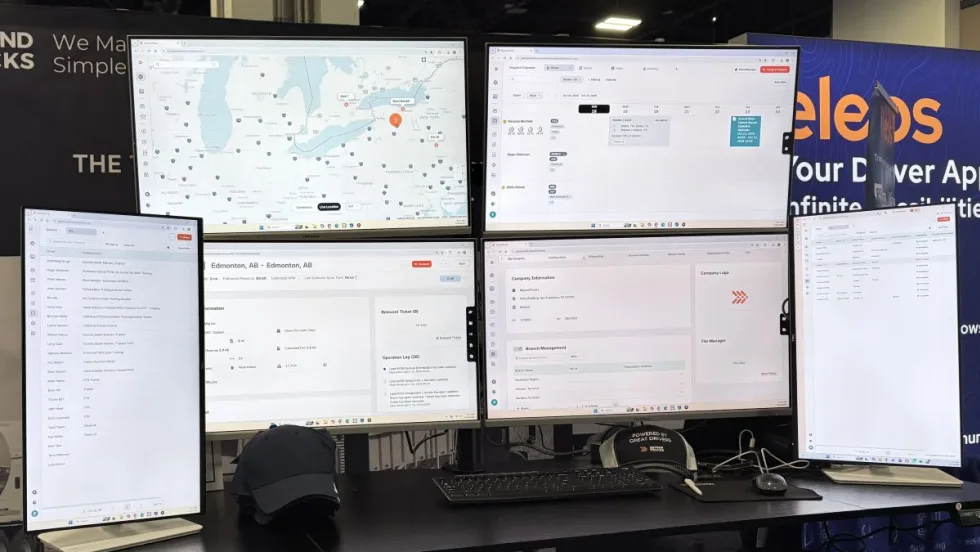
BeyondTrucks Adds Rules Checks to Dispatch
New Compatibility Engine checks driver qualifications, equipment requirements and fleet policies before loads are dispatched.
Read More →
Diesel Prices Hijack Trucking’s Worry List
ATRI’s annual survey finds cautious optimism about freight, but diesel costs, litigation, and insurance continue to squeeze fleets. Drivers have different priorities on several issues.
Read More →
Nomination Deadline Extended for HDT Emerging Leaders
Just a few more days to nominate accomplished trucking fleet professionals under 40 who are making an impact and helping lead the industry forward for the HDT Emerging Leaders award. Deadline extended to October 20!
Read More →
What Will ATA’s New Leader Bring to Trucking's Table?
Incoming President and CEO Mark Colson’s record in Alabama offers clues about his priorities and approach following Chris Spear’s abrupt departure as the head of the American Trucking Associations.
Read More →
Volvo, Waabi Start Commercial Autonomous Operations in Texas
Volvo VNL Autonomous trucks, powered by the Waabi Driver, are hauling freight directly to third-party facilities for a customer in Texas.
Read More →